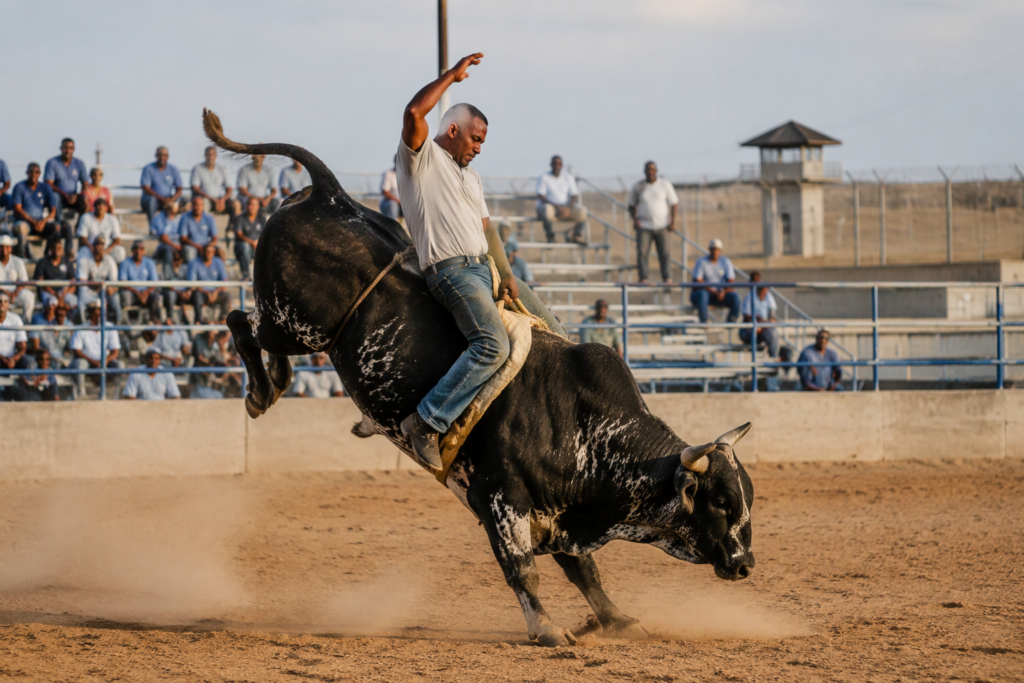
Inside America’s biggest maximum-security penitentiary, men serving sentences for violent crimes step into the dirt to face charging bulls before cheering ticket-holders. The Angola prison rodeo remains the last public spectacle of its kind in the United States, drawing thousands of visitors behind prison walls several days each year.
For the men inside Louisiana State Penitentiary, the arena offers rare daylight contact with the public and a small shot at cash. For critics, the event is an uncomfortable throwback that puts incarcerated lives on the line for spectator entertainment.
Also read: Holmesburg Prison Experiments: Men Sold Skin to Survive
Life sentences at Louisiana State Penitentiary
Louisiana holds the highest incarceration rate of any state in the nation. Angola Prison serves as its primary holding ground for those convicted of the most serious violent offenses, including murder.
Because of Louisiana’s strict sentencing laws, most men held at the penitentiary will never leave jail. The prison grounds sprawl across former plantation territory, housing thousands behind razor wire with virtually no prospect of release.
Why the Angola prison rodeo divides spectators
The racial dynamic of the event draws sharp scrutiny from civil rights advocates. While the inmate participants are primarily Black, the paying audience filling the bleachers is mostly white.
Spectators buy tickets, eat concessions, and watch incarcerated men attempt dangerous stunts against farm stock. Many visitors view the weekend as an annual Louisiana tradition, but watchdog groups argue the visual of a white crowd paying to see Black prisoners risk injury echoes a troubling past.
Cash and contact versus modern gladiators
Supporters of the event argue that taking part offers real benefits to the men who enter the arena. The rodeo gives participants a rare chance to interact with people outside the prison fences, breaking the intense isolation of maximum security.
Inmates can also earn prize money during the events. That income allows them to send funds home to their families or buy supplies that make their daily lives behind bars more bearable.
Opponents see something far darker in the arena. They compare the events to Roman gladiatorial contests, pointing out that spectators gleefully gather to see whether enraged bulls will overpower untrained inmate cowboys.
What comes next for the arena events
State corrections officials continue to promote the event as a self-sustaining recreation program, and tickets routinely sell out months in advance. The next round of public dates will test whether growing public scrutiny over prison labor and inmate safety can disrupt a century-old tradition.
Source: BBC