Long before commercial tequila took over the bar shelf, rural communities across Mexico fermented the ripe fruit of the prickly pear cactus into a deep red brew. That seasonal drink is the colonche cactus spirit, a historic fermented beverage that has largely slipped from public memory.
Few drinkers outside central Mexico have ever tasted it, and fewer still know its name. César Iván Ojeda-Linares, a researcher at the National Autonomous University of Mexico (UNAM), argues that this forgotten tradition is well worth seeking out before it disappears completely.
Also read: American Culture Quiz Tests Fast-Food Battles and Oklahoma
Fermenting the desert fruit
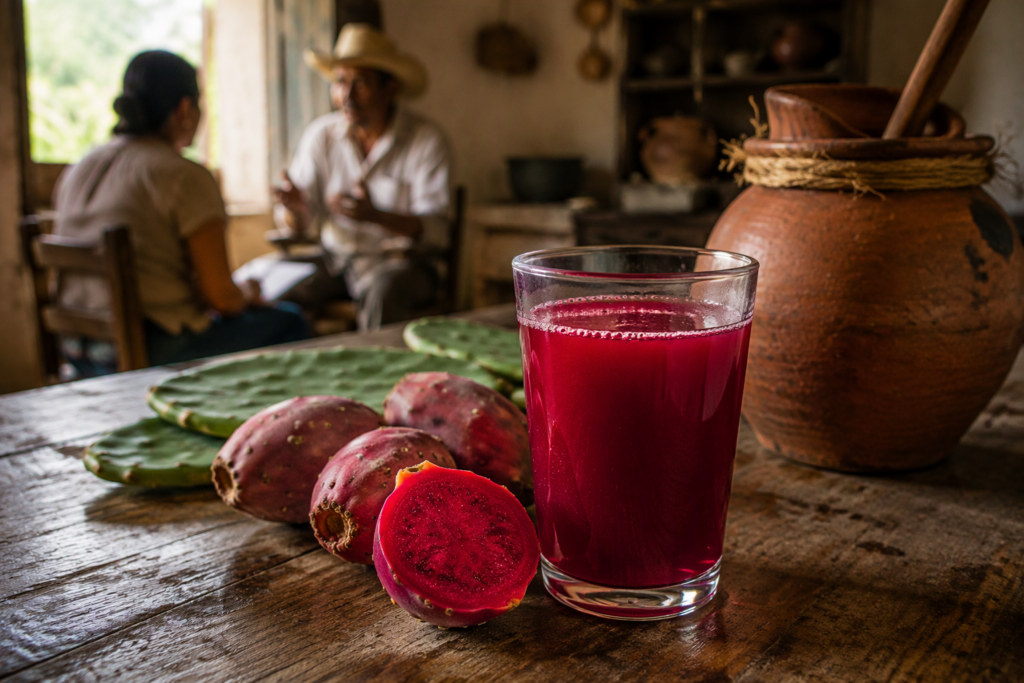
Colonche starts with the juicy fruit of the nopal cactus, commonly known as the prickly pear. Makers peel the fruit, crush it into fresh juice, and let natural wild yeasts handle the fermentation over several days.
The result is not a high-proof distilled liquor like mezcal, but a tart, lightly alcoholic drink with an intense ruby color. Because the prickly pear only ripens in late summer and early autumn, traditional makers can only brew fresh batches during a narrow harvest window.
Why the drink faded from view
Industrial beer, commercial sodas, and factory spirits pushed hyper-local Mexican fermentations into the background over the past century. As families moved toward urban centers, fewer people passed down the patience and labor required to harvest and ferment wild cactus fruit.
That shift left the drink surviving in small pockets, often sold only out of private homes or roadside stands during peak harvest weeks. Ojeda-Linares has pointed out that while commercial trends overlooked the colonche cactus spirit, its cultural value and distinct flavor make it a treasure for curious drinkers.
What to watch for the colonche cactus spirit
Reviving interest in ancient Mexican drinks has already brought pulque back into urban nightlife. If researchers like Ojeda-Linares succeed in drawing attention to colonche, regional harvest fairs in states like San Luis Potosí, Zacatecas, and Guanajuato could see renewed demand when the next prickly pear season arrives late this summer.
Source: Mexico News Daily