In 1983, a 23-year-old tourist sat on a park bench in Paris with a fresh baguette and a wedge of Brie, realizing right then that expensive dining rooms had nothing on a great snack eaten outdoors. Four decades later, that traveler has visited more than 90 countries, created the sitcom Everybody Loves Raymond, and built a global audience craving his infectious eating habits. Even after dozens of luxury tasting menus across the globe, Phil Rosenthal street food cravings still beat any four-hour banquet.
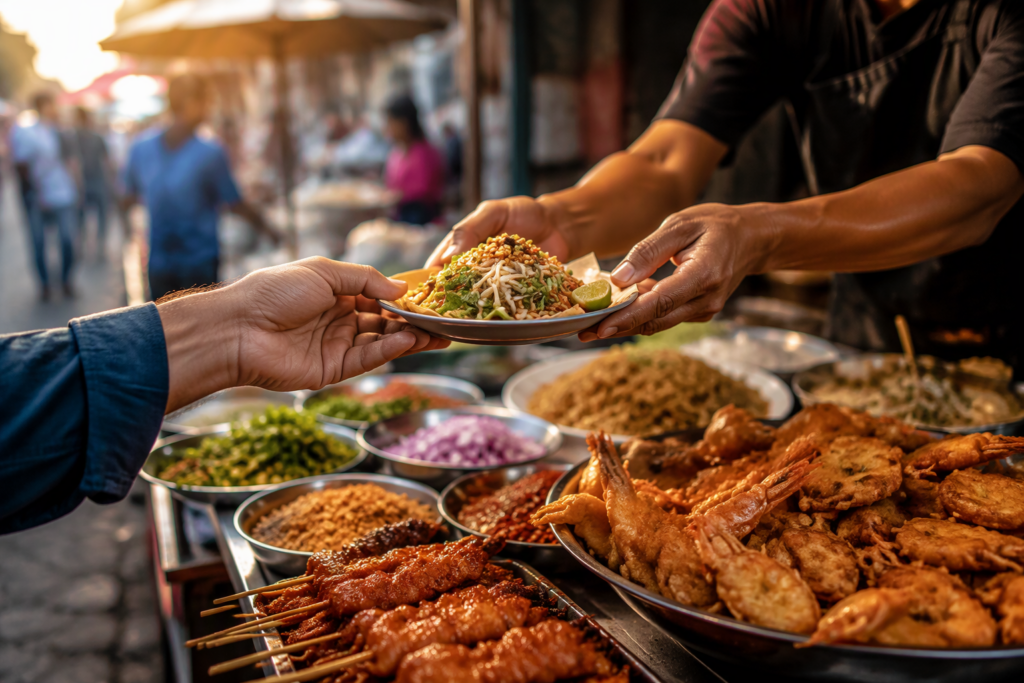
Rosenthal, the two-time Emmy and James Beard award winner behind Somebody Feed Phil and I’ll Have What Phil’s Having, calls curbside cooking the purest way humans feed each other. Fancy dining rooms often drown meals in formality and puffed-up prices, but sidewalk carts focus entirely on honest flavour. For home cooks and travelers alike, his personal favorites prove that an exceptional meal rarely requires white tablecloths or a dress code.
Also read: The Hunt for New York’s Most Authentic Pretzel: Bakers Revive a Street Icon
The northern Thai curry that broke a show rule
On his culinary travels, Rosenthal follows a strict routine: take two or three bites for the camera, then hand the bowl to his crew. That rule broke completely inside a wooden shack in northern Thailand with chickens roaming through the entrance.
Guided by chef Ian Kittichai, Rosenthal visited Khao Soi Loong Prakid Gard Gorm in Chiang Mai. The stall focuses on just one thing: traditional Chiang Mai khao soi noodle soup. The cook serves a rich coconut curry broth over fresh hand-pulled noodles, topping the bowl with crispy fried noodles, pickled mustard greens, chillies, sliced raw onions, and a fresh squeeze of lime.
Rosenthal started with the chicken version and refused to share with the crew. He scraped the bowl clean, then promptly ordered and finished a second bowl loaded with beef. In his eyes, the balance of sweet, salty, sour, and bitter made it one of the finest dishes he has ever tasted anywhere in the world.
Gray’s Papaya hot dogs beat marathon tasting menus
Rosenthal loves food you can hold in your hands, and nothing beats an iconic New York counter on 72nd Street and Broadway. While street carts often pull frankfurters from murky water, Gray’s Papaya cooks them on a hot griddle until the skin pops.
The classic order comes dressed with sharp mustard, tangy sauerkraut, and onions cooked down in a gentle tomato sauce, all tucked into a warm, pillowy roll. Customers can still grab two franks and a medium tropical drink for $8.50. Rosenthal notes that Anthony Bourdain adored the tiny spot, and local workers have relied on it for decades.
“At my age, having done some travelling and had the good fortune to eat in fine restaurants, I’d rather have a great hot dog than a four-hour sit-down tasting menu at this point.”
Rosenthal admits long queues can sometimes just be social media hype, but an old-school New York counter drawing crowds is usually doing something right. For him, the satisfaction of that griddled snap outshines almost any lavish course.
An eight-inch burger tower in Oaxaca
Oaxaca has a reputation as the culinary heart of southern Mexico, celebrated for traditional corn tlayudas and folded empanadas. Yet Rosenthal’s most memorable bite in the city was an unruly American classic built on a fiery flat top.
At a busy stand in the central plaza of Paseo Juarez El Llano, a local cook turned dinner into an architectural feat. The griddle sent up clouds of fragrant smoke as he stacked beef with crisp bacon, ham, griddled eggs, sweet caramelised onions, chopped pineapple, and diced fresh tomatoes. He bound the tower together with melted local quesillo string cheese, house-made hot sauce, and chipotle mayonnaise.
The resulting burger stood at least eight inches tall. Rosenthal wondered how anyone could get their mouth around it without causing a disaster. Yet despite the mountain of toppings, every flavor cut through cleanly without turning into greasy mush.
Morning scallion pancake Taipei style
Taipei ranks among the undisputed capitals of morning street eats, and Rosenthal found perfection at an unassuming street cart named Huang Fulong Crispy Scallion Pancake near the central railway station.
The vendor rolls fresh, scallion-flecked dough by hand and fries every portion to order on an oiled plate. Right beside the sizzling disc of dough, she cracks two fresh eggs straight into the oil. Before the eggs finish cooking, she presses the warm pancake directly on top, paints the surface with a pair of spicy and savory house sauces, and rolls the entire creation into a piping hot morning wrap.
Rosenthal considers the stall an example of culinary brilliance with bare essentials. Great cooking, he insists, comes down to what someone can accomplish with cheap everyday staples like dough and eggs. The contrast between the blistered, flaky crust, tender egg, and rich sauce makes a breakfast he says he could eat every single day.
The world’s priciest crab omelette in Bangkok
A sidewalk stand does not have to be dirt cheap to qualify as real street eating. In an old Bangkok shophouse, 81-year-old street vendor Jay Fai cooks in thick aviator goggles to shield her eyes from spitting oil, holding court over massive woks like a seasoned performer.
Her stand holds a Michelin star, and her signature Jay Fai crab omelette commands a price near $75. That figure sounds steep for outdoor dining, but Rosenthal points out that the sheer mountain of fresh, sweet lump crabmeat inside would run closer to $300 in an upscale restaurant in London or New York. The eggs remain custardy and soft beneath a crisp golden shell, served alongside a tom yum soup crowned with giant river prawns.
For Rosenthal, authentic street cooking remains the most exciting way to discover a culture. As his travel adventures continue to reach fans worldwide, his advice to hungry travelers remains simple: skip the hotel dining room, look for the longest local queue on the sidewalk, and let the city feed you.
Source: BBC