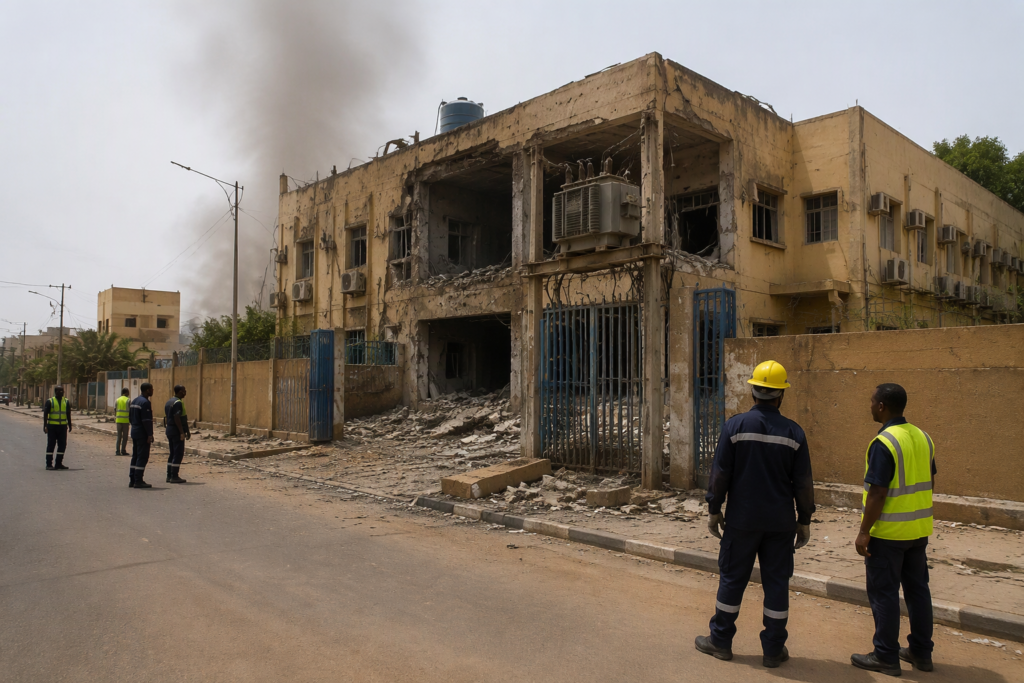
Explosions echoed through Khartoum for two and a half hours before dawn as air defenses tried to shoot down incoming aircraft, but the Sudan drone attacks still tore through civilian homes and smashed into a United Nations building with staff trapped inside.
By sunrise on Sunday, four people were confirmed dead across the capital region, including a child whose home collapsed in a village to the south. Nine other civilians lay wounded in northern Omdurman after an unmanned aircraft slammed directly into a residential compound across the Nile.
Also read: Israeli Attacks on Gaza Kill Four as Floods Swamp Camps
The strikes show how thoroughly remote-controlled aerial warfare has overtaken Sudan’s civil conflict, turning densely populated neighborhoods and international relief outposts into free-fire zones where escape is nearly impossible.
A dawn barrage across Khartoum and Omdurman
The pre-dawn assault started around 2:00 a.m. local time and lasted until roughly 4:30 a.m., sending rolling detonations across the capital as the Sudanese army fired interceptor rounds into the night sky. Military sources reported that the incoming craft were attempting to hit government headquarters and the grounds of the shuttered Khartoum airport.
The strikes instead crashed into civilian districts. Across the river in northern Omdurman, an explosive drone hit a family house, killing three residents on the spot and injuring nine more, according to reports from the ground.
Roughly 45 kilometers south of the capital, another strike tore into the rural community of Jebel Aulia. An aircraft hit the private house of a local mosque official responsible for calling the neighborhood to prayer. The blast killed a child instantly, leaving neighbors digging through shattered brick and mortar in the dark to reach family members trapped in the ruins.
United Nations offices caught in the crossfire
International aid workers found themselves directly in the blast radius when one of the strikes hit an active UN facility in a central residential area. Personnel were inside the structure when the impact occurred, though officials have not reported any deaths among international staff.
Denise Brown, the UN humanitarian coordinator in Sudan, confirmed the direct structural damage to the site on Sunday. The emergency relief office swiftly issued a formal rebuke of the incident.
The UN’s humanitarian office, which coordinates emergency relief, condemned the danger to its personnel in a civilian neighbourhood, calling it “unacceptable”.
Aid operations across the capital have already been pushed to the brink by fuel shortages, looting, and street fighting. An open air strike on marked humanitarian buildings threatens to halt whatever skeleton relief teams remain on site to feed displaced families.
Ethiopian airfield allegations and border tensions
While local officials pinned immediate blame for the strikes on the paramilitary Rapid Support Forces, the attack rapidly triggered a diplomatic dispute across Sudan’s eastern border. A Sudanese military official claimed on Sunday that the aircraft used in the raid took off from Bahir Dar airport inside neighboring Ethiopia.
Ethiopian authorities have previously rejected accusations that they allow paramilitary units to launch combat sorties from their soil. Even so, the government in Port Sudan has escalated the dispute by submitting formal complaints to both the UN Security Council and the African Union over suspected cross-border drone flights.
Tensions spiked further on Sunday when Sudanese state authorities separately accused paramilitary fighters of executing captured army soldiers in southeastern Blue Nile state, an area bordering Ethiopia. The government denounced the alleged killings as explicit breaches of international humanitarian law, though independent monitors have not yet verified the battlefield reports.
The deadly rise of unmanned aerial warfare
Remote air raids are no longer occasional tactics in this war; both the military and the paramilitary forces now use cheap, explosive-laden drones as their primary offensive weapons. United Nations figures reveal that remote aerial attacks killed more than 1,100 people across the country in just the first six months of this year.
Children face the heaviest burden of the expanding air war. Monitoring by the UN Children’s Fund shows that aerial drone strikes accounted for nearly two-thirds of all child deaths and injuries recorded in Sudan between January and September.
The wider conflict, which broke out in April 2023, has displaced 13 million people from their homes and pushed multiple farming regions into severe famine. With front lines stalled in several cities, both factions are leaning on distant operators to drop munitions onto urban streets.
The UN Security Council is expected to review Sudan’s official complaint regarding cross-border drone launches in the coming days as diplomats assess whether foreign airfields are fueling the capital’s bombardment.
Source: Al Jazeera


