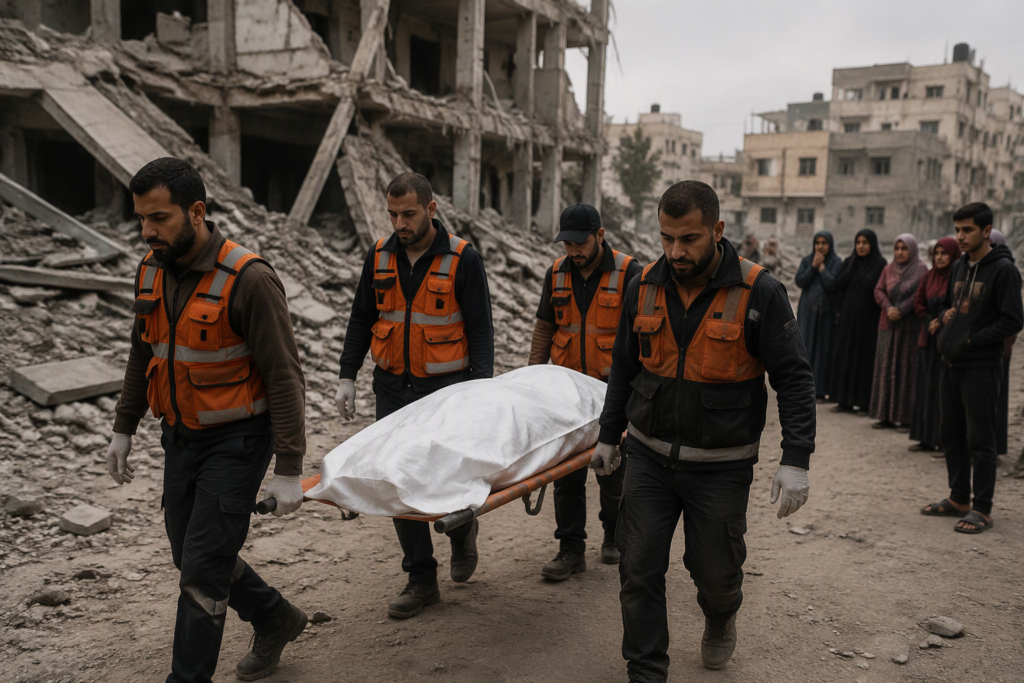
A precision drone strike tore through a passenger car on a Gaza City street on Saturday, killing three people inside and shattering any illusion of calm under an existing truce. The strike in the Tel al-Hawa neighbourhood, alongside a fatal shooting in northern Gaza, pushed the death toll higher as fresh Israeli attacks on Gaza continue to batter the besieged territory.
East of the Jabalia refugee camp, Israeli soldiers opened fire in the Halawa displacement camp, killing a Palestinian man where displaced families shelter. The killings add to a rising count of casualties recorded since an internationally backed ceasefire agreement supposedly took effect last October.
Also read: Strait of Hormuz Drone Shot Down as US-Iran War Stalls
For families trapped across the enclave, the renewed violence arrives alongside severe winter weather. Freezing rains and pooling floodwaters have swamped dirt tracks, ruined makeshift shelters, and plunged millions into deeper misery.
Deadly strikes shatter the October truce
Saturday’s drone strike hit without warning in Tel al-Hawa, reducing the vehicle to charred metal. Health officials confirmed that all three passengers died at the scene before medical crews could reach them.
Hours later, gunfire in the Halawa camp claimed another life. Ground troops positioned near northern Gaza fired directly into the settlement of tents, causing panic among residents who fled their homes earlier in the conflict.
According to figures released by Gaza’s Health Ministry, Israeli attacks on Gaza have killed 1,671 Palestinians since the ceasefire started last October. In total, 74,736 Palestinians have been killed across the enclave since the war began three years ago.
Settler violence flares in the West Bank
While missiles fell on Gaza, violence also flared in the occupied West Bank. Security guards from an illegal Israeli settlement shot and killed 42-year-old Hamza Masoud Salim Abdo late Friday near the village of Dura al-Qar, north of Ramallah.
The Palestinian Health Ministry reported that Israeli authorities seized Abdo’s body after the shooting and refused to return it to his family. Forces also detained another Palestinian man at the scene.
The incident follows an intensifying wave of armed settler raids on Palestinian communities. Official data indicates that fewer than 3 percent of Israeli settler attacks investigated by authorities lead to any conviction, leaving local residents with almost no legal protection.
Allied criticism clashes with financial ties
Foreign governments have repeatedly condemned settler aggression in the West Bank, but rights advocates say verbal pushback produces few results. The British government recently sanctioned several commercial entities linked to settlement construction, yet financial ties persist.
An investigation revealed that the United Kingdom awarded $14.4 million in new public contracts to companies connected to illegal West Bank settlements. The awards occurred despite an official British ban on goods imported from those outposts.
Palestinian officials argue that these economic agreements contradict diplomatic statements and encourage further territorial expansion across occupied lands.
Winter storms and blocked humanitarian supplies
Inside Gaza, extreme weather has quickly turned temporary displacement into a daily battle against hypothermia and hunger. Heavy downpours flooded low-lying ground, soaking fuel stores and leaving people unable to prepare hot meals.
Aid workers report that displaced families have been burning plastic trash and paper scraps to cook basic rations. World Food Programme country director Shaun Hughes warned that even those desperate options have vanished under the rain.
“Now even the rubbish is wet,” warned Shaun Hughes, WFP’s country director for Palestine.
Shelter supplies remain stalled across the border in Egypt. The International Organization for Migration reported that more than 100,000 emergency tents cannot enter Gaza because Israeli border inspections enforce rigid restrictions on equipment dimensions.
Inspectors routinely reject tents with support frames measuring over 38 millimetres in diameter. Karl Baker, head of the IOM Gaza programme, noted that Israeli border officials offer no technical explanation for why standard metal tent poles are barred from entering.
With winter storms forecast to intensify over the coming week, humanitarian groups are pressing border authorities for immediate clearance to move stranded tents and emergency fuel into the enclave.
Source: Al Jazeera


