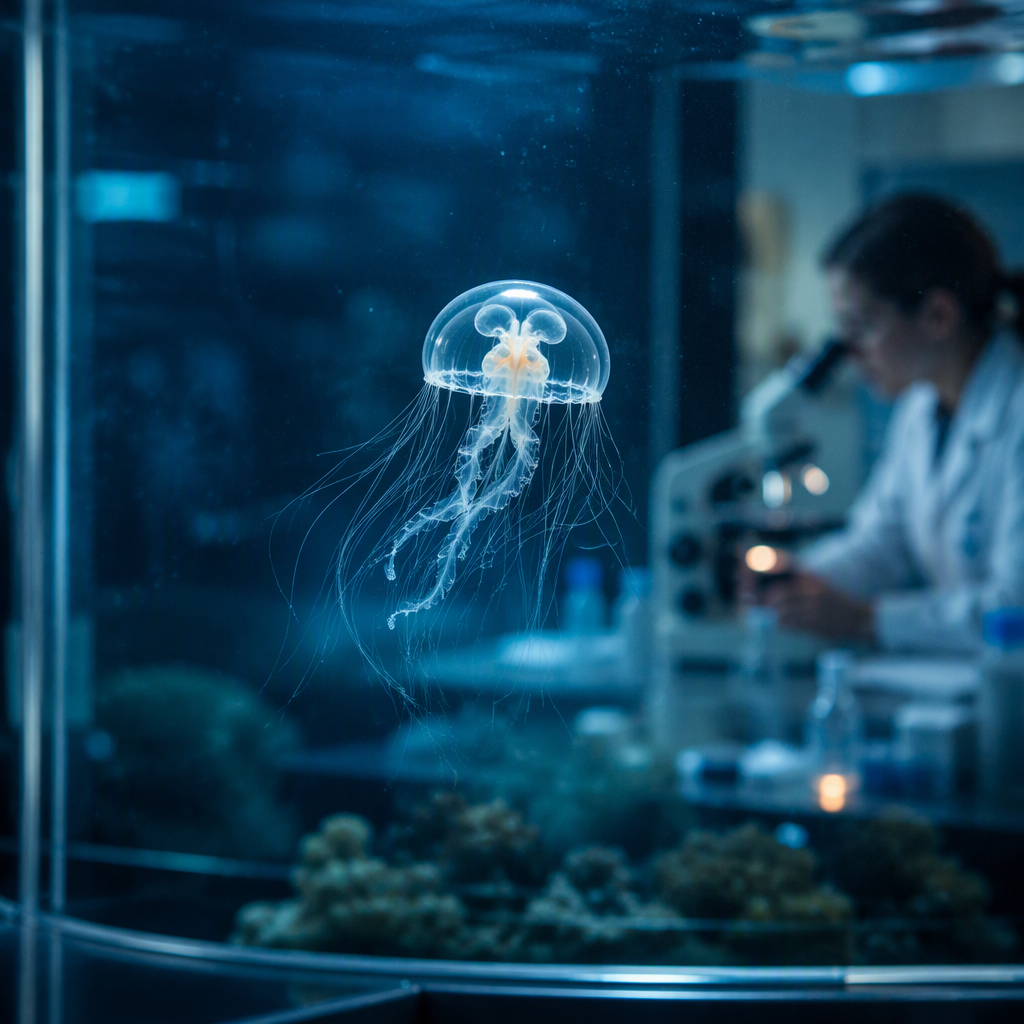

How the Immortal Jellyfish Beats Ageing to Inspire Treatments for Human Disease
A tiny marine creature known as the immortal jellyfish holds biological secrets that could transform modern regenerative medicine. While humans have searched for centuries for ways to slow or reverse bodily decline, Turritopsis dohrnii performs this feat naturally by resetting its biological clock whenever it faces physical damage, starvation, or old age. Now, geneticists and biomedical researchers are studying the animal’s cellular mechanisms to uncover therapies capable of targeting debilitating age-related diseases.
Decoding How the Immortal Jellyfish Reverses Cellular Ageing
Discovered in the Mediterranean Sea in the late 19th century, Turritopsis dohrnii is the only known animal capable of reverting from an adult medusa back to its juvenile polyp stage. When stressed or injured, the creature absorbs its tentacles, reduces its body mass, and sinks to the ocean floor. Within days, it transforms into a cyst-like cluster of cells that grows into a brand-new polyp colony, starting its life cycle over again.
Also read: How the Immortal Jellyfish Could Unlock New Treatments for Diseases of Old Age
This biological reset relies on a rare cellular process called transdifferentiation. Through transdifferentiation, mature, specialized adult cells reprogram themselves into entirely new types of cells. In humans, adult cells generally follow a fixed trajectory toward death once damaged or worn out. In contrast, the jellyfish can reset differentiated cells back into pluripotent-like states, renewing entire tissues without tumor formation.
Genomic Secrets: DNA Repair and Telomere Maintenance
Recent comparative genomics research has shed light on the molecular blueprint underpinning this survival strategy. By sequencing the genome of Turritopsis dohrnii alongside non-immortal hydrozoan cousins, scientists identified distinct duplications and variations in genes linked to cellular maintenance.
Key findings from genetic analyses include:
- Enhanced DNA repair: The species possesses multiple copies of genes responsible for detecting and repairing damaged genomic sequences.
- Telomere protection: It maintains elevated telomerase activity, preventing the wear and tear of chromosome end-caps that typically causes human cellular senescence.
- Stem cell preservation: Genes involved in maintaining stem cell reserves remain permanently active, allowing rapid tissue regeneration.
- Oxidative stress defense: The jellyfish produces specialized proteins that neutralize metabolic toxins before cellular decay sets in.
Translating Marine Biology into Treatments for Age-Related Illness
While biomedical researchers emphasize that humans will never achieve literal biological immortality, the mechanisms found in the immortal jellyfish offer actionable targets for medicine. Chronic degenerative diseases—including Alzheimer’s disease, Parkinson’s disease, cardiovascular degradation, and osteoarthritis—are driven primarily by cellular exhaustion and cumulative DNA damage.
If researchers can harness the molecular switches that trigger transdifferentiation and enhanced genomic repair, they could potentially develop treatments that rejuvenate failing human tissues. Rather than simply replacing damaged organs, future therapies might encourage existing patient cells to repair themselves, reduce chronic inflammation, and clear senescent cells that accelerate bodily decline.
Challenges and Ethical Considerations
Significant technical hurdles remain before these discoveries can translate into clinical practice. Mammalian biology is drastically more complex than that of simple cnidarians. Inducing cellular reprogramming in humans carries substantial risks, particularly the danger of uncontrolled cell division leading to cancer.
Clinical scientists are therefore focusing on precision pathways rather than whole-organism reprogramming. The objective is to isolate specific molecular signals that boost endogenous cellular repair without triggering oncogenic mutations.
What Happens Next
Laboratories across Europe, Asia, and North America are now developing advanced cellular models to test synthetic compounds that mimic the jellyfish’s repair pathways. Over the next decade, researchers aim to advance these candidate molecules into pre-clinical trials for specific degenerative conditions, such as cardiac fibrosis and age-associated macular degeneration.
Conclusion
The remarkable survival strategy of the immortal jellyfish continues to challenge long-standing assumptions about the inevitability of physical decline. By unraveling how this creature defies biological breakdown, scientists are charting a promising path toward therapies that may one day extend human healthspan and alleviate the heaviest burdens of old age.




1 Comment
Comments are closed.