
When Is Premium Economy Worth the Extra Cost?
As international travel rebounds and airlines overhaul cabin layouts, passengers face a widening gap between standard coach and lie-flat business class. For many travelers weighing budget against comfort, deciding whether premium economy is worth the extra cost hinges on flight duration, aircraft configuration, and pricing dynamics.
Originally introduced in the early 1990s, premium economy has emerged as the airline industry’s most profitable real estate per square foot. Major carriers across North America, Europe, and Asia now treat the cabin as a distinct service tier rather than merely a standard seat with extra legroom. However, airfares can range anywhere from 30% to more than double the price of standard economy, making careful calculation essential.
Also read: How to Find Your Motivation: Science-Backed Strategies for Sustainable Drive
What Premium Economy Actually Delivers
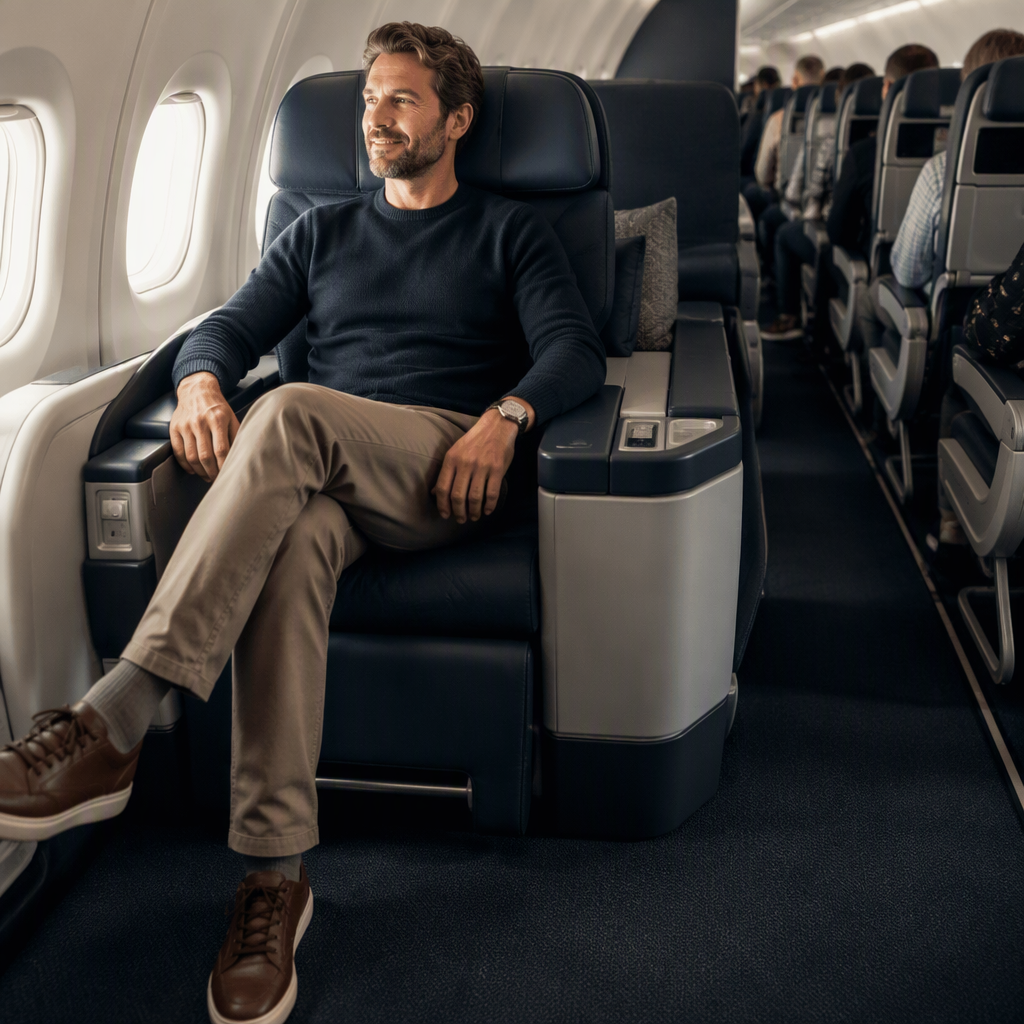
Understanding the value proposition requires separating cabin marketing from reality. Unlike domestic “extra legroom” seats, true international premium economy provides a dedicated cabin with distinct physical seats and service upgrades.
- Wider Seats and Greater Pitch: Premium economy seats typically offer 38 inches of pitch (legroom) compared to 30 to 32 inches in standard economy. Seats are also roughly two to three inches wider, featuring wider armrests and deeper recline.
- Dedicated Amenities: Most long-haul carriers provide larger in-flight entertainment screens, noise-canceling headphones, amenity kits, and upgraded bedding.
- Enhanced Dining: Meals are frequently served on real tableware with upgraded menus, complimentary alcoholic beverages, and dedicated flight attendants.
- Airport Privileges: Tickets routinely include priority check-in, priority boarding, and increased checked-baggage allowances, which can offset some of the fare difference.
When Is Premium Economy Worth the Extra Cost for Long-Haul Travel?
Travel analysts identify specific scenarios where booking premium economy represents sound financial and physical value.
Daytime vs. Overnight Flights Exceeding Seven Hours
On transoceanic routes lasting longer than seven or eight hours, extra space materially impacts physical fatigue. For overnight flights where passengers need to sleep, the increased recline, adjustable leg rests, and footrests offer a tangible improvement over the upright confines of coach. Business travelers who need to arrive rested for immediate meetings often find the tier a justifiable middle ground when company policy excludes business class.
When Traveling With Children or Mobility Needs
The dedicated cabin environment offers wider aisles, smaller seat groupings (often 2-3-2 or 2-4-2 layouts), and less cabin traffic. Passengers traveling with young children or those managing joint stiffness benefit significantly from the increased buffer between rows.
The “Under $50 Per Hour” Rule of Thumb
A widely used industry metric suggests calculating the fare difference on an hourly basis. If upgrading to premium economy costs less than $40 to $50 per flight hour, consumer advocates generally view the upgrade as good value, particularly after factoring in waived baggage fees and complimentary amenities.
When You Should Skip the Upgrade
Conversely, premium economy is rarely cost-effective under specific travel conditions:
- Daytime Flights Under Six Hours: For shorter transatlantic or regional routes, staying alert during the flight makes standard extra-legroom seats sufficient at a fraction of the cost.
- Outsized Price Premiums: If the fare spread exceeds double the economy rate, the value rapidly diminishes, as the seat remains a recliner and does not convert into a flat bed.
- Older Aircraft Configurations: Some carriers operate legacy aircraft where premium cabins lack updated ergonomic designs or power ports. Checking seat specifications on platforms like SeatGuru or AeroLOPA remains critical prior to booking.
What Happens Next: Airline Investments in Intermediate Cabins
Carriers are accelerating investments in intermediate cabins through 2025 and 2026. Fleet additions, including the Boeing 787-9 and Airbus A350-1000, increasingly dedicate higher proportions of floor space to premium economy. Airlines are also introducing privacy wings, fixed-shell seats that avoid encroaching on neighbors when reclining, and wireless charging capabilities.
Determining if premium economy is worth the extra cost ultimately depends on personal budget thresholds and the physical demands of your itinerary. For flights crossing multiple time zones, the blend of priority airport handling, increased personal space, and superior rest makes the upgrade a pragmatic choice for travelers seeking relief from standard economy without paying business-class rates.