
Families Desperate for News as Rescuers Work to Identify Spanish Train Crash Victims
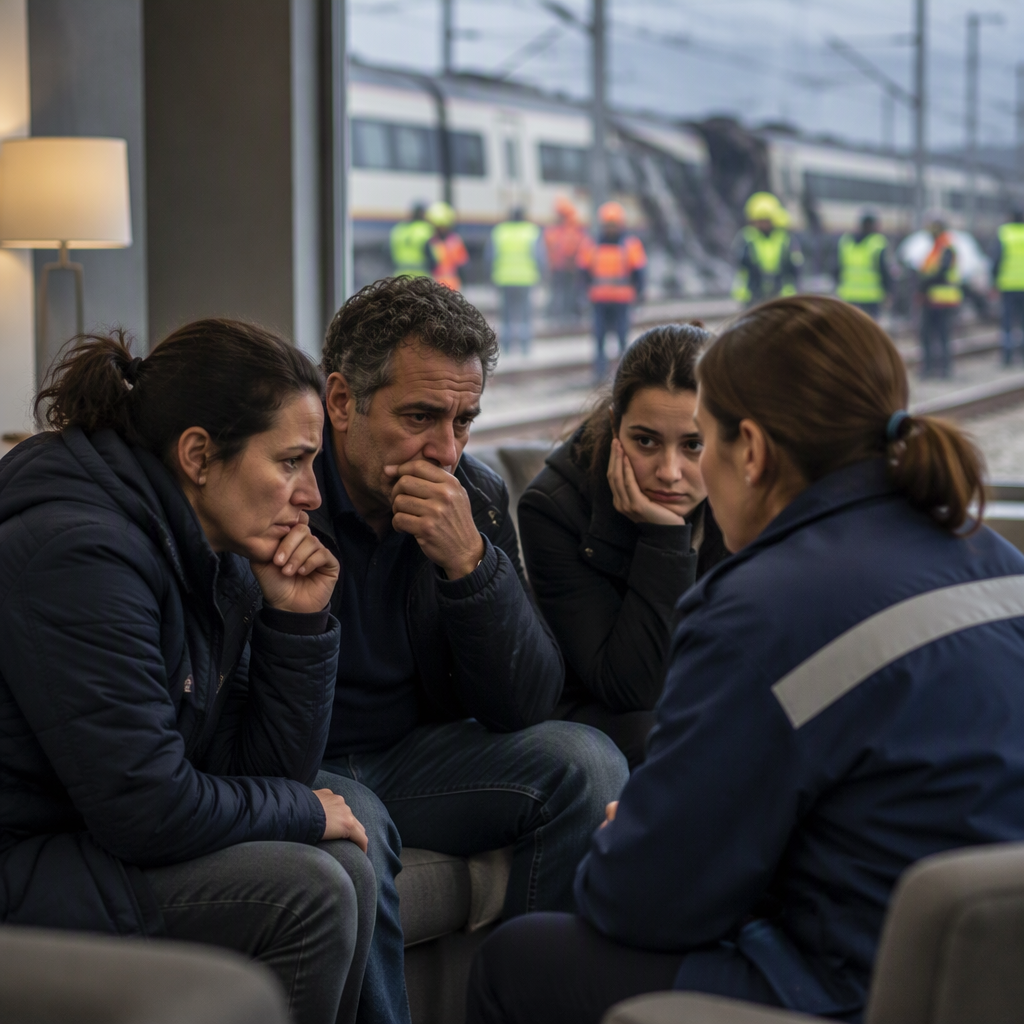
Grieving relatives gathered at makeshift assistance centers and local hospitals on Tuesday, desperate for information as emergency responders and forensic specialists worked tirelessly to identify Spanish train crash victims following a devastating rail disaster. With many passengers still unaccounted for, the agonizing wait has left families pleading for answers while search-and-rescue teams comb through the wreckage.
Rescue Teams Face Complex Task to Identify Spanish Train Crash Victims
Specialized emergency personnel, supported by forensic scientists and civil protection units, are confronting severe technical obstacles inside the damaged carriages. The impact of the derailment caused significant structural collapse, requiring heavy cutting machinery and stabilization equipment before recovery teams could safely access all compartments.
Also read: Train Crash in Spain Leaves Dozens Dead and Many Injured in Severe Rail Disaster
Forensic authorities confirmed that identifying the Spanish train crash victims requires meticulous scientific protocols. Teams are utilizing dental records, biometric fingerprints, and rapid DNA profiling to ensure accurate identifications. Officials cautioned that because of the sheer force of the collision, the identification process could take several days.
“Our teams are working without pause, but precision and respect for the deceased must guide every step,” said an emergency services spokesperson at the scene. “We understand the unbearable pain of the families, and we are mobilizing every resource to give them certainty as quickly as humanly possible.”
Anguish and Uncertainty at Family Assistance Centers
Authorities have established dedicated family support centers near the crash site and in major transit hubs connected to the train’s route. Psychologists, social workers, and Red Cross volunteers are providing round-the-clock crisis counseling to relatives awaiting news of their loved ones.
Many relatives described hours of terrifying silence after losing telephone contact with passengers immediately following the crash. In several cases, families traveled through the night to reach local municipal centers, clutching photographs and medical records to assist forensic teams with identification files.
Hospitals across the region remain on high alert, treating dozens of survivors with injuries ranging from severe trauma to fractures and shock. Medical directors reported that several unidentified survivors remain in intensive care units, further complicating efforts to compile an accurate passenger manifest.
Official Investigation Underway into Rail Tragedy
While recovery operations continue, transport safety investigators have launched an inquiry into the circumstances surrounding the derailment. Technical teams from Spain’s rail infrastructure authority and the judicial police are examining the train’s data recorders—commonly known as black boxes—to evaluate speed, braking performance, and signaling data prior to impact.
Preliminary assessments indicate that investigators are focusing on track conditions, mechanical components, and automated signaling systems along the rail corridor. Government officials have pledged complete transparency as forensic inspectors complete their on-site survey.
What Happens Next
Emergency crews will maintain 24-hour operations at the disaster site until every carriage is cleared and inspected. In the coming days, judicial authorities will begin releasing formally identified remains to families as DNA testing confirms identities.
National and regional leaders have announced several days of official mourning to honor the Spanish train crash victims, while transport regulators prepare an interim safety report to prevent similar tragedies across the rail network.