
Israeli Forces Turn Hebron Homes into Military Posts Amid West Bank Lockdown
Israeli soldiers have seized multiple Palestinian residential properties in the occupied West Bank city of Hebron, converting private dwellings into fortified observation outposts and command points. The measure comes as Israeli forces turn Hebron homes into military posts amid an intensifying lockdown that has restricted movement, shuttered commercial centers, and left hundreds of residents confined to their neighborhoods.
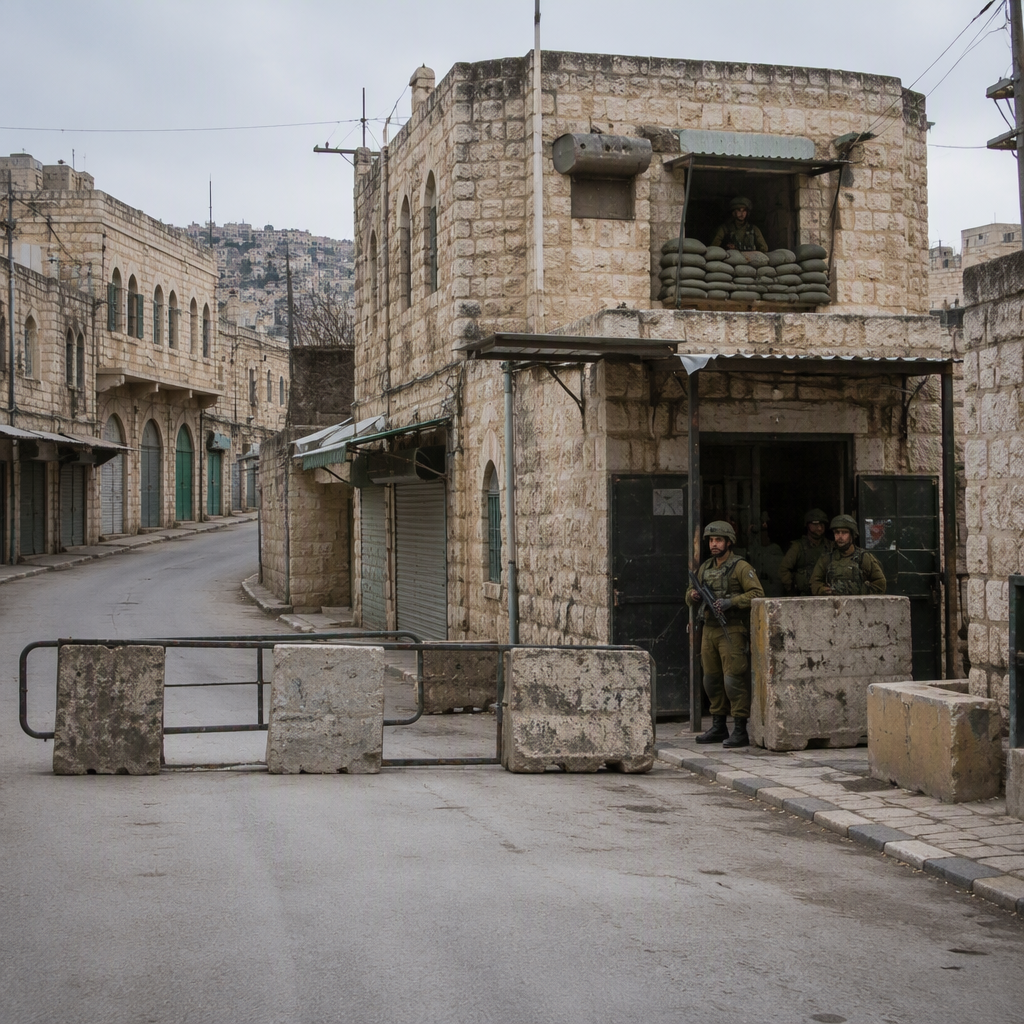
According to local officials, human rights monitors, and resident testimonies, troops entered several residential buildings across central and southern Hebron over recent days. Soldiers ordered civilian families to vacate specific floors or entire premises, positioning surveillance gear, sandbags, and communications hardware on rooftops and balconies overlooking key thoroughfares.
Also read: Outposts and Impunity: The Anatomy of Israeli Settler Land Grabs in the West Bank
Conversion of Hebron Homes into Military Posts
The practice of taking over civilian structures has primarily targeted multi-story homes situated in elevated strategic locations, particularly near friction points between Palestinian communities and Israeli settlement compounds. In several recorded cases, troops ordered homeowners to gather in single rooms while soldiers commandeered roofs and upper floors for operational use.
Local municipal sources reported that these temporary seizures often occur without prior warning or written military orders. Soldiers have utilized the seized premises as 24-hour observation platforms and sniper nests, monitoring streets below and controlling entry points into sensitive quarters of the city.
For residents, the sudden conversion of their living spaces into operational military zones has caused acute distress. Families report sleep deprivation, fear for their children’s safety, and the complete loss of privacy within their own residences.
Widespread Movement Restrictions and Daily Life Disruption
The seizure of homes coincides with an expanded security lockdown throughout Hebron and surrounding governorates. Israeli authorities have shuttered iron gates, lowered checkpoint barriers, and placed concrete blocks across primary access roads linking residential quarters to the city center.
Commercial districts near the Old City, including areas surrounding Bab al-Zawiya and the Ibrahimi Mosque, have seen prolonged closures. Palestinian shop owners have been forced to pull down metal shutters, grinding economic activity to a halt.
Checkpoints governing entry into the Israeli-controlled H2 sector of Hebron have operated under strict limitations. Residents attempting to access basic necessities, medical facilities, or workplaces face rigorous identification checks, extensive delays, or outright refusals of passage.
Human Rights Concerns and Legal Context
International human rights organizations have frequently criticized the commandeering of civilian dwellings in occupied territories. Under international humanitarian law, particularly the Fourth Geneva Convention, the requisition of civilian property by an occupying power is heavily restricted and strictly barred except under imperatives of absolute military necessity.
Legal monitors note that converting residential dwellings into military points can also endanger civilians by turning civilian structures into potential targets. Rights groups argue that collective restrictions and home takeovers violate basic protections against arbitrary interference with home and family life.
Israeli military spokespersons typically maintain that security measures, including enhanced surveillance points and heightened patrols, are operational responses aimed at preventing armed attacks and maintaining order along volatile perimeter areas.
What Happens Next
Community leaders and municipal authorities in Hebron have appealed to international diplomatic missions and humanitarian agencies to intervene against the escalating property takeovers and mobility restrictions. Meanwhile, local legal centers are compiling formal documentation to challenge the seizures through legal channels, although past administrative petitions have rarely yielded rapid relief.
As security operations continue across the West Bank, the decision to turn Hebron homes into military posts underscores the deepening strain on civilian infrastructure and the volatile reality confronting residents navigating sustained military control.