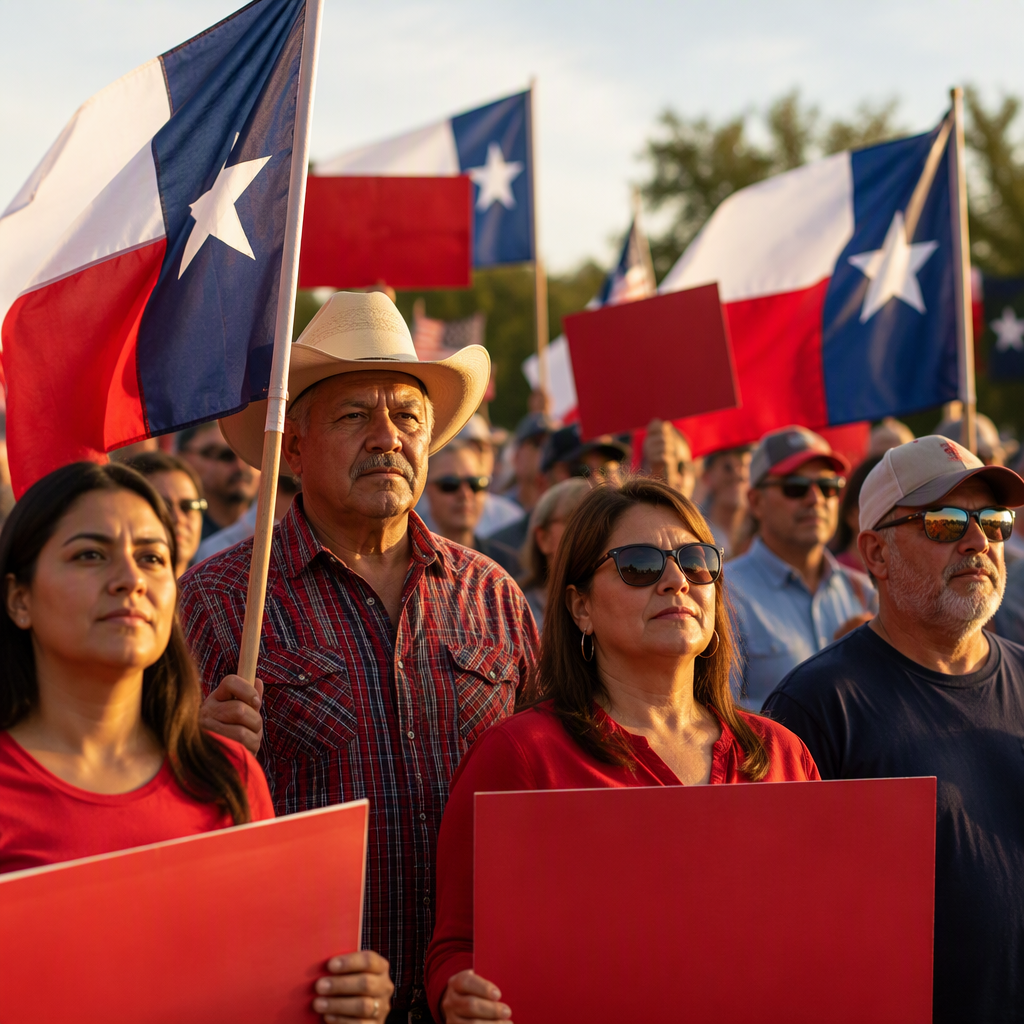

Texas Voters Rally to Keep the Lone Star State Red
Conservative organizers and grassroots activists across Texas are ramping up statewide outreach as Texas voters rally to keep the Lone Star State red ahead of major election cycles. From sprawling suburban enclaves to historically Democratic counties along the Rio Grande Valley, Republican coalitions are mobilizing to protect their decades-long governing majority in Austin and preserve Texas’s status as the nation’s premier conservative stronghold.
The coordinated campaign brings together local precinct chairs, volunteer organizations, business leaders, and statewide elected officials. Faced with substantial investments from national Democratic groups aiming to shift the state’s political balance, conservative strategists are focusing on aggressive voter registration, door-to-door canvassing, and community town halls to energize their base.
Also read: Democrats Break Through in Red States From Texas to Kansas
Grassroots Mobilization to Keep the Lone Star State Red
Political action committees and conservative civic clubs have launched a series of high-energy rallies aimed at turning voter enthusiasm into high turnout at the ballot box. Organizers emphasize that keeping Texas conservative requires active participation rather than complacency.
“Texas has been an economic powerhouse because of conservative governance, low taxes, and strong support for business,” said Elena Morales, a volunteer coordinator in Collin County. “Our rallies are about reminding neighbors that our state’s prosperity did not happen by accident. Every election requires us to show up and defend those principles.”
Campaign organizers are deploying digital organizing tools alongside traditional precinct walking. Volunteer networks are focusing heavily on newly arrived residents, seeking to integrate out-of-state transplants into conservative civic groups and ensure their voter registrations are current.
Key Issues Driving Conservative Turnout
Attendees at recent rallies point to several central policy priorities as the primary catalysts for their civic engagement:
- Border Security and Public Safety: Grassroots voters consistently identify immigration enforcement and border security as top concerns, supporting state-led enforcement operations and increased funding for law enforcement.
- Economic Stability and Cost of Living: With inflation and property taxes top of mind for homeowners, voters emphasize the state’s lack of an individual income tax, regulatory restraint, and ongoing efforts by state leaders to deliver property tax relief.
- Energy Independence: Participants frequently defend Texas’s oil, natural gas, and broader energy sectors against federal regulatory mandates, framing energy production as vital to both state revenue and national security.
- Parental Rights in Education: School board governance, curriculum transparency, and educational choice continue to galvanize suburban parents, driving engagement at both municipal and state levels.
Suburban Battlegrounds and South Texas Realignment
While rural Texas remains an overwhelming foundation for Republican candidates, the battle for the state’s future centers increasingly on major metropolitan suburbs and the South Texas border region.
In suburban counties surrounding Houston, Dallas-Fort Worth, and Austin—such as Fort Bend, Denton, and Williamson—rapid population growth has created highly competitive legislative and congressional districts. In response, conservative groups have set up permanent field offices, hosted weekly block walks, and cultivated relationships with diverse community leaders to counteract Democratic gains.
Concurrently, South Texas has emerged as a major front in the fight to maintain conservative leadership. Counties across the Rio Grande Valley that voted reliably Democratic for generations have trended toward Republican candidates in recent cycles. Working-class Hispanic voters, motivated by social conservatism, law enforcement ties, and jobs tied to the oil and gas industry, are playing an increasingly visible role at rallies across the region.
What Happens Next in Texas Politics
Both major political parties view Texas as pivotal to the national balance of power. While Democrats continue to target competitive congressional and state legislative seats, Republicans are doubling down on early voting drives, poll worker training, and multi-platform advertising campaigns.
Statewide leaders, including Governor Greg Abbott and Lieutenant Governor Dan Patrick, have pledged continued support for grassroots infrastructure. Over the coming months, county parties will conduct voter contact operations designed to maximize turnout across both traditional GOP strongholds and emerging swing precincts.
Conclusion
The sustained drive among Texas voters rally to keep the Lone Star State red underscores how critical the state remains on the national political map. Through targeted grassroots organizing, policy-focused messaging, and expanding outreach into changing communities, conservative organizers are working to ensure that Texas maintains its defining political identity for years to come.