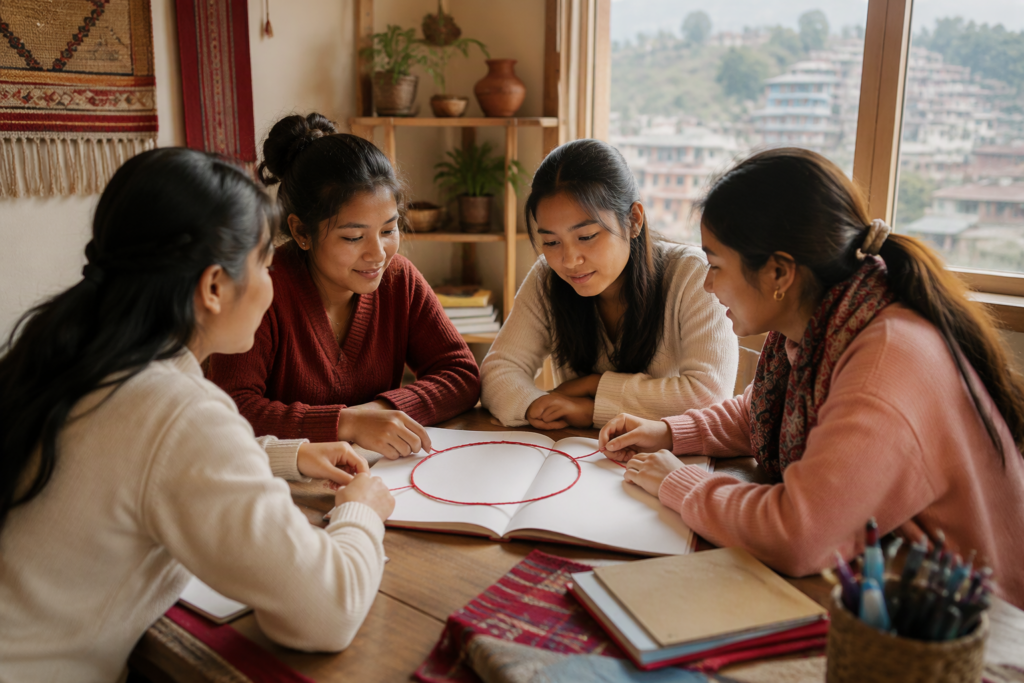
According to a BBC report, young women, educators, and community activists in Nepal are confronting long-standing cultural taboos surrounding menstruation. While menstruation is a normal biological process, many women and girls in the country face persistent stigma, silence, and social restrictions.
The initiatives documented by the broadcaster reflect an effort by a new generation to replace silence with accessible period education. Rather than accepting traditional constraints, local youth and advocates are developing targeted educational platforms to encourage open conversation about menstrual health.
Also read: Long-Term Health Effects of Childbirth: The Lasting Complications Millions Face
Digital Media and Community Outreach
To counter the pervasive secrecy surrounding periods, young creators have turned to digital tools tailored to their peers. A central part of this outreach involves a period-tracking application created by girls to help users understand their menstrual cycles directly.
Alongside mobile software, advocates have established a pioneering podcast dedicated to menstrual health. This broadcast project provides a forum to discuss topics that traditional social standards have kept hidden from everyday public dialogue.
According to the BBC, these efforts combine technology with direct community engagement:
- Mobile cycle tracking developed specifically by young women
- Audio broadcasting addressing taboo health topics
- Educational advocacy led by local activists
Confronting Restrictions and Taboos
The restrictions described in the report affect women and girls across generations, reinforcing shame around reproductive health. By speaking publicly, educators and grassroots organizers aim to dismantle the perception that menstruation is something to conceal.
The reported projects mark a deliberate shift from private compliance toward public dialogue. Organizers focus on ensuring that young people can access basic biological information without fear of judgment or cultural penalties.
Unanswered Questions Surrounding Adoption
The BBC broadcast focuses on the existence of these educational tools, but several operational details remain unstated. The report does not specify the exact reach of the period-tracking application or the listener metrics of the new podcast.
It also leaves open whether these digital initiatives reach remote communities where menstrual restrictions can be severe. Further reporting will be needed to determine how widely these educational resources are adopted across the country.
Source: BBC