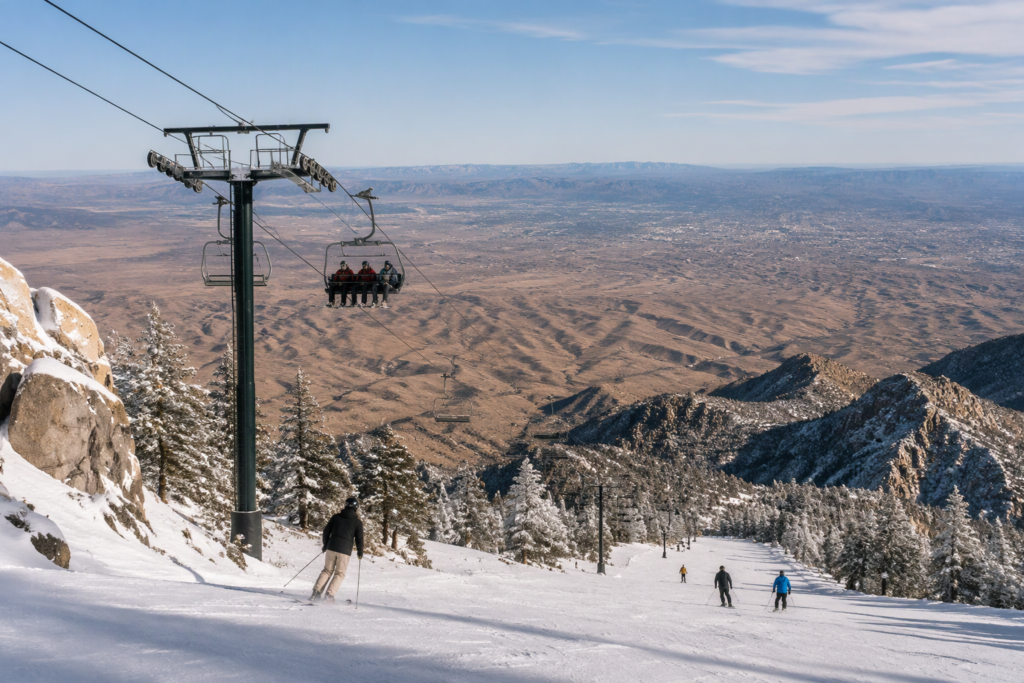
You can stand on an 11,500-foot ski ridge, glance north toward the Grand Canyon, and look south to the red rocks of Sedona where Hollywood filmed more than 100 Westerns. Phoenix sits just 150 miles away, a desert metropolis where summer temperatures routinely pass 100 degrees Fahrenheit. Yet high above the desert floor on the slopes of an ancient volcano, the Arizona Snowbowl offers true alpine winter in one of the hottest states in the country.
For desert dwellers looking to trade cactus-lined highways for fresh powder, the contrast is immediate. Phoenix resident Karen Malis-Clark explained that driving from the valley to the slopes feels like traveling between Mexico and Canada in two hours. That proximity changes how outdoor enthusiasts in the Southwest spend their winters, giving them alpine terrain without the need to board a plane to Colorado or Utah.
Also read: Destiny Schliefert Charged After Boy Dies Without Cancer Care
The resort sits in Arizona’s only alpine tundra zone, perched directly on the state’s highest mountain range. While millions know northern Arizona for its deep canyons and arid plateaus, the mountain has quietly maintained an active winter sports scene for over a century.
Two Norwegian brothers and a car-engine rope tow
Skiing took root in northern Arizona thanks to two immigrants from Norway. In the winter of 1915, Ole and Peter Solberg brought homemade wooden skis to Flagstaff after growing up on Nordic snow. According to local journalist Gail G Collins, the brothers hiked up a nearby hill and carved down its slopes before an astonished crowd of local residents.
People first used wooden skis to get around in the winter. Starting in 1933, the local community began organizing a winter carnival on the San Francisco Peaks, and interest in the sport began to take off. Ski clubs started popping up across the Southwest, and people were willing to drive hours just to go skiing.
By 1938, the U.S. Forest Service cut an access road up Mount Humphreys and built a rustic log cabin among the birch trees. Workers rigged a rope tow to an automobile engine to drag skiers uphill. With that crude setup, the Arizona Snowbowl opened years before celebrated resorts like Aspen, Vail or Breckenridge welcomed their first guests. Today the site features 777 skiable acres, 61 runs, a ski school, gear rentals, and mountain restaurants.
How the Arizona Snowbowl holds winter in the desert
Operating a ski mountain inside an arid state presents unusual weather challenges. Winters can swing wildly between dry spells and heavy storms. During the 2001-2002 winter, sparse conditions forced the resort to shut down its chairlifts after only four days of operation.
Yet the mountain’s natural geography often delivers surprising amounts of powder. The resort averages about 260 inches of natural snow each year. In 2025, favorable conditions allowed lifts to run for a record-breaking 185 days, keeping runs open until early June.
Sam Burns explained the peaks’ strength to catch weather systems for the 2025-26 season, saying that the area’s extinct volcanic caldera acts as a massive, natural bowl. This helps slow and capture storms. Mount Humphreys, the only large peak in the area, captures storms and causes them to dump their moisture on the slopes.
The legal battle over reclaimed wastewater on sacred peaks
Natural snowfall cannot always be counted on to support a successful winter season. Around 65% of the resort’s trails rely on machine-made snow to provide skiers a surface from November through May. Reliance on machine-made snow has led to community and legal unrest.
More than a dozen Native American tribes revere the San Francisco Peaks as sacred land. Tribal members and Indigenous advocates argue that covering the sacred peaks with artificial snow produced from reclaimed wastewater harms their spiritual traditions. The practice, they say, disrupts their deep ancestral connection to the high alpine slopes.
“What makes our resort different to the rest of the country is that you can be skiing on top of Mount Humpherys in the morning and be in the high desert riding mountain bikes by the afternoon.”
Six Native American tribes filed a series of lawsuits against the U.S. Forest Service for spraying treated effluent to make artificial snow on the sacred land, arguing that the Forest Service infringed on the tribes’ First Amendment right to practice their spiritual traditions. Federal Courts have dismissed the cases and sustained the Forest Service’s treatment of the land. Government regulators maintain that treated water meets the strictest standards of public health and safety.
What Flagstaff skiing offers beyond the desert heat
Despite the controversies and changing weather patterns, local skiers have built a dedicated culture around Flagstaff skiing. Krystan Lauher, development director for the Flagstaff Ski & Snowboard Team, works with 180 youth competitors on the mountain. She points out that athletes can carve turns on Mount Humphreys in the morning and ride dirt bikes through warm desert valleys by afternoon.
The mountain also hosts long-term regulars who have spent their entire lives on its trails. Ski instructor Lynda Fleischer has taught on the mountain for 28 seasons and spent more than half a century exploring its ridges. Other regulars point to the unique climate, where mild sunshine creates comfortable spring conditions even in the middle of January.
For snowboarder Garrett Michael Okun, who lives 30 minutes away, the location rivals famous resorts in Japan and Canada when fresh storms roll through. On major powder mornings, the mountain often hosts fewer than 50 riders. For now, crews on the San Francisco Peaks continue preparing equipment for the next wave of Pacific storms heading across the Arizona high country.
Source: BBC