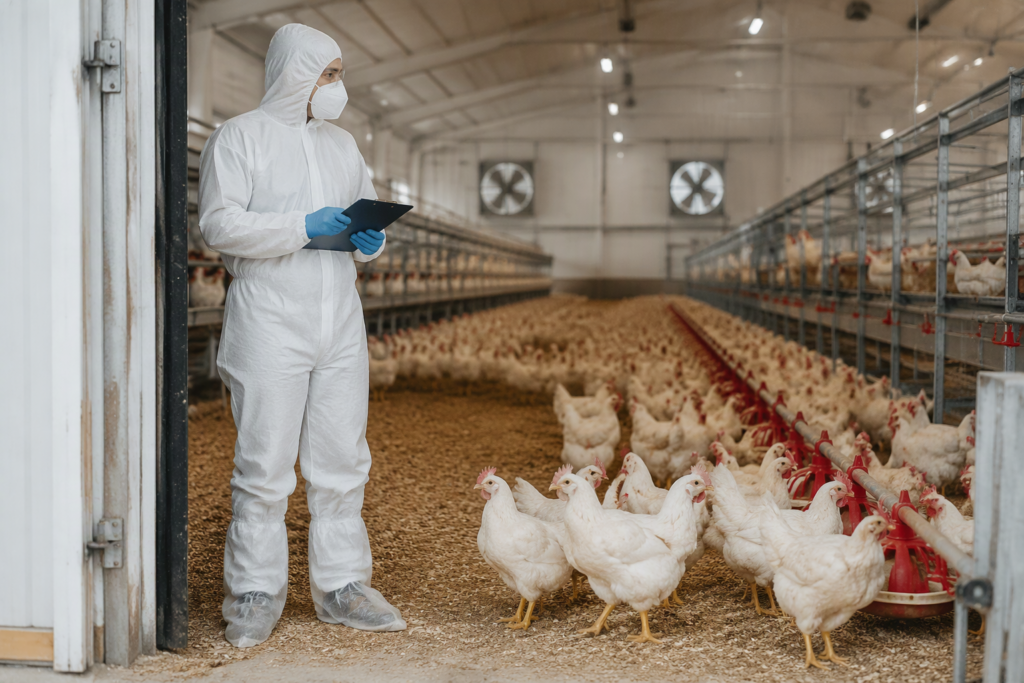
More than 1.8 million chickens are being destroyed in Florida after a fresh bird flu outbreak hit the country’s top commercial egg producer.
The emergency cull at Cal-Maine Foods wipes out roughly 2.7 percent of the company’s entire national flock. It offers a sudden reminder of how quickly agricultural infections can ripple through American grocery supplies.
Also read: Jensen Huang Investigation: Nvidia Hires Top US Law Firm
Inside the Florida facility shutdown
Cal-Maine confirmed Wednesday that tests detected avian influenza at one of its major farming complexes in Florida.
The depopulation order claims 1.4 million active egg-laying hens. Crews are also destroying 360,000 young pullets that were being raised to replenish older stock.
Egg processing at the Florida location is completely suspended while teams clean and sanitize the barns. To keep store shelves stocked, Cal-Maine Foods announced it will shift orders to its other processing and distribution facilities across the country.
How the bird flu outbreak threatens egg prices
Shoppers have good reason to watch supermarket coolers closely in the coming weeks.
A brutal surge between mid-October 2024 and early March 2025 wiped out 50.7 million laying hens across the nation. That shortage forced retail egg prices to a record peak of $6.23 per dozen.
Market conditions have steadily stabilized since then, bringing the average price down to $2.32 per dozen, according to the Bureau of Labor Statistics. But the broader poultry industry remains under heavy pressure, with 21.5 million commercial birds already affected nationwide this year.
What CDC bird flu records show on human safety
Public health authorities maintain that the general risk to grocery shoppers remains minimal.
The Centers for Disease Control and Prevention notes that avian influenza rarely spreads to people and shows zero proof of passing from human to human. The CDC bird flu tally stands at 74 total human cases since February 2024, almost entirely among farm hands working directly with sick flocks or infected livestock.
Why Wall Street shrugged off the loss
You might expect a massive loss of livestock to trigger panic on Wall Street, but trading went the other way.
Shares of Cal-Maine Foods gained 5.3 percent in early trading following the public announcement. Investors understand that when a bird flu outbreak tightens national egg supplies, higher wholesale prices often protect the remaining producers’ bottom line.
State and federal veterinary inspectors are now monitoring surrounding counties to see if quarantine perimeters can stop the Florida virus from spreading into neighboring facilities.
Source: Al Jazeera