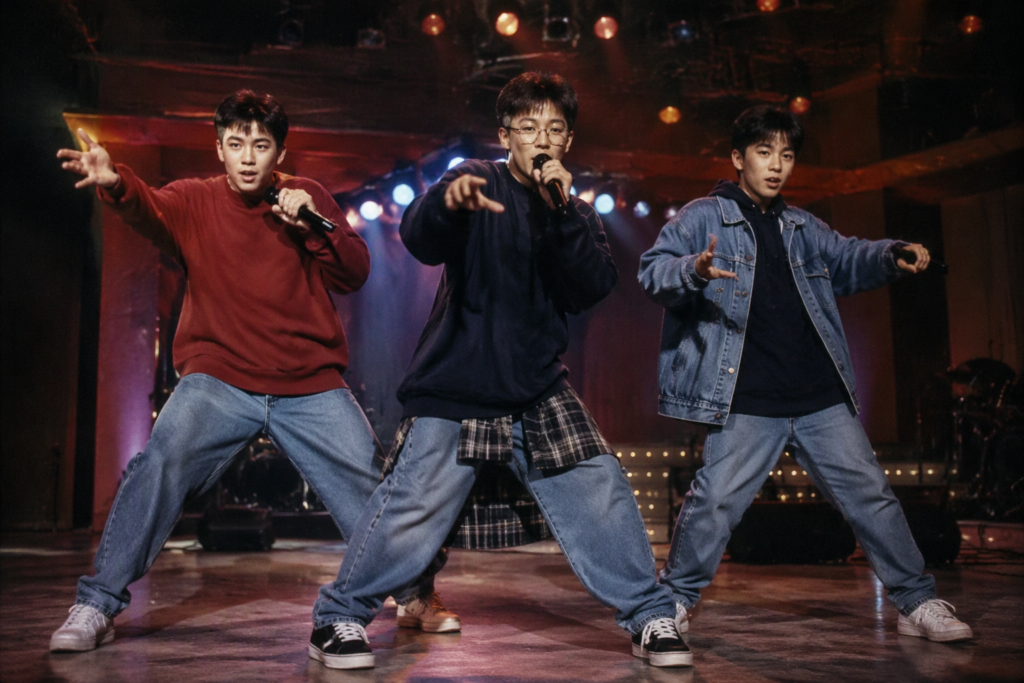
When three young musicians stepped onto a South Korean television stage in 1992, nobody in the studio expected a three-minute song to ignite the birth of K-pop. South Korean television had long favoured polished ballads and traditional trot music, so the sudden explosion of American-style hip-hop, rock guitars and aggressive breakdancing left the judges visibly stunned.
That group was Seo Taiji and Boys. Their televised appearance on an MBC talent contest quickly shattered the rigid boundaries of Korean pop music and set off a cultural revolution that still echoes across global stadium tours today.
Also read: Chris Harrison Dating Show ‘The Vow’ Premieres on Fox Nation
The TV talent show that broke every rule
Before that fateful broadcast, mainstream music executives controlled what young Koreans heard. Seo Taiji and Boys bypassed those gatekeepers by walking into a standard TV talent show and refusing to follow the standard script. Instead of harmonising over soft acoustic melodies, they combined frantic rap verses, distorted electric riffs and synchronized street choreography.
The music was loud, but their message hit even harder. The trio wrote bold social lyrics that openly tackled the crushing pressures placed on teenagers, directly addressing teen angst and strict academic expectations.
How young fans fueled the birth of K-pop
While the older panel of industry judges gave the group poor marks on air, youth across South Korea reacted with immediate mania. Legendary Korean singer Jeon Young Rok witnessed that historic debut firsthand and watched the shock wave spread across the entire country.
In an interview with the BBC’s Julie Yoonnyung Lee, Jeon Young Rok described the intense shock and excitement that gripped young listeners as soon as the broadcast ended. Teenagers rushed out to buy cassette tapes, copied the group’s oversized streetwear and memorised their dance moves. Almost overnight, Korean pop music stopped catering to conservative television producers and started answering to youth culture.
The shock waves still hitting global charts
Have you ever wondered why today’s idol groups sound just as comfortable rapping as they do singing three-part harmonies? That hybrid sound started right here with Seo Taiji and Boys.
By welding Western urban beats with native Korean storytelling, the trio created the original blueprint for modern entertainment agencies. Their commercial triumph proved that youth culture could drive the domestic market, leading to milestone appearances at events like the 8th Golden Disk Awards and paving the way for multi-talented idol training systems.
The band eventually split in 1996, but their legacy only deepens as modern Korean acts continue to sell out arenas in London, New York and Tokyo. Anyone tracing modern chart hits back to their roots will find that the real birth of K-pop happened on a modest Seoul television soundstage on an April evening in 1992.
Source: BBC