
Bull Rider Dies After Rodeo Accident Despite Wearing Protective Vest
The rodeo community is in mourning following a catastrophic incident in the arena where a bull rider dies after rodeo accident injuries proved fatal, despite the competitor wearing standard protective body armor. The fatal event has reignited urgent conversations surrounding participant safety and the physical limits of modern protective equipment in extreme western sports.
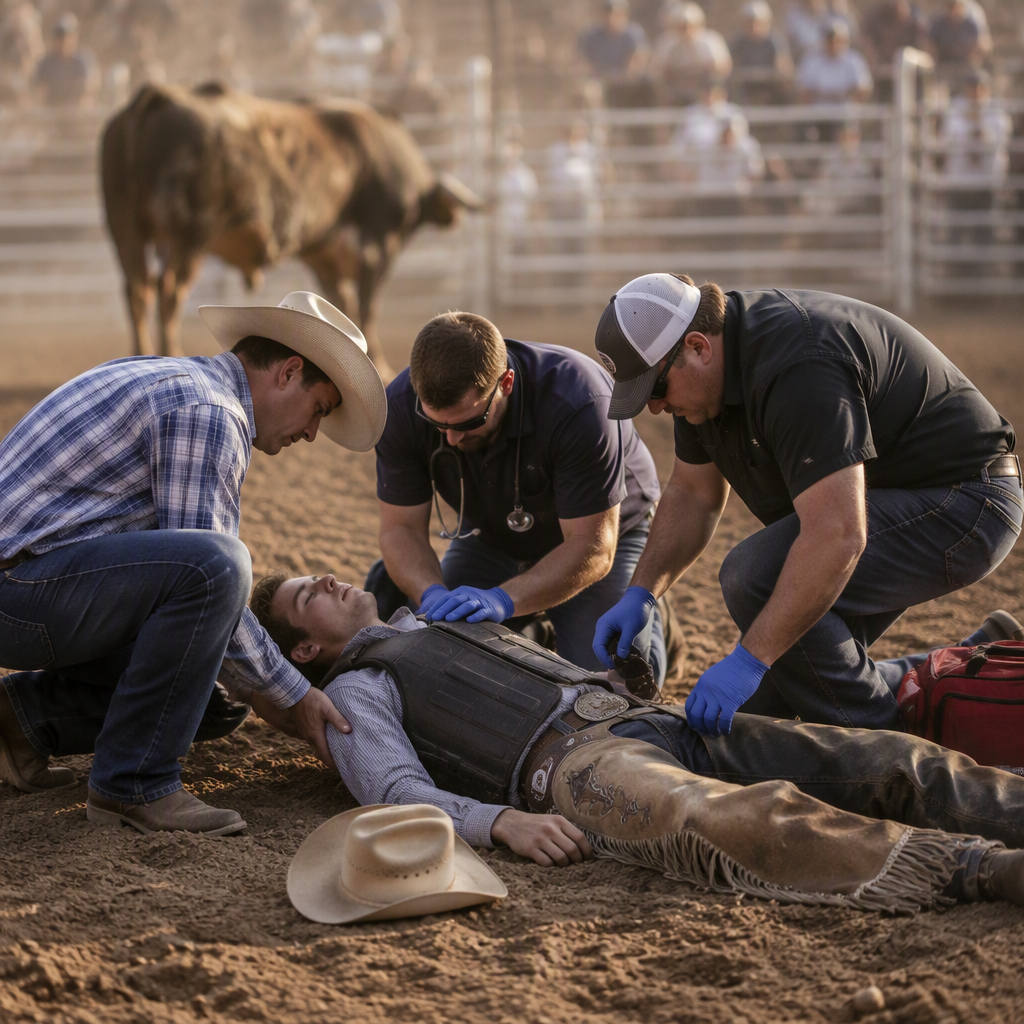
Emergency medical personnel rushed into the arena immediately following the incident, attempting life-saving measures before transporting the athlete to a nearby trauma center. Attending physicians later pronounced the competitor dead due to severe internal trauma caused by direct impact.
Also read: Tenerife Striker De Miguel Dies After Tragic On-Field Collision
Investigation Underway as Bull Rider Dies After Rodeo Accident
Officials and rodeo sanctioning representatives launched a comprehensive safety review following the incident. Witnesses reported that the competitor lost balance during the mandatory eight-second ride, bucked off toward the ground, and suffered an unavoidable impact from the animal’s hooves.
Arena bullfighters responded within seconds to distract the 1,500-pound bull and shield the fallen rider. Despite their swift intervention and the on-site presence of trauma response teams, the force of the collision caused catastrophic, irreversible injuries.
Sanctioning bodies routinely analyze video footage and arena ground conditions after severe arena incidents to evaluate response times, equipment functionality, and potential protocol adjustments.
The Protective Vest: Capabilities and Limitations
Protective vests became mandatory across major rodeo associations in the 1990s following the death of legendary cowboy Lane Frost. Made from high-density foam and ballistic material such as Kevlar, these vests serve essential defensive functions:
- Puncture resistance: Vests prevent bull horns from penetrating the rider’s chest and abdominal cavities.
- Shock dispersal: The rigid plating diffuses localized blunt force across a wider surface area.
- Abrasion shielding: Rigid layers reduce severe lacerations caused by hooves, arena rails, and rigging.
However, trauma specialists note that no vest can absorb the full kinetic energy of a direct stomp from a bucking bull weighing close to a ton. When high-velocity compression strikes the thorax or vital organs, severe internal hemorrhaging or cardiac trauma can occur regardless of protective padding.
Rodeo Safety Protocols Face Renewed Scrutiny
While injuries represent an acknowledged hazard in roughstock competition, fatal occurrences prompt intense industry review. Competitors often accept fractured bones, dislocations, and concussions as part of the trade, but catastrophic impacts highlight existing gaps in mechanical protection.
Sports safety engineers and equipment manufacturers continue to test composite materials, inflatable air-vest systems, and reinforced chest plates borrowed from equestrian eventing and motocross. Integrating bulkier gear into rodeo, however, remains difficult due to the mobility requirements demanded of riders maneuvering unpredictable bucking stock.
What Happens Next
Sanctioning officials are expected to release a formal incident debrief once medical examiners finalize their findings. The rodeo organization plans a memorial tribute during upcoming tour dates to honor the fallen athlete.
As the sport confronts another painful loss where a dedicated bull rider dies after rodeo accident trauma, industry leaders and equipment manufacturers face mounting pressure to explore enhanced impact-absorption technology to protect athletes inside the arena.