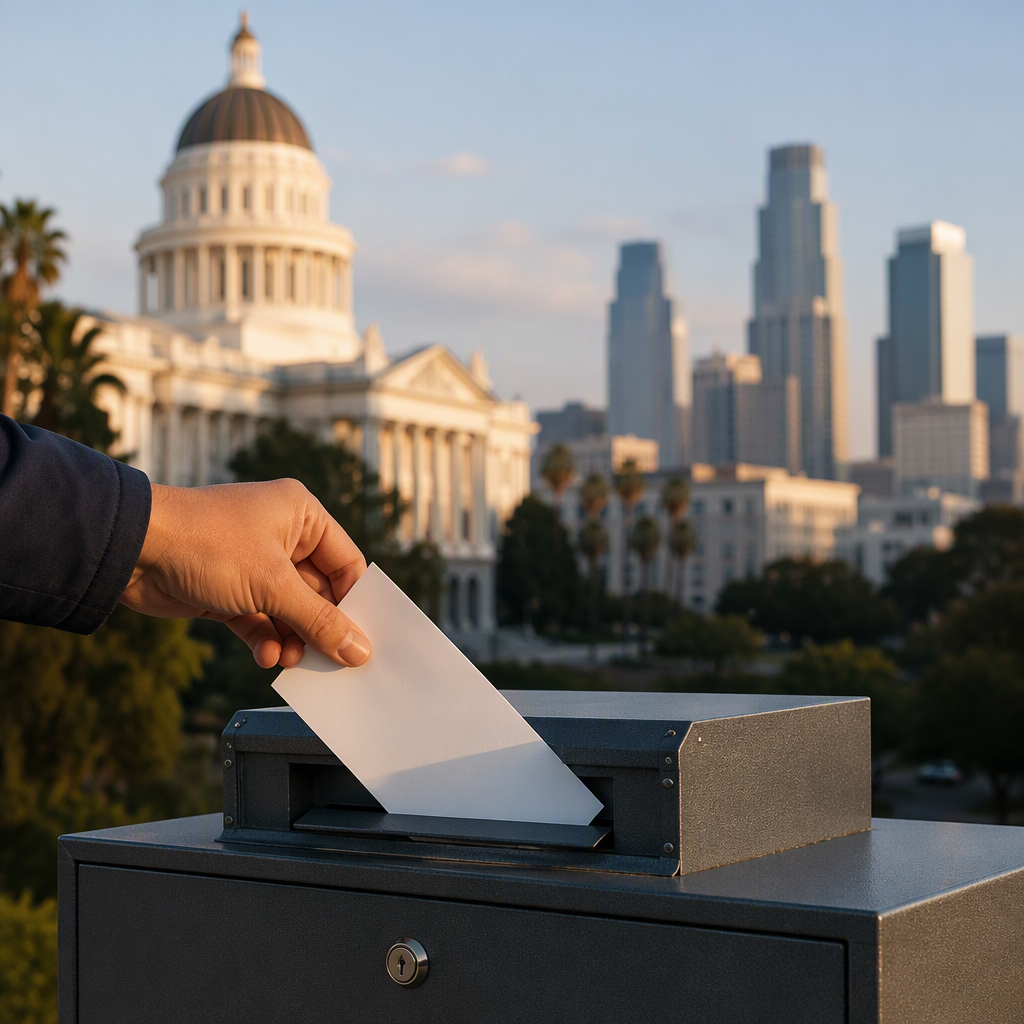

California is home to more billionaires than nearly any sovereign nation, housing tech titans, venture capitalists, and real estate moguls whose collective net worth reaches trillions of dollars. For years, progressive lawmakers, labor unions, and advocacy groups have argued that this concentration of wealth represents an untapped reservoir of public revenue. Now, renewed efforts to place a wealth tax before the electorate have reignited a high-stakes national debate: Are voters about to pass a historic California billionaire tax?
While the prospect of a direct levy on personal net worth has captured international attention, the path from activist proposal to statewide law is fraught with constitutional, political, and economic obstacles. Here is an in-depth look at where the initiative stands, how it would function, and whether California voters will actually cast ballots on the measure anytime soon.
Also read: California Candidate Swipes at One-Party Rule in California Before Election
What Does the Proposed California Billionaire Tax Entail?
Unlike traditional state income taxes, which apply only to realized income such as salaries, business profits, and liquidated investments, the proposed wealth levy targets accumulated personal balance sheets. Modeled after progressive legislative concepts previously championed by Assemblymember Alex Lee and supported by policy institutes, the proposal seeks to impose an annual net-worth tax on the state’s wealthiest residents.
Key components of the framework typically include:
- Thresholds Targeting Extreme Wealth: The tax would apply strictly to ultra-high-net-worth individuals, typically beginning at net worths above $50 million, with a higher surtax reserved exclusively for billionaires.
- Worldwide Asset Valuation: Covered assets would encompass global holdings, including stock portfolios, private equity stakes, art collections, and intellectual property, rather than merely California-based assets.
- Dedicated Revenue Streams: Proponents design the tax revenues to finance public education, healthcare expansion, climate resilience, and state infrastructure.
Advocates argue that an annual tax of 1% to 1.5% on billionaire wealth would generate tens of billions of dollars annually, offering a stable counterbalance to California’s notoriously volatile boom-and-bust revenue cycles.
Grassroots Ballots vs. Sacramento Reluctance
The legislative version of the wealth tax has stalled repeatedly in Sacramento. Despite holding a Democratic supermajority in both chambers of the state legislature, lawmakers have hesitated to advance wealth-tax bills through key fiscal committees. Furthermore, Governor Gavin Newsom has consistently voiced opposition to direct wealth levies, repeatedly warning that such measures could destabilize the state’s fiscal competitiveness.
Because of this legislative roadblock, progressive coalitions and labor leaders have looked toward the citizen initiative process. In California, proponents can bypass the governor’s veto by collecting enough registered voter signatures to place a constitutional amendment directly on the statewide ballot.
However, getting an initiative on the ballot requires massive financial resources, extensive petition drives, and strict procedural compliance. While organizers have laid the groundwork to test voter appetite, the measure has faced intense scrutiny before reaching formal qualification, meaning an immediate vote is far from guaranteed.
The Economic Debate: Public Windfall or Capital Flight?
The debate surrounding a wealth tax divides economists, policymakers, and business leaders across the state.
The Case for the Tax
Supporters point to California’s severe wealth inequality and persistent budget shortfalls. Labor coalitions emphasize that while working-class families pay a substantial share of their earnings in sales and basic living taxes, billionaires often shield their assets through borrowing against stock portfolios, avoiding realized capital gains. An annual net-worth tax, proponents maintain, restores fairness to the state tax code.
The Risk of High-Earner Exodus
Conversely, business associations, including the California Chamber of Commerce and the California Taxpayers Association, strongly oppose the concept. Critics argue that billionaires are uniquely mobile and can easily establish residency in states with no personal income or wealth taxes, such as Texas, Florida, or Nevada.
Because California’s top 1% of income earners already pays nearly half of the state’s personal income tax revenue, critics warn that even a minor departure of wealthy taxpayers could inadvertently trigger massive revenue losses for public services.
Legal and Enforcement Hurdles
Even if voters approve such an initiative, enforcement poses significant legal challenges. Valuing non-liquid assets—such as early-stage tech startups, privately held businesses, and foreign holdings—requires complex valuation mechanisms that have historically challenged European countries that previously attempted wealth taxes.
Additionally, opponents are expected to challenge the tax in federal court under the Commerce Clause and the Due Process Clause of the U.S. Constitution, arguing that individual states lack the authority to assess taxes on property and business entities situated beyond their borders.
What Happens Next?
Before voters can decide on any wealth tax initiative, organizers must meet rigorous deadlines to collect hundreds of thousands of valid voter signatures. If signature requirements and legal verifications are satisfied, the earliest realistic window for the measure to appear on a statewide general election ballot would be the upcoming statewide election cycles.
In the interim, the political battle lines are already drawn. Business coalitions are preparing multi-million-dollar opposition campaigns, while public-sector unions and progressive organizers continue building grassroots support.
Conclusion
While the debate over an unprecedented levy on the ultra-rich continues to capture headlines, California voters are not on the immediate brink of enacting the policy tomorrow. Substantial signature hurdles, fierce legal questions, and organized opposition from business groups and state leaders remain in place. Nonetheless, as economic pressures mount, the momentum behind a California billionaire tax ensures that wealth redistribution will remain at the forefront of the state’s political landscape for years to come.