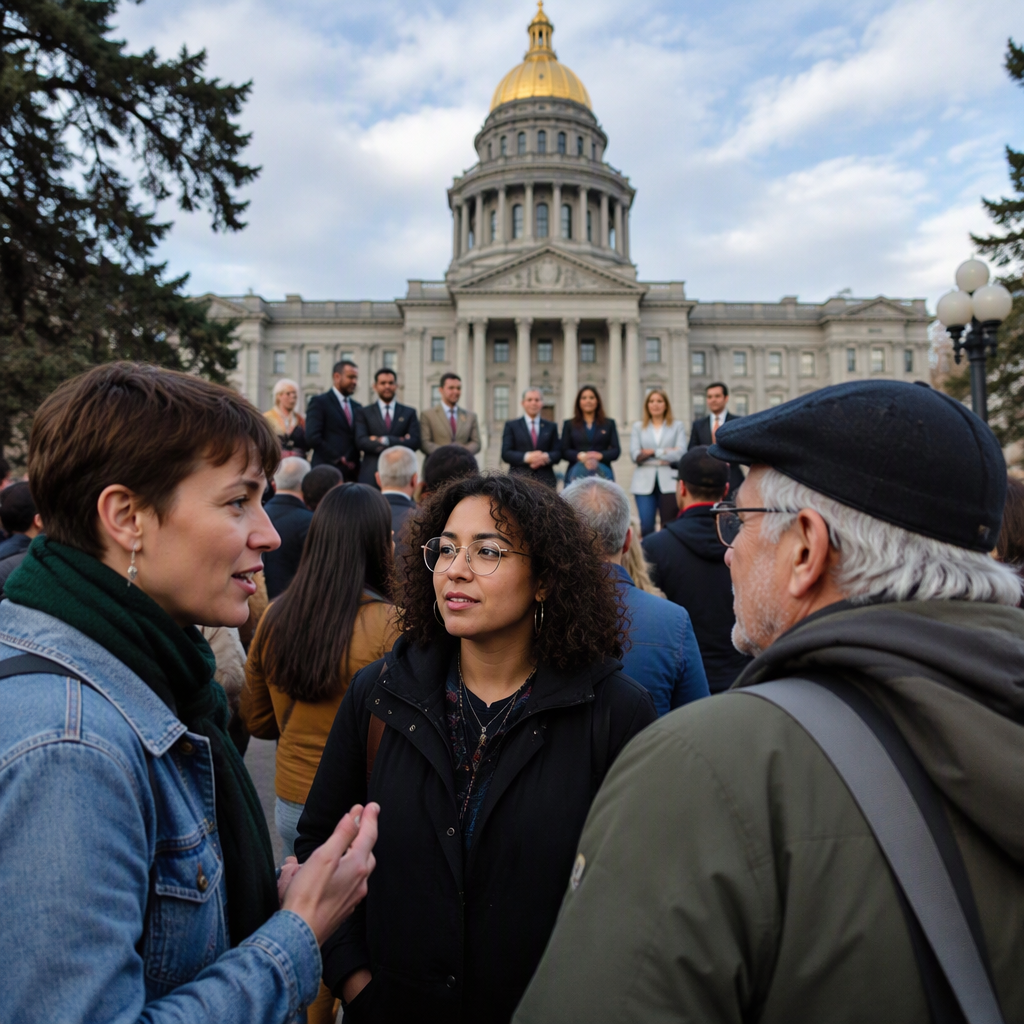

A growing political divide is reshaping Colorado politics as a visible Colorado socialist surge challenges the state’s long-dominant moderate Democratic establishment. Propelled by grassroots organizers, union activists, and chapters of the Democratic Socialists of America (DSA), left-wing candidates and lawmakers are pushing the state Capitol toward ambitious economic and social reforms, creating friction with party leadership.
For more than a decade, Colorado served as a model for moderate, business-friendly Democratic governance. Under leaders such as Governor Jared Polis and former Governor John Hickenlooper, the state party maintained power by combining socially liberal policies with fiscal restraint. However, recent primary contests, municipal races, and legislative debates signal that progressive and socialist organizers are steadily expanding their influence across the Front Range.
Also read: ‘I’ll Settle for Not Crazy’: Denver Business Leaders Brace for Socialist Shift After Big Win for DSA
Grassroots Mobilization Drives the Leftward Shift
The momentum behind Colorado’s left flank began gaining traction in municipal and legislative races in Denver, Boulder, and surrounding suburban districts. Candidates backed by the DSA and progressive working families coalitions have successfully captured seats in the Colorado General Assembly and on city councils.
These victories have introduced an unapologetically left-wing bloc to legislative debates in Denver. Rather than relying on traditional party donor networks, these lawmakers rely on small-dollar donors, organized labor support, and door-to-door ground campaigns that mobilize younger, working-class voters.
Key figures within this coalition argue that the state’s rapid economic growth has left too many residents behind, particularly amid skyrocketing housing costs, rising healthcare expenses, and stagnant wages.
Clashing Visions Within the Democratic Party
The ideological clash between the party establishment and socialist-aligned lawmakers has become increasingly visible during legislative sessions at the state Capitol. Disagreements center on several core policy areas:
- Housing and Rent Control: Progressive lawmakers have repeatedly pushed to repeal the state’s decades-old prohibition on local rent stabilization, a move supported by tenants’ unions but resisted by real estate groups and moderate Democrats.
- Labor and Workers’ Rights: Socialist and progressive legislators have championed measures expanding collective bargaining rights for public sector employees and strengthening independent contractor protections.
- Taxation and Wealth Redistribution: While centrist leaders often defend Colorado’s Taxpayer’s Bill of Rights (TABOR) framework or seek revenue-neutral reforms, the left flank advocates for progressive taxation to fund transit, public schools, and healthcare.
- Climate and Energy: Tensions persist over the pace of decarbonization, with progressives calling for stricter bans on oil and gas drilling, challenging the administration’s market-driven transition strategies.
Establishment Pushback and Moderation Arguments
Mainstream Democrats and affiliated political action committees have not yielded quietly. Party centrists warn that shifting too far to the left could alienate suburban swing voters who helped turn Colorado reliably blue in statewide and federal contests.
Governor Polis and establishment allies frequently emphasize innovation, fiscal discipline, and bipartisan compromise. Moderate groups argue that aggressive regulatory mandates risk dampening business investment and increasing the cost of living for working families.
During recent primary election cycles, well-funded independent expenditure committees backed by business interests and moderate donors have spent heavily to protect centrist incumbents from progressive and socialist primary challengers.
How the Colorado Socialist Surge Impacts Upcoming Elections
The ongoing struggle reflects broader national debates within the Democratic Party, but local conditions amplify the divide. High living costs in the Denver metro area provide fertile ground for socialist arguments framing affordability as a structural crisis requiring government intervention.
Political analysts note that the Colorado socialist surge has already shifted the legislative agenda, forcing moderate leaders to address housing protections and environmental regulations more aggressively than in past legislative sessions.
What Happens Next
As upcoming election cycles approach, primary ballots across legislative districts will test the durability of the progressive movement. Candidates aligned with socialist organizations are preparing to target additional legislative seats and county offices, while centrist organizations mount defensive operations to preserve the party’s moderate brand.
Whether this internal conflict fragments the party or creates a new governing synthesis remains an open question. For now, the Colorado socialist surge has permanently altered political dynamics under the Gold Dome, ensuring that the debate over the state’s economic future will be fought from within Democratic ranks.