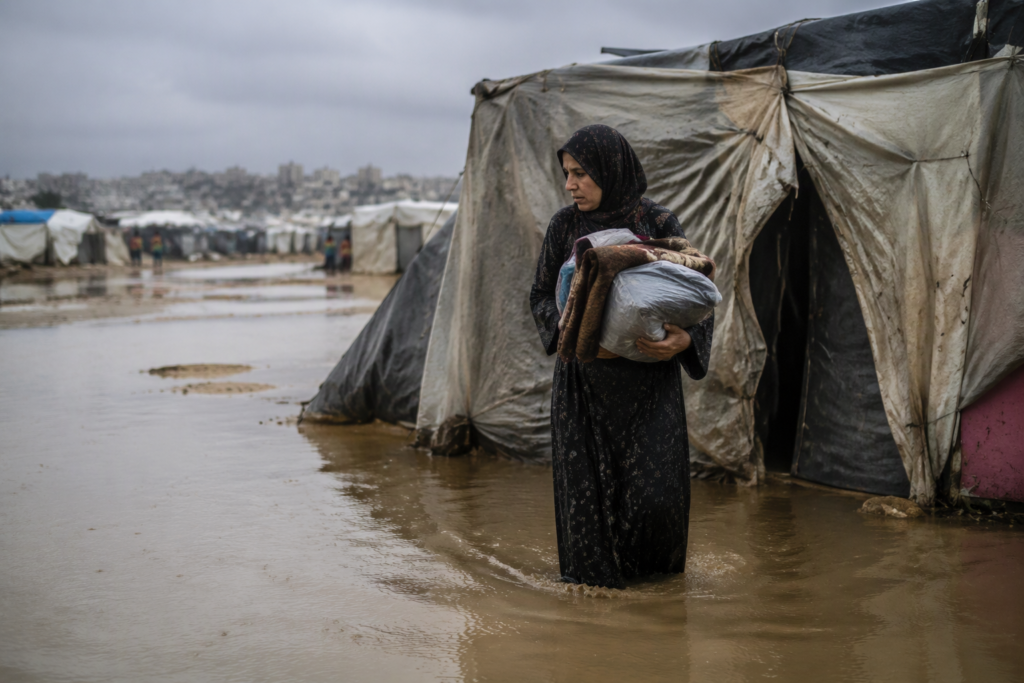

Heavy rains tore through makeshift encampments last weekend, soaking bedding, ruining food stocks and washing away the thin plastic walls shielding displaced families from the elements. The sudden Gaza floods struck an estimated 1.4 million people who currently live crammed into temporary shelters across the territory.
That number accounts for about two-thirds of the entire population in Gaza. For families sleeping on dirt floors, the immediate crisis has turned into an hourly fight against water, freezing temperatures and severe food shortages.
Also read: Israeli Strike Kills Hamas Commander Samir Abu Younis in Gaza
Tens of thousands of shelters ruined in hours
The weekend downpour submerged or ruined tens of thousands of temporary structures, leaving some residents without any roof over their heads. Water swept straight through fragile settlements built from wooden scraps, sheeting and worn cloth.
Displaced families in Gaza now face brutal Gaza winter conditions without heating fuel or dry clothes. Daily life in crowded Gaza tent camps has narrowed to finding dry patches of ground, securing warmth and searching for enough bread to keep children fed.
How parents shield their children from the Gaza floods
Local residents describing their daily routines say the emotional toll is as heavy as the physical misery. Among them is Fedaa, whose three-year-old daughter has spent her entire life growing up amidst conflict and displacement.
Inside makeshift shelters Gaza families patch together from garbage bags and scrap cloth, parents spend their evenings trying to distract young children from wet floors and shivering cold. Fedaa relies on storytelling and drawings to provide an escape.
“I try just to draw her a world, or a universe, that is different to the one in which she lives,” Fedaa tells us.
What happens as winter storms approach
The recent flooding in Gaza exposed how vulnerable these temporary settlements are to seasonal weather. Without paved roads, drainage pipes or solid building materials, standing water quickly stagnates around living spaces, increasing the risk of illness among children.
Weather forecasts point to further rain systems moving across the Mediterranean over the coming days, leaving aid workers and families racing to secure plastic tarps before the next downpour hits.
Source: BBC