
India’s Cartoonists Built an Audience Online, but Now Face Rising Digital Restrictions
For decades, political satire served as a pillar of Indian journalism, but as space in traditional newspapers contracted, India’s cartoonists turned to social media platforms to reach millions of readers directly. Today, however, that digital haven is shrinking as artists report an unprecedented wave of content restrictions, account withholdings, and shadowbans across major platforms.
Independent political illustrators across the country warn that increasing regulatory pressure, copyright reporting misuse, and strict content-takedown notices are restricting their ability to critique public policy and current affairs.
Also read: Why India Soured on Trump Ahead of US Midterms: Trade, Visas, and Strategic Realities
From Print to Pixels: The Rise of Web Satire
The migration of political satire to digital spaces began in earnest over the past decade. Budget cutbacks, editorial caution, and shifting media ownership in traditional print journalism left fewer independent editorial cartoonist roles available in mainstream publications.
In response, illustrators turned to platforms like Instagram, X (formerly Twitter), and Facebook. Webcomics and single-panel illustrations addressing social inequality, economic issues, corruption, and political rhetoric quickly found a massive youth readership. These digital platforms provided artists with real-time feedback, direct patronage, and freedom from conventional editorial filters.
Challenges Facing India’s Cartoonists in Digital Spaces
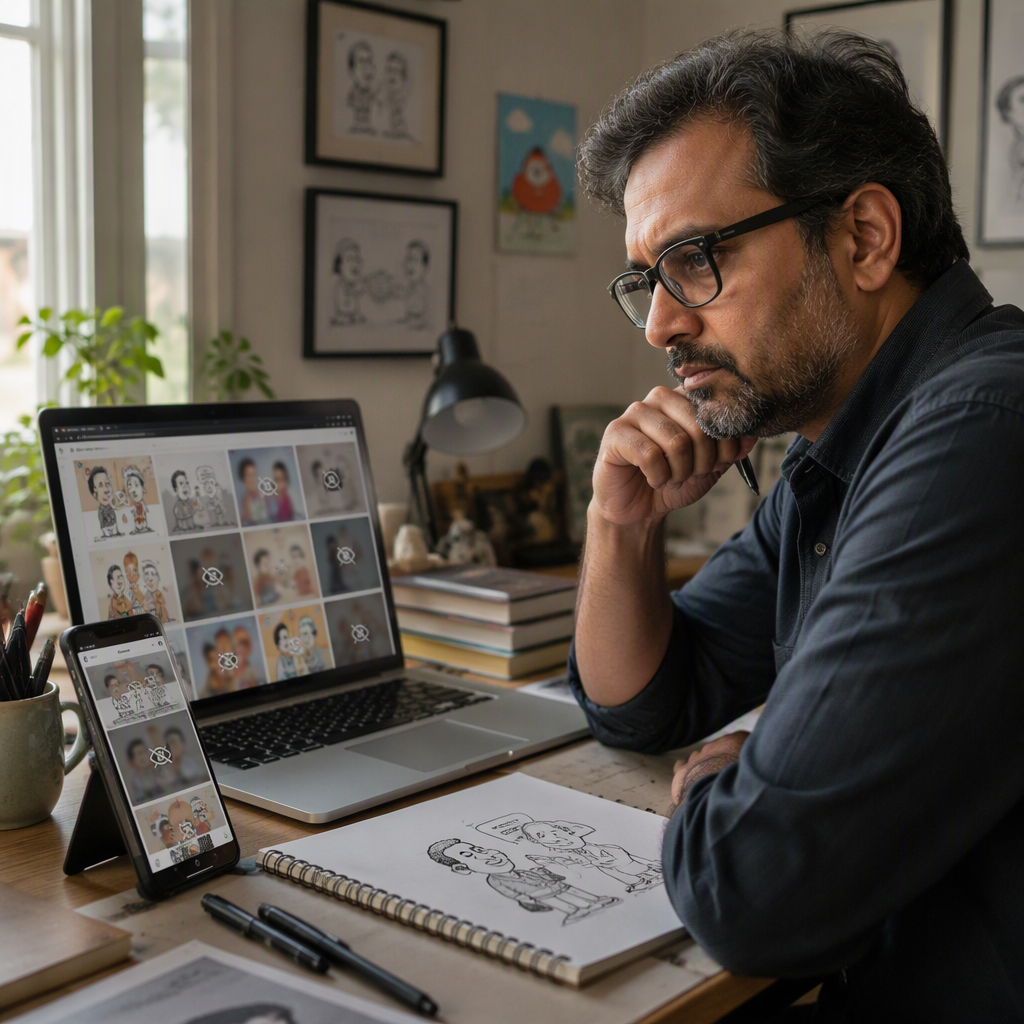
That digital autonomy now faces mounting pressure. In recent months, several prominent political satirists have reported sudden disruptions to their online reach. These interventions range from explicit legal withholding of specific posts within India to algorithmic demotions known as shadowbanning.
Artists note that posts covering sensitive national developments or political debates frequently trigger rapid community guidelines flags or localized blocks. In some cases, platform notifications cite compliance with official government requests or legal obligations under local internet regulations.
Beyond government notices, cartoonists also face coordinated reporting campaigns by partisan groups. Mass reporting can trigger automated platform moderation systems to suspend accounts or restrict visibility before any human review takes place.
Legal Compliance and the Information Technology Act
At the center of the dispute is Section 69A of India’s Information Technology (IT) Act, which empowers authorities to issue confidential directives ordering platforms to block public access to content in the interest of national sovereignty, defense, or public order.
Global tech intermediaries operating in India must comply with these legally binding orders to maintain safe-harbor immunity, which shields platforms from liability for user-generated content. As enforcement has tightened, platforms have increasingly complied with geotargeted blocking orders, preventing domestic users from viewing specific cartoons while leaving them accessible abroad.
Digital rights advocates argue that the lack of public transparency surrounding these blocking orders makes it difficult for creators to appeal decisions or understand why specific satirical works were deemed objectionable.
Impact on Free Expression and Livelihoods
The restrictions carry both expressive and economic costs. Unlike corporate media houses with dedicated legal teams, independent digital cartoonists operate largely on their own. Defending against legal notices or algorithmic suppression drains resources and discourages independent commentary.
Furthermore, many digital artists rely on social visibility to secure freelance contracts, sell prints, or solicit crowdfunding. When reach is arbitrarily throttled, independent creators face an immediate decline in reader engagement and financial sustainability.
What Happens Next?
Legal challenges concerning digital free speech and intermediary liability continue to move through Indian courts, with digital rights organizations petitioning for greater transparency in executive takedown orders.
In the meantime, some illustrators are seeking alternatives to algorithm-driven platforms. Many creators are adopting direct-to-audience models, including email newsletters, private messaging channels, and independent decentralized websites, to distribute their work without fear of sudden platform intervention.
Conclusion
The growing restrictions on digital satire highlight an evolving struggle between state regulation, platform moderation, and artistic freedom in the world’s largest democracy. While the internet once offered a vibrant alternative to shrinking print spaces, India’s cartoonists now find that maintaining an open space for political commentary online requires constant adaptation and resilience.