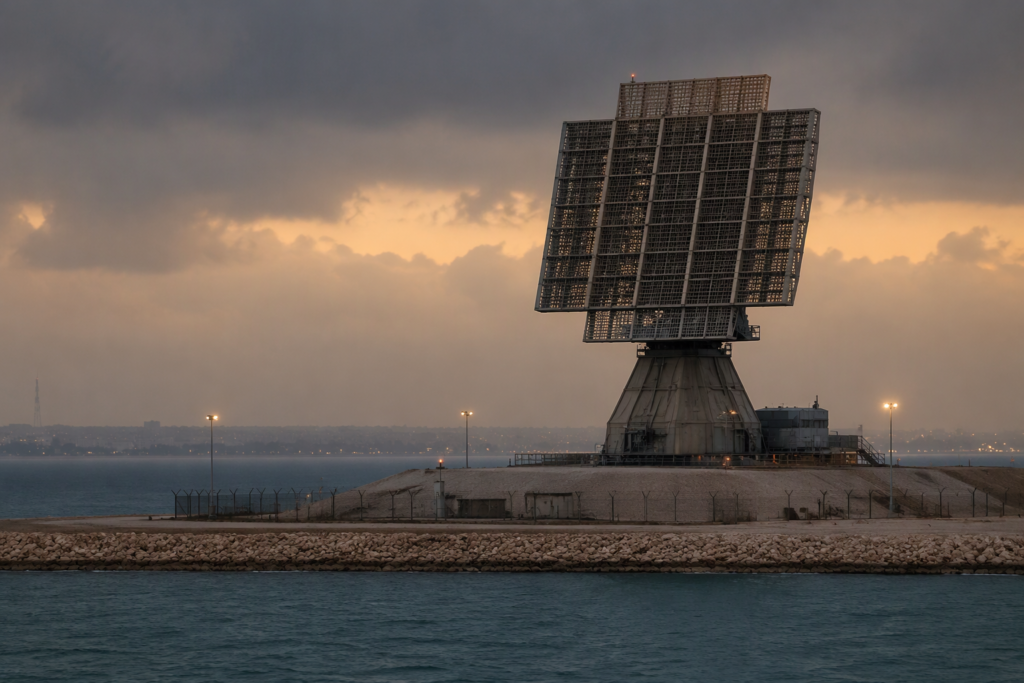

Iran’s military says it targeted an early-warning US radar in Bahrain, striking back after an air raid hit a telecommunications tower along its southern coastline. The claimed attack directly threatens American military infrastructure in the Persian Gulf as broader regional peace talks hang by a thread.
For civilian shipping and regional allies, the strike signals a dangerous escalation in waterways that handle much of the world’s crude oil. If cross-border strikes expand beyond Iranian territory into host nations across the Gulf, naval security and commercial trade face immediate disruption.
Also read: Russian Warship Hit in Gulf of Finland Drone Strike
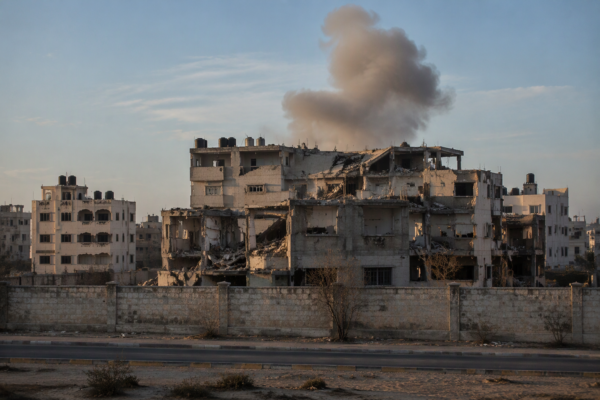
Tehran framed the strike as an answer to hostile fire inside its borders earlier in the day. State news agency IRNA reported that the port city of Sirik, located in Hormozgan province, came under enemy fire on Thursday morning.
Why Tehran targeted the US radar in Bahrain
Hours after the Sirik strike, the Islamic Revolutionary Guard Corps issued a warning through the semi-official Tasnim news agency. The IRGC called its operation against the installation a direct response to foreign aerial provocations and alleged oil smuggling in the Strait of Hormuz.
According to the IRGC-affiliated Fars news agency, the IRGC Aerospace Force targeted and destroyed the radar equipment. Bahrain hosts the headquarters of the US Navy’s Fifth Fleet, making its military installations central to American naval operations across the Middle East.
“Should these violations and acts of aggression recur, the IRGC Aerospace Force stands in full readiness to engage without limits.”
The IRGC stated that any repeated breach of Iranian airspace or territorial waters will trigger immediate military retaliation without restriction.
First Gulf base targeted since September
The strike against the US radar in Bahrain marks the first time since early September that Iran has claimed a direct hit on American military assets stationed in a Gulf country. That pause in direct targeting offered a fragile lull, but Thursday’s exchange shattered the quiet.
The incident coincides with rising pressure along other regional fronts. Israeli public broadcaster KAN reported that Israel’s security cabinet has ordered the military to step up preparations for a potential attack on Iranian targets.
Iranian officials pushed back with severe rhetoric against foreign bases. Iranian security chief Mohsen Rezaei warned that if Washington begins another military campaign, Iran will treat every base involved as a legitimate target from West Asia to Europe.
Mixed signals from the White House and State Department
In Washington, leadership remains split on whether military force or financial sanctions should guide American strategy toward Tehran. President Donald Trump has stated he is prepared to return to war if diplomatic talks mediated by Qatar collapse without an agreement.
Secretary of State Marco Rubio offered a contrasting assessment. Rubio stated that ongoing economic pressure on Iran is achieving its goals, arguing that resuming large-scale military action is unnecessary.
The current conflict began on February 28, when joint US and Israeli strikes hit targets inside Iran. While diplomats have sought a lasting ceasefire, both sides continue to exchange threats across key maritime corridors.
Strait of Hormuz and the naval blockade
Control of regional waters remains the central flashpoint between Tehran and Washington. Mohammad Bagher Ghalibaf, Iran’s parliament speaker and chief negotiator, said the strategic Strait of Hormuz will never return to its pre-war status.
Ghalibaf stated that the ball is now in the American court regarding future diplomatic progress. Meanwhile, US Central Command confirmed its naval forces continue to strictly enforce an ongoing blockade on Iranian ports.
Diplomatic talks mediated by Qatar will determine whether both sides de-escalate or slide into wider conflict in the coming days.
Source: Al Jazeera