
Iran’s Oil Lifeline Is Drying Up: Why Ordinary Citizens Face the Biggest Pain
For decades, petroleum revenues have served as the financial backbone of the Islamic Republic of Iran, underwriting state budgets, public subsidies, and currency stabilization efforts. However, recent developments indicate that Iran’s oil lifeline is shrinking under the combined weight of tighter sanctions enforcement, logistical headwinds, and shifting international dynamics. While policymakers in Tehran search for fiscal alternatives, economic analysts warn that the heaviest costs of this contraction will not be absorbed by political elites, but by ordinary Iranian citizens.
How Iran’s Oil Lifeline Is Under Pressure
Iran has long relied on illicit shipping networks, ship-to-ship transfers, and steep price discounts to sell crude oil—primarily to independent refineries in China. Yet, that workaround strategy is facing unprecedented pressure.
Also read: Why Falling Oil Prices Won’t Lower Airfare Prices Anytime Soon
Western authorities, led by the United States, have intensified surveillance on the so-called “ghost fleet” of aging tankers transporting sanctioned crude. At the same time, regional tensions and increased compliance scrutiny among international maritime insurers and port authorities have complicated transport routes.
Furthermore, competition in the discounted oil market has expanded. Russian crude, discounted heavily since the outbreak of the war in Ukraine, continues to compete directly with Iranian barrels in Asian markets. As buyers demand wider discounts to take on sanctions risk, Tehran’s actual net revenue per barrel has steadily declined even during periods of elevated global oil prices.
The Domestic Fallout: Currency Depreciation and Soaring Inflation
When crude oil revenues drop, the Iranian government loses its primary source of foreign exchange. The Central Bank of Iran relies on hard currency reserves to intervene in currency markets and defend the Iranian rial. Without a steady influx of petrodollars, the rial has experienced sharp downward spirals on the open market.
The depreciation of the national currency translates almost immediately into severe inflation across the domestic economy. Iran imports substantial quantities of raw materials, industrial machinery, medicines, and essential foodstuffs. As import costs climb, consumer prices follow suit.
Official and independent data show inflation hovering near historic highs, with annualized rates exceeding 40 percent in recent years and food inflation frequently running even higher. For average households, the arithmetic is unforgiving: wages remain largely stagnant while basic necessities become steadily more expensive.
Ordinary Citizens Caught in the Middle
The erosion of state revenues reverberates through every tier of daily life in Iran, impacting household budgets and social stability across several key fronts.
Erosion of Purchasing Power
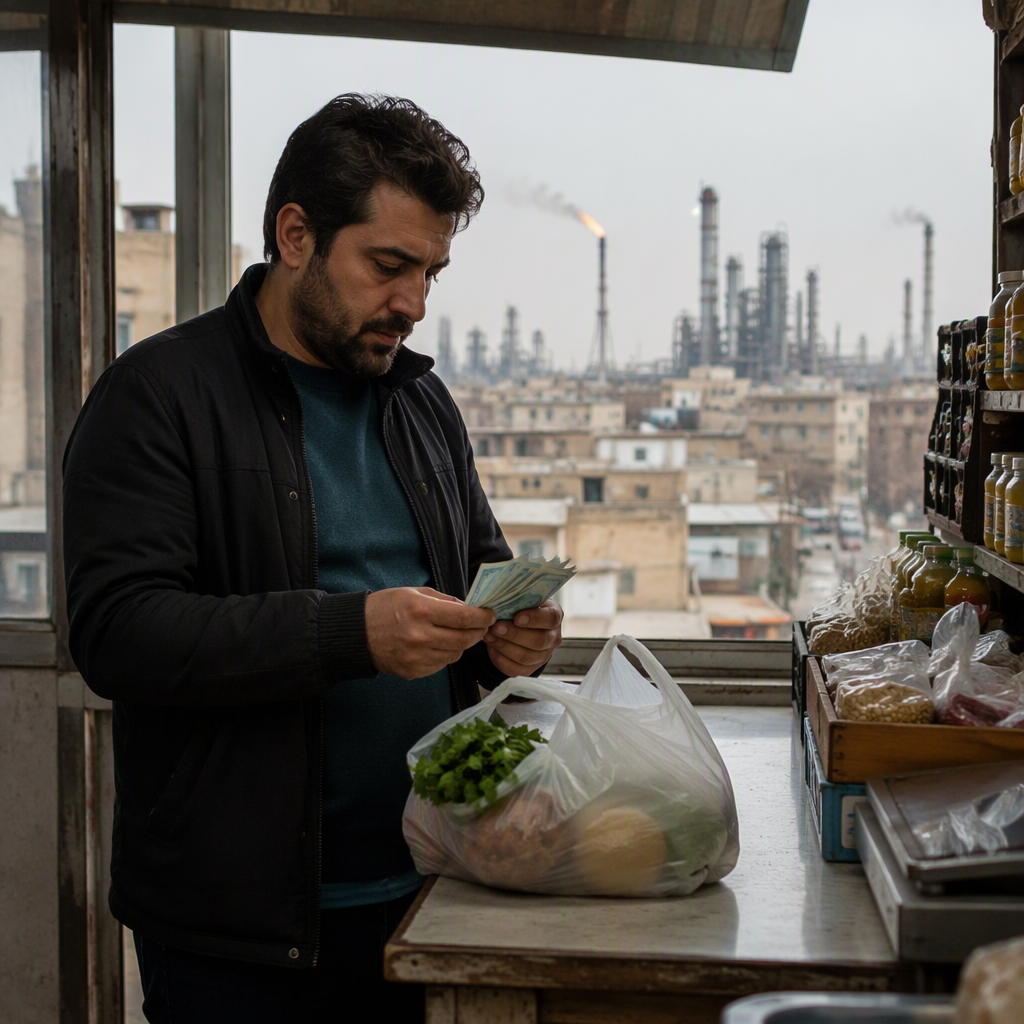
Working-class and middle-class families have seen their savings effectively wiped out by rapid currency depreciation. Basic staples such as meat, dairy, and fresh produce have transitioned from routine grocery purchases into luxury items for millions. Many households report cutting back on protein intake and healthcare expenditures just to keep pace with housing and utility bills.
Subsidies and Public Services at Risk
To curb widening budget deficits, Tehran has repeatedly debated scaling back costly state subsidies on energy, fuel, and bread. In previous years, government attempts to reduce gasoline subsidies triggered nationwide public demonstrations. Now, with petroleum revenue contracting, the state faces an acute dilemma: maintain expensive subsidies and risk hyperinflation, or roll them back and trigger widespread public unrest.
Geopolitical Crossroads and What Happens Next
The tightening vise around Iranian oil exports leaves the country’s leadership with limited economic room to maneuver. Internal discussions have focused on increasing domestic tax collection, privatizing state assets, and expanding non-oil exports to neighboring countries. Yet, none of these alternatives can rapidly replace billions of dollars in lost crude income.
Looking ahead, several key developments will determine how severe the crisis becomes:
- Sanctions Enforcement: A further clampdown by Western regulators on foreign intermediaries and shipping networks could restrict export volumes even further.
- Beijing’s Trade Appetite: China’s independent refiners remain Iran’s main buyers. Any shift in Beijing’s diplomatic balance or domestic refinery margins will immediately affect Tehran’s cash flow.
- Domestic Social Stability: As purchasing power continues to collapse, the risk of labor strikes and public protests over economic grievances remains elevated.
Ultimately, while international sanctions and geopolitical strategies target government behavior, the structural drying up of Iran’s oil lifeline lands squarely on everyday families who are left navigating soaring prices, diminished savings, and an increasingly uncertain economic future.