
Mysterious Freezer Failures at US Military Bases Spark Federal Investigation
Federal authorities have initiated an inquiry after a series of unexplained cold storage malfunctions affected multiple domestic defense installations. The recurring freezer failures at US military bases have compromised sensitive biological specimens, pharmaceutical inventories, and critical food reserves, raising alarms across the defense logistics network.
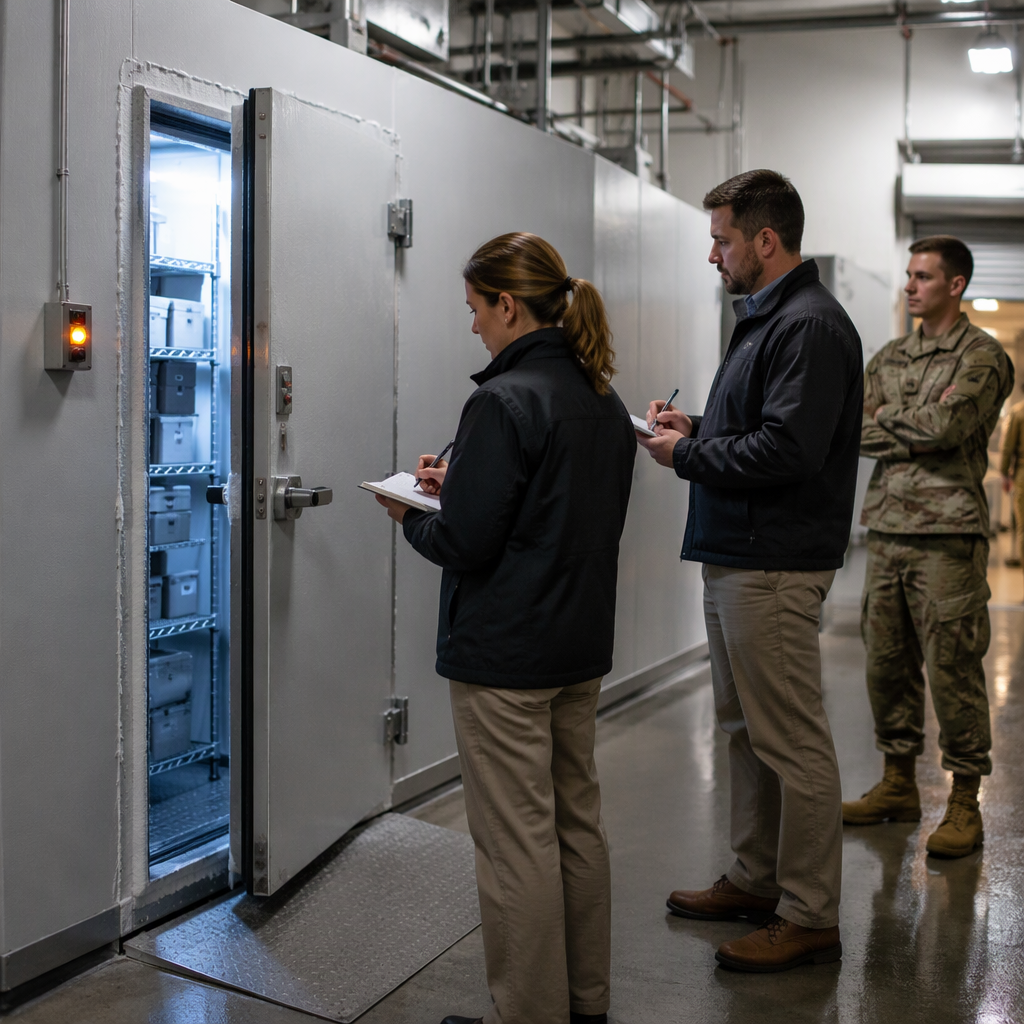
According to defense officials familiar with the matter, the disruptions began occurring across several service branches over recent months. Automated monitoring systems detected sudden temperature spikes in heavy-duty commercial refrigeration units, rendering temperature-sensitive stockpiles unusable before maintenance crews could intervene.
Also read: Pennsylvania Cop Killer Suspect Eric Lewis Faces New Federal Charges
Scope of the Freezer Failures at US Military Bases
The anomalies were detected at logistics depots, military treatment facilities, and commissary warehouses. While individual mechanical breakdowns are not uncommon in large-scale infrastructure, the geographic dispersion and simultaneous nature of these incidents prompted leadership to escalate the issue to federal oversight agencies.
Investigators are examining whether the failures stem from faulty components, shared software vulnerabilities in automated cooling management systems, power grid fluctuations, or supply chain defects. Specialized forensic teams have begun inspecting hardware at several impacted facilities to rule out tampering or external interference.
Defense logistics officials confirmed that emergency protocols were deployed to relocate remaining temperature-controlled assets to alternative storage sites. Despite those efforts, preliminary assessments indicate substantial financial losses stemming from ruined vaccines, laboratory reagents, and perishable provisions.
Investigating Potential Systemic Causes
Federal investigators are focusing on three primary lines of inquiry:
- Hardware and Manufacturing Defects: Technicians are reviewing recent procurement batches to verify if common compressor parts or coolant regulators share batch defects.
- Industrial Control Software: Cybersecurity analysts are auditing environmental control systems to determine whether recent firmware updates or network vulnerabilities caused remote sensor calibration errors.
- Base Power Stability: Utility specialists are evaluating localized power surges and backup generator synchronization at affected installations.
Pentagon oversight offices emphasize that safeguarding cold-chain integrity is vital to troop readiness and health services. Any vulnerability in pharmaceutical distribution or biological research storage poses direct operational challenges for deployed units and military families relying on base clinics.
Logistical Safeguards and Immediate Precautions
In response to the recurring incidents, base commanders have instituted manual temperature logging alongside existing digital telemetry. Military medical centers have also been directed to test secondary power feeds and verify backup dry-ice storage capacities.
Facility managers are coordinating directly with commercial manufacturers to replace high-risk control units while the federal probe proceeds. Procurement officials are reviewing vendor contracts to assess warranty liabilities and vendor compliance standards across federal storage facilities.
What Happens Next
Congressional defense committees have requested an initial briefing on the findings once preliminary forensic audits conclude. Federal investigators expect to release an interim report within the coming weeks, outlining root causes and recommending binding maintenance directives for military installations worldwide.
Conclusion
The ongoing probe underscores the critical role that infrastructure resilience plays in national defense operations. As investigators work to pinpoint what triggered the freezer failures at US military bases, military leaders remain focused on securing vital supply chains and preventing further logistical disruptions.