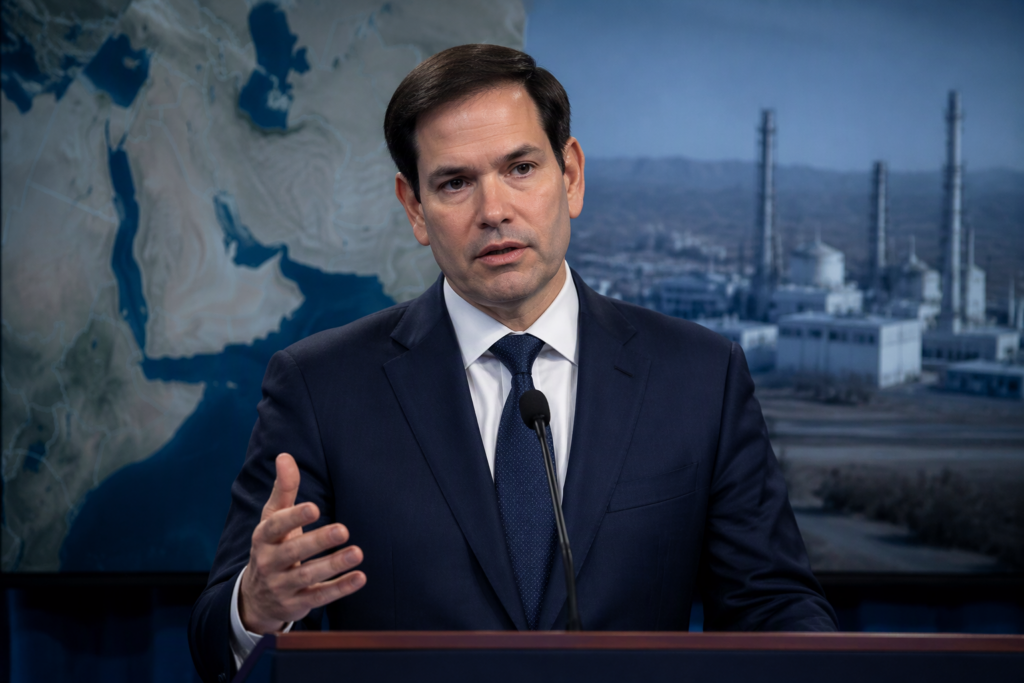

Marco Rubio stated that a potential war on Iran may be deeply unpopular with the public, yet maintained that decisive action could be necessary to prevent Tehran from developing a nuclear weapon.
Addressing the Nuclear Threat
Rubio framed the prospect of military confrontation not as a desirable path, but as an unavoidable measure if diplomatic strategies fail to halt Iranian nuclear progress. Policymakers have continued to debate how best to counter Tehran’s advancing capabilities while managing the regional risks associated with direct intervention.
Also read: Trump Says He Doesn’t Disagree With Vance That Iran War Fueled GOP Losses
According to Rubio, preventing the acquisition of nuclear weapons must remain the primary strategic objective, even when the measures required to achieve it face domestic resistance.
Public Sentiment and the Possibility of War on Iran
Acknowledging widespread hesitation among the public regarding overseas military engagements, Rubio pointed out that national security decisions cannot always align with popular sentiment. He argued that allowing Tehran to achieve nuclear capability poses far greater long-term dangers to global stability than the political cost of preemptive measures.
The debate highlights an ongoing tension between public weariness toward prolonged conflicts and strategic imperatives centered on non-proliferation and regional deterrence.
Regional and Global Repercussions
The situation surrounding Tehran’s nuclear program continues to heighten concerns across the Middle East and among international allies. Proponents of a firm posture argue that clear deterrence is essential to maintaining stability in the region.
Conversely, skeptics warn that any military strike could trigger unpredictable escalation, endanger key shipping lanes, and lead to wider regional unrest.
Conclusion
As discussions over foreign policy priorities evolve, Rubio’s assessment underscores the complex calculations facing decision-makers. Balancing public sentiment against the severe risks associated with nuclear proliferation remains a central challenge in determining future policy toward Iran.
Source: Al Jazeera