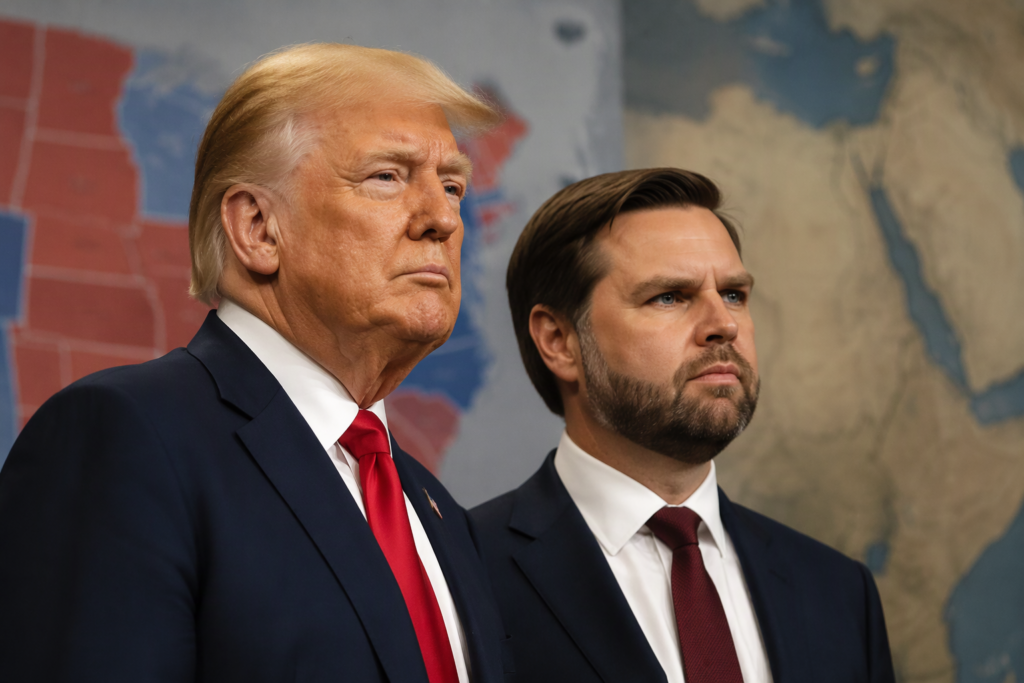

Donald Trump has publicly acknowledged that he does not disagree with Vice President JD Vance’s perspective that foreign military interventions and rhetoric surrounding an Iran war fueled GOP losses in prior election cycles. The remarks highlight an ongoing strategic realignment inside the Republican Party over American foreign policy and military engagement abroad.
Vance’s Perspective That Iran War Fueled GOP Losses
The discussion centers on JD Vance’s longstanding argument that Republican hawkishness and calls for aggressive overseas interventions, particularly in the Middle East, have alienated key voting blocs. Vance has frequently maintained that working-class communities and conservative voters prioritize domestic economic stability over costly foreign conflicts.
Also read: Florida Congresswoman Vows to Ditch Foreign-Policy PAC Cash After Near-Loss
When addressing Vance’s stance that military conflict narratives harmed Republican candidates at the ballot box, Trump signaled general agreement with the sentiment. Rather than defending traditional hawkish approaches, Trump indicated that aggressive foreign policy postures often conflict with the electorate’s desire for international restraint and diplomatic resolution.
The Foreign Policy Shift Within the Republican Party
For decades, traditional Republican leadership championed robust military presences abroad and confrontational foreign policy strategies. However, the rise of the America First movement has shifted party orthodoxy, placing greater emphasis on non-interventionism, restrained overseas military commitments, and domestic revitalization.
A Contrast With Traditional Hawkish Stances
Both Trump and Vance have repeatedly criticized protracted foreign engagements, describing decades of military commitments in the Middle East as misallocated resources. Vance has emerged as one of the most prominent advocates of this foreign policy realism within conservative politics.
By aligning with Vance’s analysis, Trump further solidifies the party’s move away from conventional neoconservative platforms that previously guided Republican administrations and congressional agendas.
Electoral Impact and Voter Priorities
National security and foreign affairs continue to carry substantial weight among independent and swing voters. Polling across multiple election cycles indicates growing public skepticism toward prolonged international entanglements, with voters closely scrutinizing candidate positions on overseas conflicts.
Political observers note that foreign intervention debates directly impact voter confidence. Candidates emphasizing conflict de-escalation and domestic growth often build broader appeal among voters weary of regional escalations abroad.
Looking Ahead
Trump’s concurrence with Vance demonstrates a coordinated perspective on foreign policy as conservative leadership shapes its future policy platform. As regional instability in the Middle East remains a focal point of global affairs, the balance between deterrence and avoiding extended military engagements will remain a defining topic for the Republican Party.
Source: Fox News