
As commercial waterways become increasingly dangerous, the seafarers caught in the US-Israeli war face a deadly and escalating crisis. Since the conflict erupted on February 28, civilian maritime crews navigating regional waters have found themselves vulnerable to crossfire, military strikes, and heightened hostilities.
IMO Confirms Rising Toll Among Commercial Crews
Data from the International Maritime Organization (IMO) shows that at least 25 seafarers have died since the start of the conflict. The documented casualties highlight the severe risks confronting commercial vessels operating in and around contested maritime transit corridors.
Also read: Iran Warns US Against Escalation with Threat to ‘Rain Down Hell’
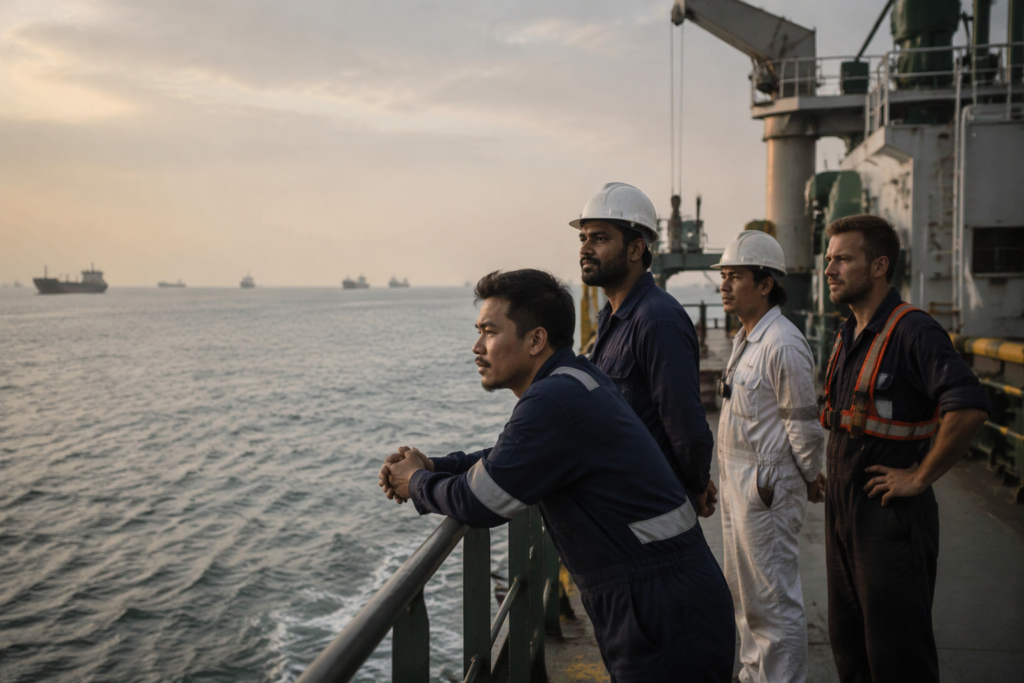
Merchant sailors from diverse international backgrounds continue to crew oil tankers, bulk carriers, and container ships in the region. Despite their neutral, civilian status, these mariners are exposed to drone strikes, missile attacks, and maritime boarding operations that have disrupted commercial routes.
Dangers for Seafarers Caught in the US-Israeli War
Merchant mariners play an essential role in keeping global supply chains moving, carrying food, energy supplies, and manufactured goods. Unlike military vessels, commercial cargo ships possess minimal defensive capabilities, leaving crews largely unprotected when hostilities break out.
The loss of at least 25 lives underscores the human toll of the confrontation. In addition to fatalities, crew members operating in these volatile waters face severe psychological stress, prolonged voyages due to rerouting, and the constant threat of sudden attack.
Calls for Enhanced Maritime Protection
The mounting casualties have prompted urgent calls across the global shipping sector to safeguard civilian seafarers and ensure adherence to international maritime law. Industry advocates emphasize that commercial crews are non-combatants and must never become targets or collateral damage in geopolitical conflicts.
International bodies continue to monitor the situation, urging all parties involved to respect freedom of navigation and protect human life at sea. Shipping companies are also reassessing voyage routes and security protocols as dangers persist.
Until regional tensions de-escalate and secure transit can be guaranteed, commercial mariners operating in these crucial waterways remain on the front lines of an increasingly hazardous conflict.
Source: Al Jazeera