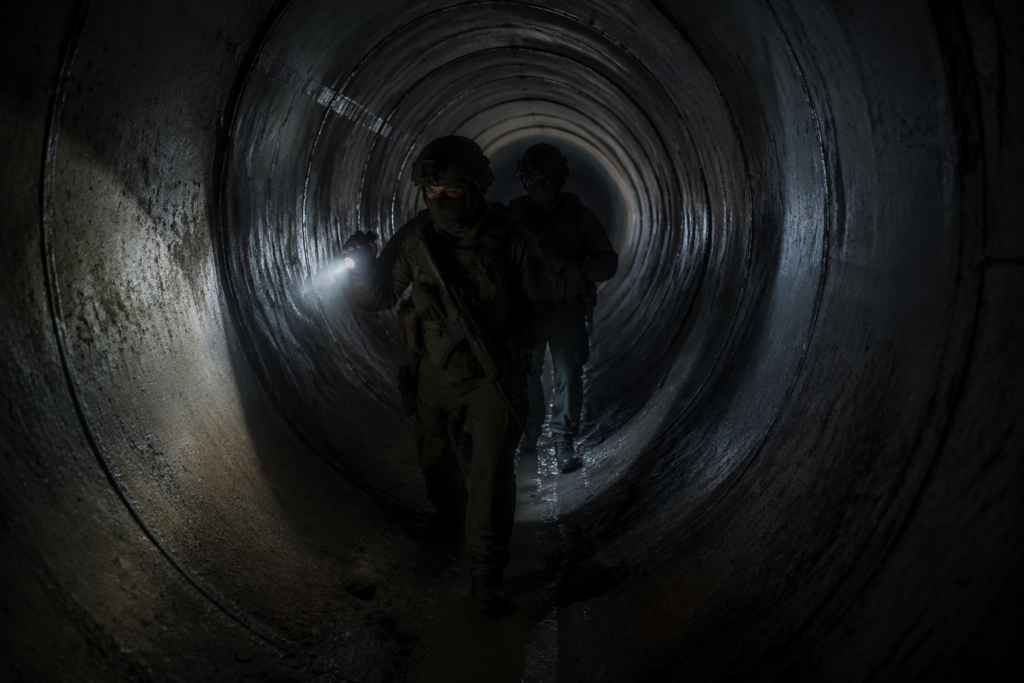
Ukrainian infantrymen near Kupyansk are spending their days crawling on their bellies through an abandoned Soviet gas pipeline just over a metre wide. For seven months, soldiers from the 13th Khartiia Operational Brigade have lived, slept and clashed with Russian forces inside this subterranean metal tube beneath the Kharkiv region.
The buried line offers a dark, suffocating sanctuary from a surface world where movement has ground to a halt. Above ground, Russian drone warfare and Ukrainian surveillance craft pack the airspace so tightly that stepping into the open invites immediate attack.
Also read: Ecuadorian Fishermen File Drone Strike Lawsuit Against Trump
Life inside a one-metre tube
Conditions inside the conduit are punishing. The diameter gives adult fighters barely enough clearance to squeeze forward on hands and knees with their rifles and tactical gear.
There is no room to stand or turn around quickly. Troops carry out patrols, sleep in cramped positions and fight close-quarters skirmishes with Russian soldiers who are contesting the very same underground network.
Why the Soviet gas pipeline matters now
The industrial relic of the Soviet gas pipeline network has created an unexpected defensive artery across the Kupyansk front line. Surface trench lines offer little cover against loitering munitions that hunt individual soldiers from above.
Going beneath the soil changes the tactical balance. The metal cylinder blocks aerial thermal optics and deflects shrapnel from surface artillery, giving infantry a hidden pathway to hold territory without exposing themselves to immediate drone strikes.
A subterranean battle driven by saturated skies
Drones now saturate the airspace over eastern Ukraine to an extent that makes conventional assaults almost impossible for either army. Any vehicle or squad moving above ground is spotted within minutes and targeted by precision strikes.
That gridlock drove the 13th Khartiia Operational Brigade into the earth. The subterranean battle mirrors historical trench warfare, but it takes place entirely inside a steel shell designed decades ago to carry civilian fuel across the continent.
- Pipe diameter: just over one metre
- Deployment length: seven consecutive months
- Primary combat hazard overhead: persistent drone surveillance
What to watch along the Kupyansk front
Neither army can easily bring heavy weapons into the pipe, leaving individual riflemen to decide control of the corridor yard by yard. You can expect both sides to continue probing the remaining sections of the Soviet gas pipeline as freezing winter temperatures test endurance inside the unheated steel tube.
Source: BBC


