
Thousands Demonstrate in Paris as Protests Spread Across Europe
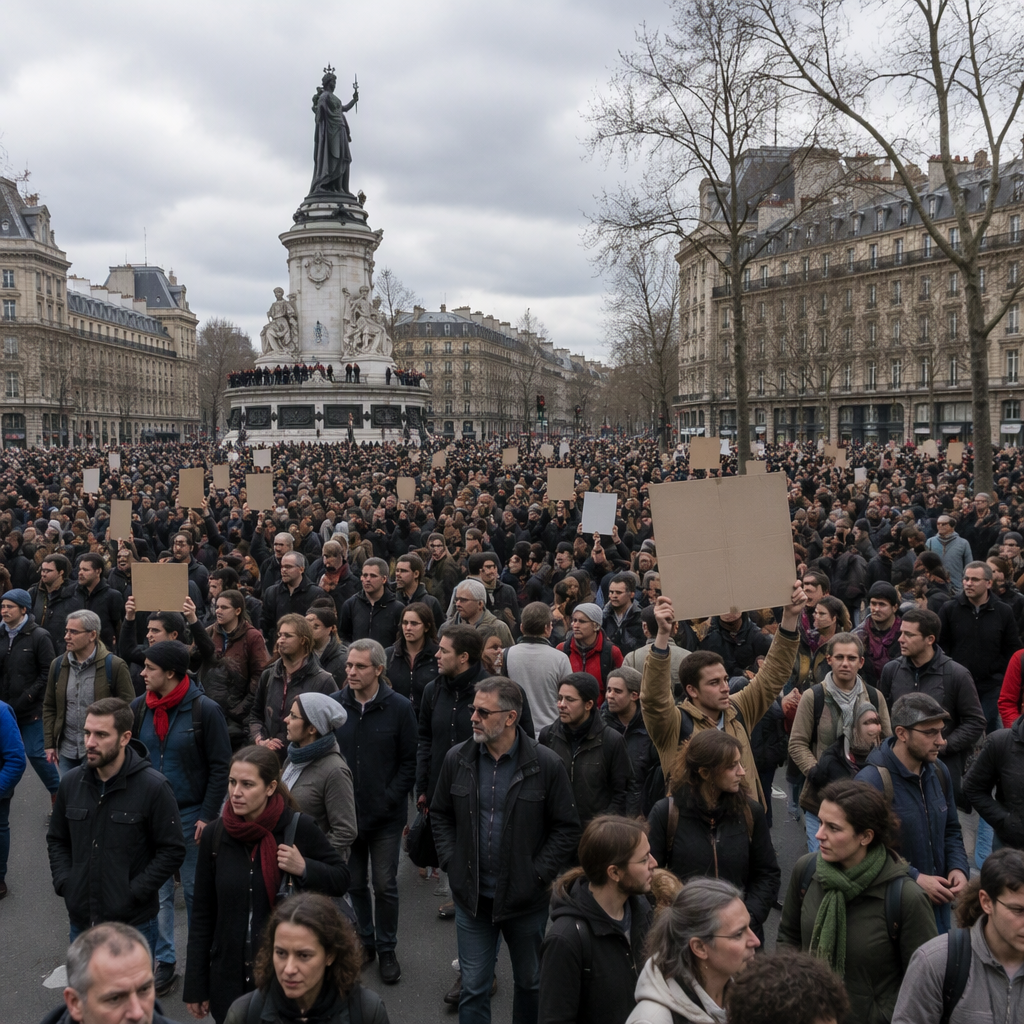
PARIS — Thousands of demonstrators marched through the streets of Paris on Saturday, joining a wave of demonstrations as protests spread across Europe over mounting economic pressures, labor disputes, and contested government policies.
Carrying union banners and chanting slogans, a diverse crowd of public sector workers, students, and civic activists assembled in central Paris. The march moved from Place de la République toward Nation, bringing parts of the French capital to a standstill amid a significant police deployment.
Also read: Thousands Protest in Prague Against Public Media Funding Reforms
Public Discontent Mounts as Protests Spread Across Europe
The Paris demonstration reflects wider societal friction visible across the European Union. Citizens throughout the bloc continue to face persistent inflation, high energy bills, and disputed legislative reforms affecting pensions and wages. As economic frustration deepens, protests spread across Europe, linking domestic grievances with broader continental anxieties over social welfare protections.
In France, organizers reported tens of thousands of participants, while interior ministry figures estimated attendance in the thousands. Union representatives argued that current government measures fail to insulate working households from sharp cost-of-living increases.
“Working families are shouldering an unfair burden,” said Marc Lambert, an organizer representing public transit workers in Paris. “People are taking to the streets because regular salaries no longer cover basic necessities.”
Rallies and Strikes Reported Across Major European Capitals
Similar gatherings took place simultaneously in other major European centers. In Brussels, trade confederations rallied outside European Union institutions, calling for robust social dialogue and safeguards against declining purchasing power.
In Germany, municipal workers and transport personnel staged coordinated walkouts in Berlin and Frankfurt, demanding inflation-adjusted compensation packages. Demonstrators in Rome and Madrid also held solidarity marches, highlighting stagnant wage growth and strains on healthcare infrastructure.
Although each national demonstration centered on specific local policies, common themes emerged: fair compensation, public service funding, and greater democratic consultation on fiscal decisions.
Authorities Respond Amid Calls for Dialogue
Law enforcement authorities across Paris maintained a heightened presence along the demonstration route. While the vast majority of participants marched peacefully, security services deployed tear gas briefly near Boulevard Voltaire after small breakaway groups clashed with police cordons.
French interior officials confirmed that several individuals were detained for carrying prohibited items, though major disruptions were largely prevented.
Government spokespersons emphasized that dialogue channels remain open with organized labor. However, administration officials reiterated that fiscal restraint is necessary to stabilize public finances and meet European deficit targets.
What Happens Next
Union leaders have warned that further actions could follow if governments refuse to make concessions on wages and welfare programs.
- Further strike dates: Transport and education unions in France are set to convene next week to evaluate potential walkouts.
- EU-level discussions: Ministers are scheduled to meet in Brussels later this month to debate fiscal rules and labor market strategies.
- Cross-border solidarity: European trade union bodies have signaled plans for coordinated action days over the coming quarter.
Conclusion
The weekend demonstrations demonstrate that public patience is wearing thin amid prolonged financial uncertainty. With thousands marching in the French capital and related protests spread across Europe, European leaders face mounting pressure to balance economic realities with the growing demands of their citizens.