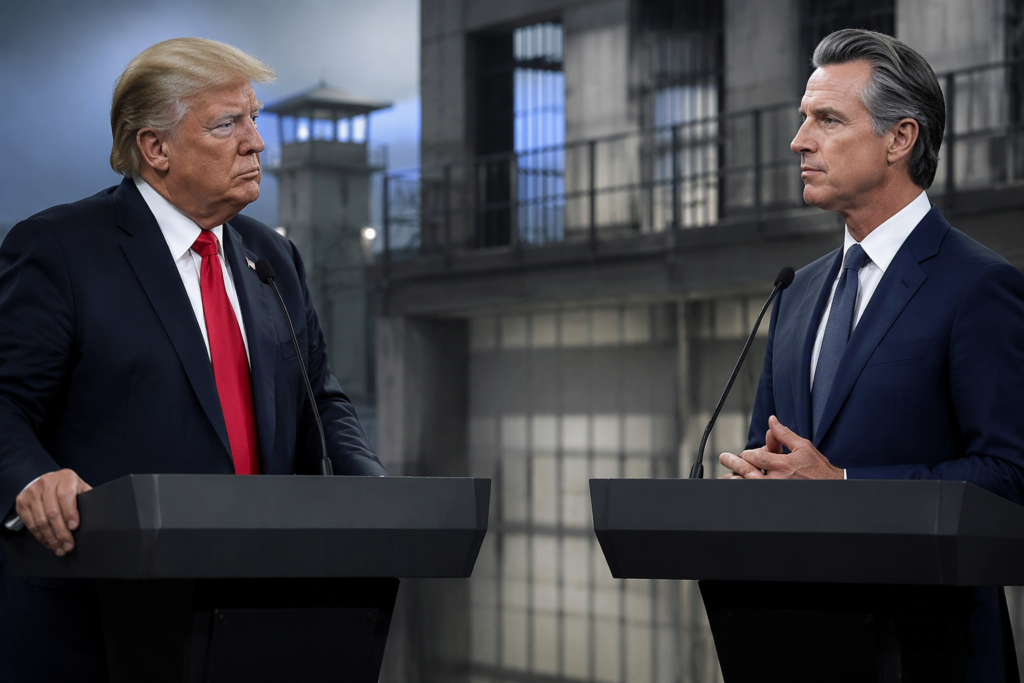
A week of silence ended with a direct challenge to the ballot box after Democrats swept both chambers of Congress. Donald Trump looked at the vote tallies, saw numbers far higher than forecasters expected, and publicly blamed midterm polling errors for creating a false political picture.
The shift leaves the White House facing an opposition-controlled House and Senate for the remainder of Trump’s term. With key committee gavels and subpoena powers moving to Democrats, the political balance in Washington changed overnight. When survey forecasts diverge from actual vote totals, public confidence in both the numbers and the vote itself quickly erodes.
Also read: Nvidia Chip Leak Sparks Feud in Trump White House
Voters turned out by the millions across the United States on 3 November. Pollsters had projected Democratic gains, but the actual margins in several contested states ran well ahead of those forecasts. Seats flipped from red to blue in regions where survey averages pointed to much tighter contests.
Why Trump questioned the vote count
Trump initially gave signs of accepting the election outcome as tallies were reported. But seven days later, he took to social media to attack the results and challenge the credibility of the pre-election forecasts.
“Does anybody really believe that this ‘election’ was honest. How could the polls be so wrong???”
His message tied the size of the polling miss directly to the legitimacy of the vote. For millions of followers, the unexpected size of the Democratic margin looked suspicious rather than statistical. Yet survey researchers point out that polling misses happen frequently without any foul play at the ballot box.
What caused the midterm polling errors
Understanding midterm polling errors requires looking at who actually shows up to cast a ballot. Surveyors do not count every citizen; they build models of likely voters based on past patterns and demographic weights.
When actual voter turnout surges beyond historical models, the sample breaks down. In this cycle, Democratic voters turned out in volumes that routine weighting could not capture. The result was not a failure of honest counting, but an undercount of an energized electorate.
Election polls also face persistent non-response bias. Certain voting blocs simply answer phone calls or fill out online questionnaires at higher rates than others. If pollsters underestimate how many suburban or young voters plan to vote, the final spread will miss the mark.
How data analysts read the final tally
Data specialists caution against equating a survey error with electoral fraud. Lenny Bronner, founder of political data company Broome Street Labs, studies voting patterns and survey modeling across competitive districts.
Bronner’s work examines why survey samples miss targeted demographics and how late-deciding voters break before election day. When late movement favors one side uniformly, state-level surveys can miss in the same direction at once.
Elaine Kamarck from the Brookings Institution provides a similar perspective on institutional voting behavior. Researchers at the Brookings Institution track how public sentiment translates into legislative turnover, noting that midterms often produce sharp swings against the White House party.
Kamarck points out that pre-election polls consistently struggle to capture sudden wave elections. When a wave forms, small discrepancies across multiple districts compound into major national shifts in the Senate and House.
What Democratic control of Congress brings next
The legislative reality now takes precedence over arguments about survey accuracy. Democratic control of both chambers gives the party total authority over committee agendas, budget votes, and executive branch oversight.
Republicans must now adjust their legislative plans to accommodate Democratic committee chairs who can block conservative bills at will. The administration faces mandatory hearings on spending priorities and policy decisions for the next two years.
Can survey companies fix these systematic gaps before the next campaign season? Polling firms are already revising their turnout models and response metrics to better measure voter enthusiasm in key states.
The next concrete test comes when the newly elected Congress convenes in January to officially organize committees and set the legislative calendar.
Source: BBC