Senior members of the American government are now sleeping behind armed checkpoints on military bases after intelligence surfaced that Tehran weighed deploying a dirty bomb or chemical weapon in the heart of Washington.
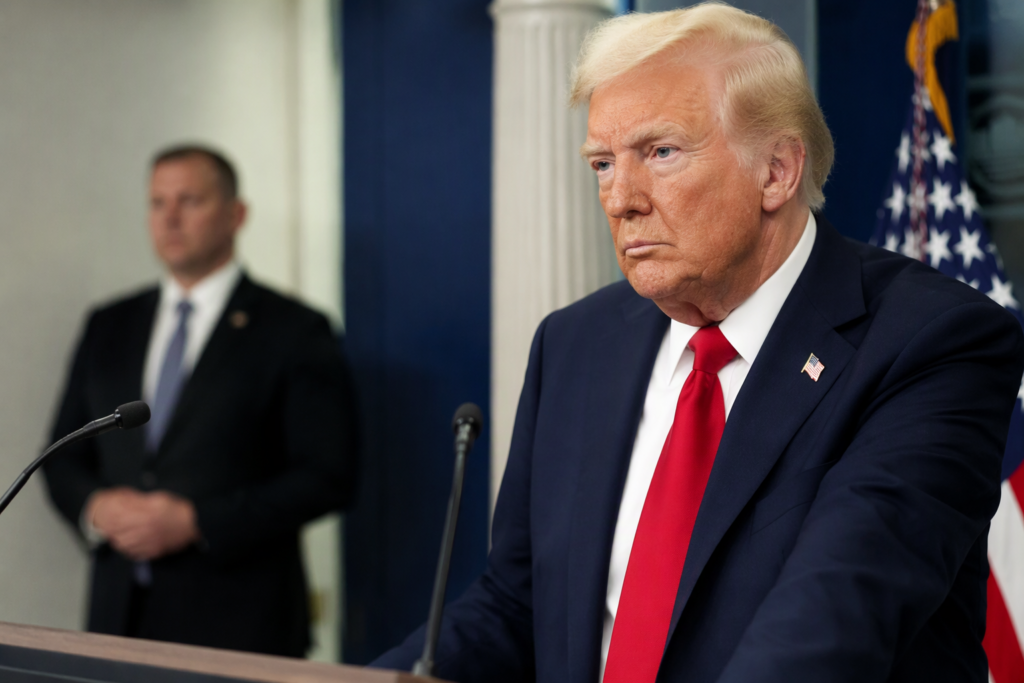
Standing on the first leg of his Asia trip in the Philippines on Monday, President Donald Trump warns Iran that any strike inside the capital would bring down military force on a scale the world has never witnessed. Asked directly if an attack on the district was imminent, Trump made clear that federal agencies are treating the reports as an urgent priority.
Also read: Prosecutor Warns Elizabeth Warren Over Probes of Trump Allies
“Well, if there is, they will pay a price the likes of which no country has ever paid before,” Trump said. “I, I hope it’s not, but it’s — we take it very seriously because they happen to be crazy. But this is why they can’t have a nuclear weapon, by the way, in case people had any questions.”
The stark warning alters the stakes for federal security agencies already scrambling to protect the cabinet. For residents and workers across the capital, it reveals just how volatile the confrontation with Tehran has become behind closed doors.
As Trump warns Iran, intelligence points to dirty bomb plans
The president delivered his remarks after U.S. officials confirmed that intelligence agencies tracked Iranian discussions about assassinating senior administration figures on American soil. According to the intelligence, Iranian operatives considered using either chemical agents or a radiological dirty bomb inside Washington.
Those operational concepts remain in their earliest stages. Assessors noted that the plans represent an effort by Tehran to preserve aggressive options rather than an active countdown to an immediate detonation.
White House spokeswoman Lauren Bis moved quickly to calm public alarm, clarifying that domestic defenses remain intact. Bis explained that while security services continue monitoring every potential lead, investigators have not verified any active, credible threat to the American homeland right now.
Cabinet secretaries retreat behind military gates
Despite those reassurances, the physical security posture across Washington has quietly transformed. Multiple cabinet officials have abandoned their private residences in recent weeks to live under military guard.
Treasury Secretary Scott Bessent was moved to military housing after intelligence showed that Iranian assassination threats against him had progressed to what one senior administration official described as more than an advanced stage. The danger directed at Bessent follows a documented pattern of Tehran-backed plots targeting senior American figures.
Other top officials have made similar moves into fortified compounds:
- Attorney General Todd Blanche left his personal residence for a military base around March.
- Secretary of State Marco Rubio and Secretary of War Pete Hegseth relocated to Fort McNair in Washington, D.C.
- White House chief of staff Stephen Miller and several aides moved to military installations and secure government facilities.
Not all of these emergency housing assignments trace back to Tehran. Officials noted that some security upgrades followed separate warnings tied to domestic political violence.
Diplomatic pressure builds across the Pacific
Trump addressed the threat while gathering with regional allies at the QUAD summit in the Philippines. He met Monday with Japanese Prime Minister Sanae Takaichi, Indian Prime Minister Narendra Modi and Australian Prime Minister Anthony Albanese to align regional security policies.
The administration sees international pressure as a primary lever to contain Iranian aggression before it spills onto foreign soil. Washington has repeatedly linked Tehran’s proxy network and overseas operations to its broader nuclear ambitions, arguing that even preliminary talk of unconventional weapons justifies sweeping deterrence.
The threat of chemical or radiological retaliation puts immediate strain on global partners who want to prevent an open conflict from expanding beyond the Middle East.
The upcoming showdown with Xi Jinping
The diplomatic focus now shifts directly to Beijing. Trump said he plans to confront Chinese President Xi Jinping later this week to demand that China intervene and help bring an end to the war involving Iran.
Beijing remains Iran’s primary economic customer and holds substantial diplomatic sway in Tehran. Whether Chinese leadership will agree to rein in its partner remains the central question hanging over their bilateral talks.
All eyes now turn to Trump’s direct meeting with Xi later this week, where the White House will test whether economic leverage can force China to help defuse Tehran’s escalating plots.
Source: Fox News