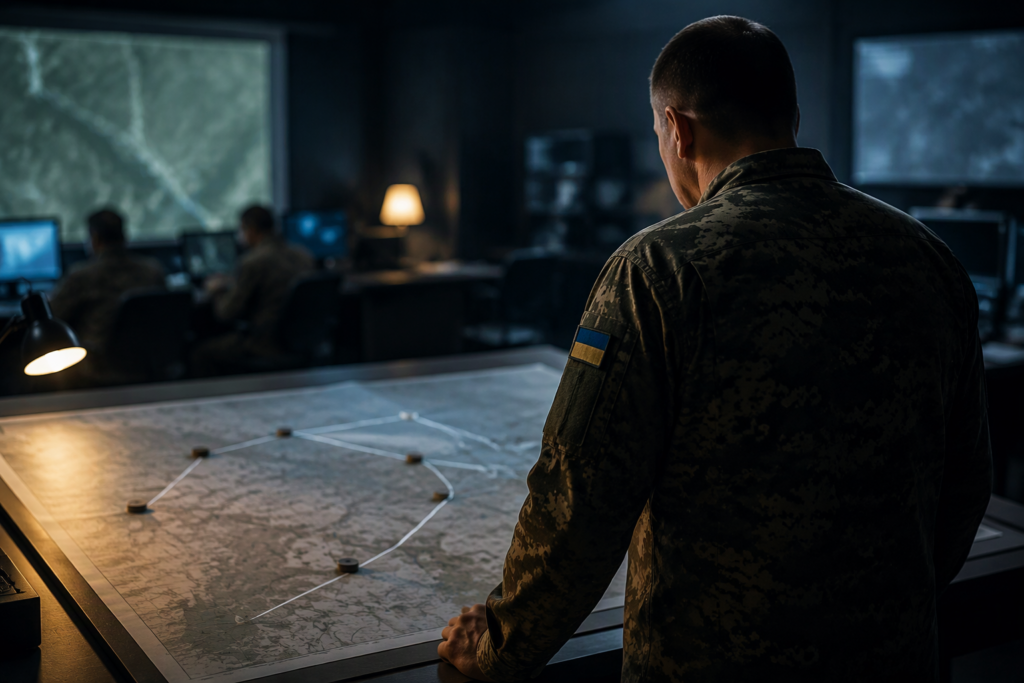

When Ukrainian and Russian officials sat across from American diplomats in Abu Dhabi this week, Kyiv held almost none of the cards. Exhausted by relentless bombardments that have crippled power grids across its cities, Ukraine joined the trilateral Ukraine peace talks under severe strain, with winter looming and few defenses left to shield its freezing population.
The meeting marked the start of what could be the closing chapter of the war. But instead of arriving on equal footing, Ukrainian delegates faced a Russian team operating from sheer dominance. Ukrainian President Volodymyr Zelenskyy had just vented his fury in Copenhagen, openly lamenting that Russian President Vladimir Putin was still alive, yet on the ground, his negotiators had to search for compromise with an uncompromising adversary.
Also read: Russia Ukraine Peace Talks Stumble Under Huge Drone Swarms
David Arakhamia, the head of Zelenskyy’s parliamentary faction and one of his chief negotiators, called the sessions among the most grueling he had attended since 2022. He revealed that the Russian delegation arrived with strict instructions from Moscow and refused to soften its tone.
What happened inside the Abu Dhabi negotiations
Russian presidential aide Vladimir Medinsky emerged from the discussions voicing public optimism, asserting that the exchange brought both sides closer to an eventual treaty. Arakhamia echoed that sentiment, acknowledging a push to find a resolution before the calendar turns. Still, Russian negotiators refused to budge on their original war aims, demanding complete military demilitarization, formal neutrality, and sweeping protections for Ukraine’s Russian-speaking citizens.
That hardline posture rattled Western capitals that had spent months predicting a Russian collapse. Only weeks earlier in September, Lithuanian President Gitanas Nauseda argued publicly that Russia had lost the war in all but name, while NATO Secretary-General Mark Rutte claimed Moscow’s military was failing. Back in July, during the NATO summit in Ankara, even US President Donald Trump appeared convinced that Kyiv held the upper hand.
Those assumptions shattered when Moscow unleashed round-the-clock air assaults against Ukrainian industrial centers and municipal electrical plants. The strikes sent a direct warning: any Ukrainian deep strikes on Russian oil refineries would trigger the systematic destruction of Ukraine’s domestic economy.
Freezing cities and a winter energy crisis
The immediate danger driving Kyiv to the bargaining table is not just diplomatic pressure from Washington. It is the raw reality of a paralyzing winter energy crisis.
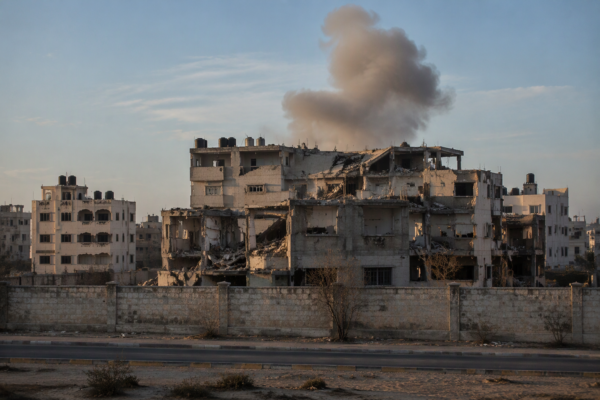
Targeted missile attacks have disabled heating and power networks across the country. Millions of Ukrainians live in densely packed apartment blocks that rely entirely on municipal central heating. Without hot water flowing through radiators, entire high-rises become uninhabitable within hours of a winter freeze. Emergency generators offer small pockets of relief, but their operating costs are staggering for a strained Ukrainian treasury and the Western partners subsidizing it.
Had Russian missiles not wrecked these vital systems, Zelenskyy likely would have delayed direct talks until at least spring. Instead, freezing temperatures gave him little room to maneuver.
Kushner, Medinsky and European security architecture
The discussions in the United Arab Emirates went far beyond ceasefire lines. For the first time in four years, Western diplomats agreed to put a new European security architecture on the table.
American envoy Jared Kushner introduced the subject, breaking a long-standing Western refusal to negotiate continental defense arrangements with Moscow. Medinsky later confirmed that post-war European security architecture became the central topic of the meeting. The debate traces directly back to Moscow’s December 2021 ultimatum, issued shortly after Washington and Kyiv signed a strategic partnership charter that helped trigger Russia’s invasion.
Yet Kushner noted that border lines proved to be the most stubborn roadblock. Moscow continues to insist that Ukrainian troops fully abandon the remaining fortified areas of the Donetsk region, including Kramatorsk and Sloviansk. While some view that demand as symbolic posturing, Russian envoys treated it as non-negotiable.
Europe scrambles for a seat at the table
The push for an agreement has deepened a divide among European governments. Hardline figures like European Union foreign policy chief Kaja Kallas and Danish Prime Minister Mette Frederiksen find themselves pushed to the margins, unable to halt the diplomatic rush.
Pragmatic leaders moved ahead on their own. Finnish President Alexander Stubb and Norwegian Prime Minister Jonas Gahr Store conducted an extensive phone call with Putin on October 27, acting with quiet approval from parts of the EU leadership. Soon after, German Chancellor Friedrich Merz hinted at speaking with Putin at the next G20 summit, while UK Defence Secretary Wes Streeting urged Western allies to open direct communication channels with Moscow.
The presence of NATO Supreme Allied Commander Europe Alexus Grynkewich at the discussions underscored how rapidly Western positions are shifting. Seeking to prevent chaotic unilateral outreach, Washington and Kyiv suggested that European nations pick one envoy for future meetings. US envoy Steve Witkoff said Putin agreed on November 12 to include European delegates, though Kremlin spokesman Dmitry Peskov countered that Moscow would review who gets picked before giving final consent.
The next test for Ukraine peace talks
With Kyiv facing blackouts and dwindling leverage, these Ukraine peace talks have revealed an unavoidable shift in momentum toward Moscow. Can Western allies agree on a single envoy before the next round of negotiations begins?
European capitals now face a fast-approaching deadline to select their representative before negotiators reconvene in the weeks ahead.
Source: Al Jazeera