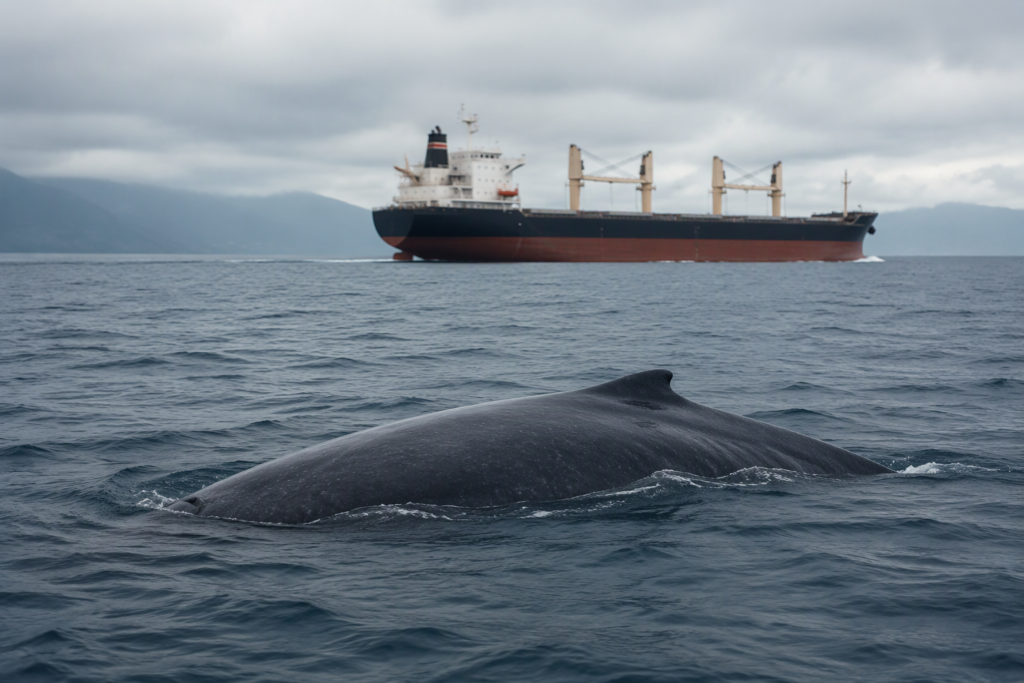
Rachel Moore spent ten quiet minutes floating eye to eye with a young humpback off the coast of Mo’orea, completely forgetting to take a photograph. When she returned the next day and captured the golden morning light striking the calf’s iris, she had no idea the same animal would be dying from blunt trauma four days later. Today, that intimate portrait has helped force ships to slow down across French Polynesia to prevent deadly whale ship strikes.
The death of the juvenile, affectionately named Sweet Girl, exposed a brutal reality hidden beneath the waves. Global shipping corridors now cut directly across traditional migration paths and nursing bays. In response, local officials turned grief into law, enacting strict vessel speed caps to shield nursery waters from commercial traffic.
Also read: Russian Missile Strikes Hit Kyiv Bridges and Rail Hubs
For mariners and conservationists alike, the new rules establish a model that shows how simple operational shifts can prevent collisions without shutting down ocean commerce.
The final hours of Sweet Girl
In October 2024, Moore encountered Sweet Girl resting in the warm shallows of Mo’orea. The jagged volcanic island offers shelter where humpback mothers arrive each year to give birth and nurse calves. During their second swim together, the curious calf rolled onto its side and emitted soft squeaking sounds, allowing Moore to frame her lens tightly on the whale’s eye.
Shortly after that peaceful meeting, weather rolled in and pushed the young humpback into the open channel toward Tahiti. Four days later, Moore received a horrifying message from shore.
A fast-moving passenger ferry had struck Sweet Girl in the transit corridor between the islands. The collision shattered her lower jaw, severed her upper jaw, and ripped open her blowhole. Bleeding heavily and struggling to breathe, the juvenile endured hours of agony while tiger sharks circled her in the shallows before she drowned.
The hidden toll of whale ship strikes
Sweet Girl’s horrific death was far from an isolated accident. Scientists estimate that whale ship strikes kill more than 20,000 large whales every single year across the globe. Yet researchers believe that official count catches only a fraction of the actual fatalities.
Unlike animals killed on land highways, struck whales rarely stay floating on the surface. Most victims sink directly to the seabed without leaving behind a trace. When crews on massive cargo vessels hit an animal, they rarely feel the impact on the bridge.
“All the internal organs are crushed and there’s broken bones inside the animal, so there are all these blunt traumas.”
Russell Leaper, a scientific adviser to the International Fund for Animal Welfare, notes that vessel trauma often stays invisible until researchers conduct a necropsy. A carcass washing ashore might look entirely intact, but internal bones and organs are often crushed.
A study led by British Antarctic Survey researcher Jennifer Jackson revealed that commercial shipping overlaps with 92% of the habitats used by humpbacks, blue whales, fin whales, and sperm whales. Less than 7% of those collision hotspots carry any safety rules or speed restrictions.
Why speed limits for boats save humpback whales
Marine biologists have long argued that vessel speed directly dictates whether an ocean collision turns lethal. When container ships and ferries travel at top speeds, whales struggle to detect their approach in time to dive out of the path.
High background noise from engines can disorient young calves, while adults accustomed to busy waterways often misjudge how quickly a vessel closes the gap. Dropping engine speeds gives whales crucial seconds to react and move aside.
Real-world data proves that enforcing speed limits for boats dramatically cuts fatal impacts. In New Zealand’s Hauraki Gulf, shipping lines voluntarily cut speeds to around 10 knots to protect local Bryde’s whales. The measure delivered clear results:
- Vessels reduced transit speeds by roughly 25% across sensitive feeding grounds.
- Lethal strikes dropped from an average of two per year to zero reported incidents over a decade.
- Lower cruising speeds reduced engine fuel burn and lowered underwater acoustic noise.
Slowing vessels also cushions any accidental contact. When a hull moves at 10 knots or less, the physical energy transferred during a collision drops sharply, turning what would be fatal blunt force trauma into a survivable bump.
How a viral photo forced French Polynesia to act
Heartbroken by the loss of the calf she had befriended, Moore refused to let the incident fade from public memory. Partnering with marine conservation groups, she launched an international petition featuring her close-up portrait of the calf’s eye.
The campaign gathered nearly 50,000 signatures from residents and ocean advocates worldwide. Moore pointed out that island communities readily accept school safety zones on land, meaning ocean nurseries deserve similar caution.
Local politicians heard the outcry. In 2025, the government of French Polynesia officially approved sweeping maritime legislation to curtail whale ship strikes throughout peak migration months. Under the new maritime code, all vessels measuring over 12 meters must throttle down to between 10 and 12 knots whenever they operate within one nautical mile of the islands.
The speed caps specifically protect narrow channels where ferries commute between Mo’orea and Tahiti, giving humpback whales safe passage through their primary calving waters. Moore’s portrait went on to win the UN World Oceans Day Photo Competition, cementing the calf’s legacy in global conservation records.
Shipping operators around the globe now face growing pressure to adopt similar speed reductions along major coastal routes. Conservation groups plan to present data from the Polynesian transit zones at upcoming international maritime safety meetings scheduled for late 2026.
Source: BBC


