
Trump Signals US Locked and Loaded for Iran Strike Amid Netanyahu Warnings
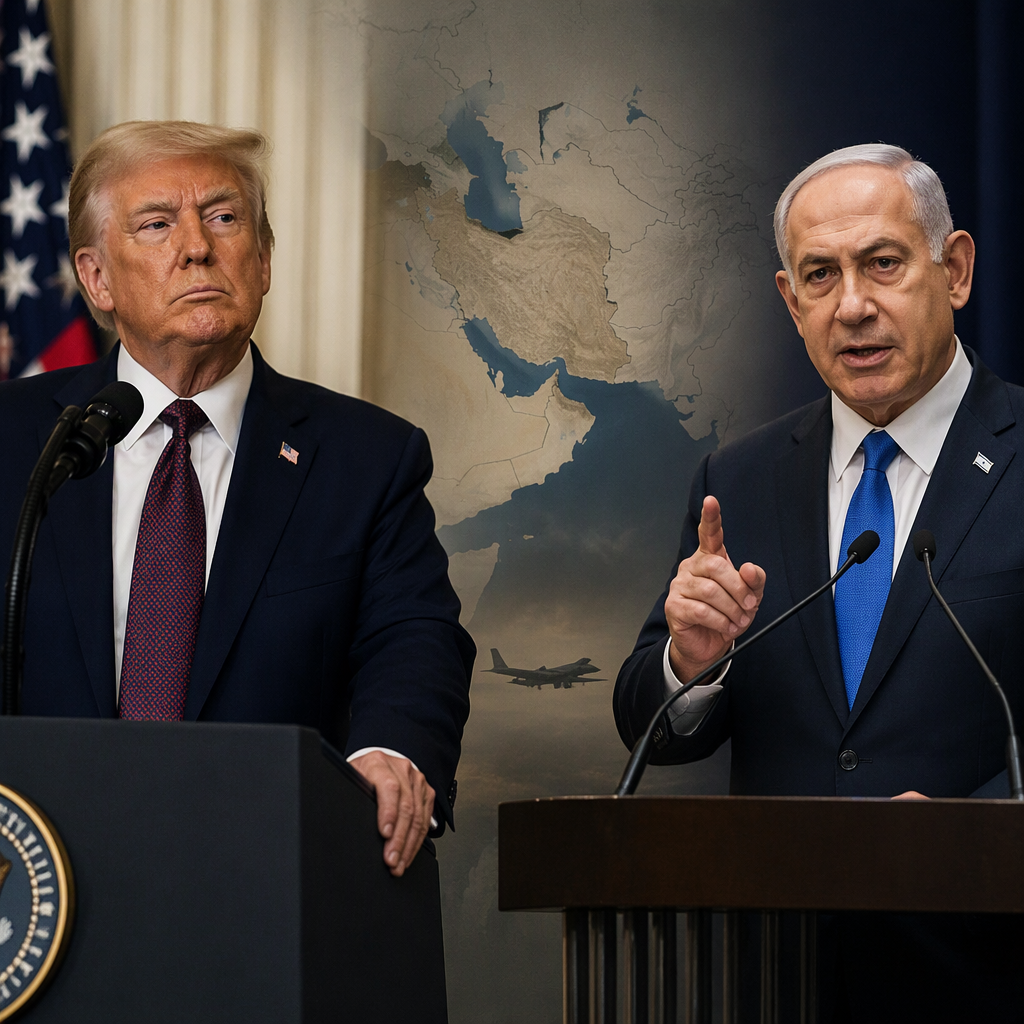
Tensions across the Middle East reached a critical boiling point after Donald Trump signaled that the US is locked and loaded for an Iran strike, responding to intelligence assessments and urgent security warnings issued by Israeli Prime Minister Benjamin Netanyahu.
The stark declaration underscores an abrupt hardening of Washington’s posture toward Tehran. Speaking to reporters and posting on social media, Trump asserted that American military assets in the region stand fully prepared to execute targeted retaliatory operations if Iranian forces or their regional proxies target American personnel, allied infrastructure, or international shipping lanes.
Also read: Israeli Opposition Accuses Netanyahu of Bid to Delegitimise Election
Escalating Warnings Across Washington and Jerusalem
The aggressive rhetoric follows days of high-level consultations between American defense officials and their counterparts in Tel Aviv. Israeli Prime Minister Benjamin Netanyahu has repeatedly warned that Tehran is accelerating its regional aggression and crossing critical thresholds in its ballistic missile and nuclear programs.
During a national security address in Jerusalem, Netanyahu emphasized that Israel reserves the right to defend itself against existential threats. “The world cannot afford a nuclear-armed, ballistic-capable Iranian regime that dictates terms to sovereign nations,” Netanyahu said, urging global powers to present an unequivocal military deterrent.
Trump aligned directly with that assessment, indicating that standard diplomatic overtures have reached their limit unless Tehran alters its course immediately.
Why Washington Declared the US Locked and Loaded for Iran Strike
The decision to message that the US is locked and loaded for an Iran strike reflects both strategic deterrence and military readiness. Pentagon commanders have repositioned naval strike groups, guided-missile destroyers, and advanced fighter squadrons across the Persian Gulf and Eastern Mediterranean to safeguard regional assets.
Senior defense analysts note several key drivers behind Washington’s heightened readiness:
- Proxy Activity: Continued drone and rocket threats launched by Tehran-aligned militias targeting maritime transit and regional bases.
- Intelligence Reports: Classified assessments indicating advanced preparations by Iranian military units.
- Coordination with Israel: Tight synchronization between US Central Command (CENTCOM) and the Israel Defense Forces (IDF) regarding shared airspace and defense shields.
White House officials reiterated that while defensive posture remains paramount, offensive plans stand reviewed and verified should the commander-in-chief authorize direct military action.
Tehran Vows Swift Counteraction
In response, Iranian officials dismissed Washington’s threats as psychological warfare while simultaneously warning of catastrophic regional fallout if strikes occur. Spokespersons for Iran’s Islamic Revolutionary Guard Corps (IRGC) declared that any strike against sovereign Iranian territory or strategic facilities would trigger an overwhelming response against regional bases and maritime corridors.
Diplomats across Europe and the Gulf Cooperation Council (GCC) called for immediate restraint, cautioning that a direct confrontation between the United States and Iran could ignite an uncontrollable multi-front conflict and destabilize global energy markets.
What Happens Next
Diplomatic observers expect crucial developments in the coming days:
- Congressional Briefings: Lawmakers in Washington are demanding classified briefings on operational authorizations and potential War Powers Act implications.
- Allied Consultations: Defense officials plan urgent coordination calls with Gulf partners and NATO allies regarding regional airspace management.
- Enhanced Surveillance: Satellite and aerial surveillance operations over strategic Iranian military sites will remain at peak operational tempo.
Conclusion
The regional standoff has entered an unprecedented phase of brinkmanship. With Benjamin Netanyahu demanding immediate international resolve and Washington explicitly warning that the US is locked and loaded for an Iran strike, the margin for diplomatic maneuver has narrowed sharply. Whether this aggressive messaging deters Tehran or accelerates direct conflict now hinges on the strategic calculations of both capitals over the hours and days ahead.