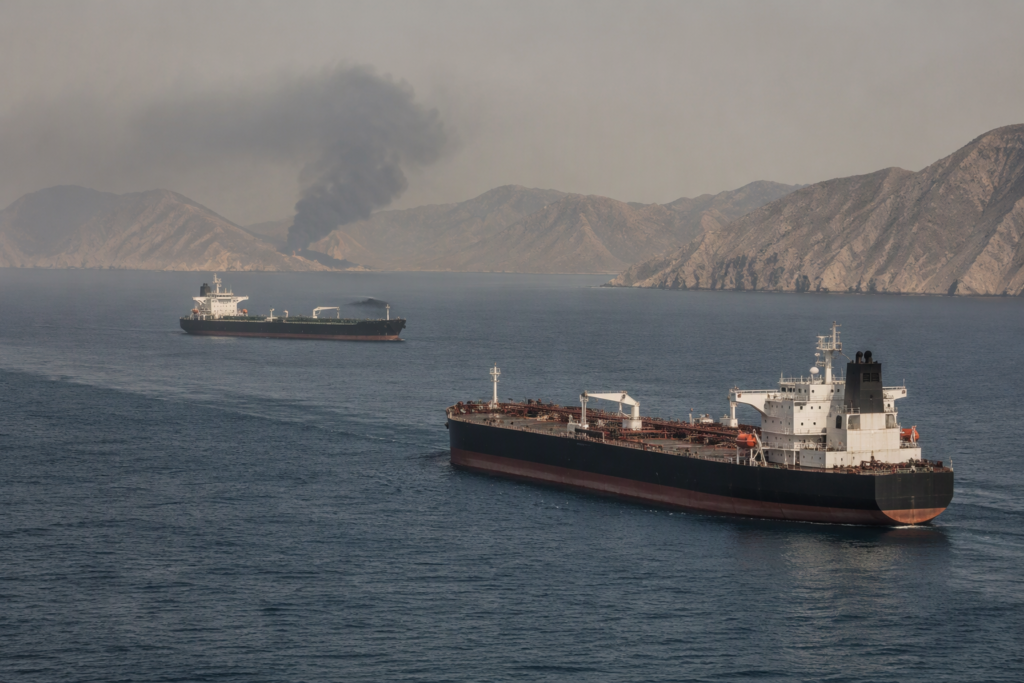

Iranian officials have reported that commercial tankers struck in Hormuz suffered damage during recent incidents, intensifying security concerns across the Persian Gulf and fueling apprehension over a potential new United States military attack.
The reported strikes have reignited scrutiny over maritime safety in one of the world’s most critical energy transit corridors. While detailed assessments of the damage and vessel identities remain limited, the developments have prompted immediate concern among commercial shipping operators and regional defense analysts.
Also read: Iran Awaits US Response to Latest Proposal to Reopen Hormuz Strait
Reports of Tankers Struck in Hormuz Spark Regional Alarm
The statement from Tehran points to renewed vulnerability in the narrow strait, which separates Iran from the Arabian Peninsula. Iranian officials have characterized the situation as precarious, directly linking maritime volatility to ongoing geopolitical confrontation and the looming prospect of foreign military intervention.
The Strait of Hormuz handles roughly a fifth of global petroleum consumption, making any disruption an instant catalyst for volatility across international commodity markets. Shipping firms regularly adjust navigational routes, increase war-risk insurance premiums, and review safety protocols whenever incidents occur along this vital waterway.
Mounting Apprehension Over Potential US Action
The announcements come against a backdrop of protracted friction between Tehran and Washington. Officials in Iran have repeatedly warned that heightened foreign military deployments in neighboring waters elevate the risk of miscalculation and armed confrontation.
Fears of a new American military response reflect broader geopolitical divisions across the Middle East. While regional actors consistently urge restraint, recurrent incidents involving commercial navigation and energy infrastructure continue to test diplomatic barriers and fragile security frameworks.
Implications for Commercial Navigation and Energy Markets
International shipping groups monitor the corridor closely, as transit disruptions in Hormuz quickly ripple through supply chains. Heightened security threats often prompt navies operating in the Gulf to increase patrols, issue navigational warnings, and escort vulnerable cargo vessels.
Market analysts note that extended uncertainty could drive up maritime freight costs and elevate global energy prices, especially if maritime security forces face recurring hostility or asymmetric threats along established shipping lanes.
Concerns Over Regional Escalation
The latest assertions from Iranian authorities highlight the fragile equilibrium governing maritime traffic throughout the Persian Gulf. International observers continue to emphasize the necessity of transparent communication to prevent unintended escalation between Iranian forces and foreign naval assets operating in international waters.
As governments evaluate the situation, maritime security agencies remain on heightened alert, waiting to see whether diplomatic channels can defuse tensions or if further incidents will push the region closer to open confrontation.
Source: Al Jazeera