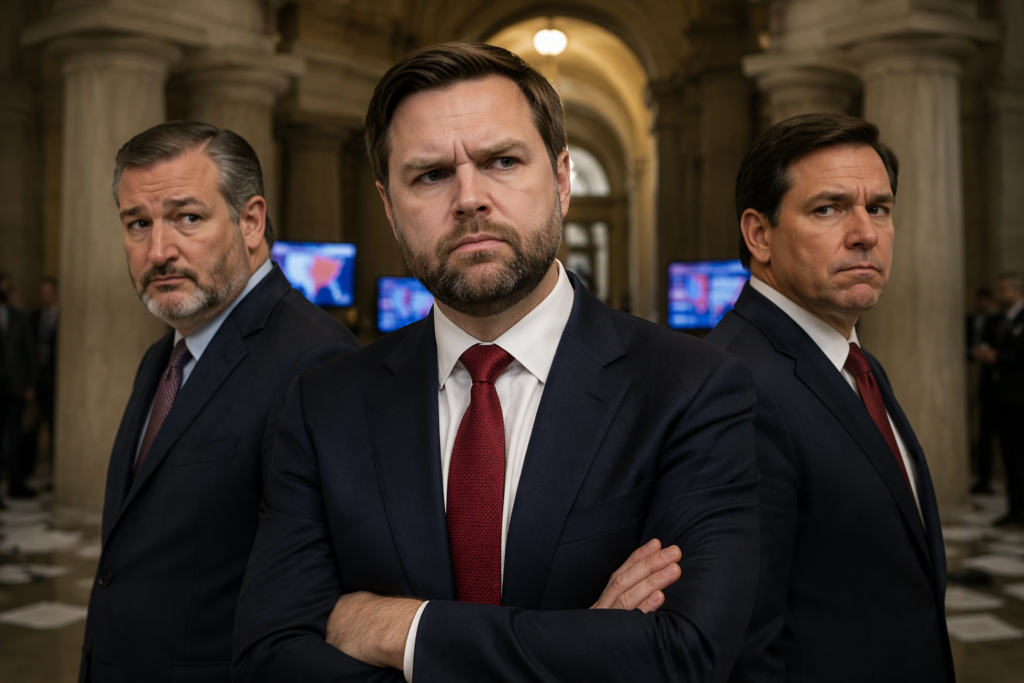

Early 2028 GOP battle lines are beginning to form across the political landscape as key Republican figures offer contrasting post-mortems following disappointing midterm election performances. Prominent party leaders, including Vice President JD Vance, Texas Senator Ted Cruz, and Florida Governor Ron DeSantis, are clashing over the direction of the party and what strategy is needed to secure future victories.
Differing Diagnoses of Midterm Setbacks
In the wake of midterm election disappointments, Republican leaders have engaged in an intense internal debate over where to place responsibility. Rather than presenting a unified front, prominent figures within the party have highlighted distinct shortcomings, ranging from tactical errors to broader messaging failures.
Also read: Ted Cruz: GOP Suffered a ‘Watergate-Level Repudiation’ in Midterms
Key factions within the conservative movement are weighing whether the party struggled due to flawed candidate selection, ineffective campaign fundraising, or an inability to appeal to critical independent and suburban voters. The public assessments from Vance, Cruz, and DeSantis underscore deep divisions over how Republicans should frame their core platform in competitive national contests.
How 2028 GOP Battle Lines Are Taking Shape
While the next presidential primary cycle remains several years away, the competing post-election assessments reflect early positioning for national leadership. Each leader represents a distinct lane within the conservative coalition, and their divergent diagnoses offer a preview of the ideological debates that could define the next Republican presidential primary.
The debate highlights several competing visions for the GOP’s future:
- Working-Class Populism: Advocates aligned with JD Vance emphasize economic nationalism, trade skepticism, and a focus on industrial and working-class communities that have reshaped the party’s base.
- Institutional and Strategic Reform: Figures like Senator Ted Cruz have long scrutinized party mechanics, voter mobilization strategies, and campaign execution, arguing for more disciplined grassroots outreach.
- Executive Governance: Governor Ron DeSantis has consistently pointed to his record in Florida as a governing blueprint, arguing that decisive conservative policy implementation creates lasting electoral success.
The Struggle for the Republican Party’s Future
The friction among these high-profile leaders reflects a broader debate occurring throughout the Republican establishment. Party strategists and donors are closely watching how grassroots activists respond to each faction’s diagnosis.
As Republicans assess their performance across swing districts and battleground states, the question of how to balance populist appeal with traditional conservative governance remains unresolved. Disagreements over policy priorities and cultural messaging are expected to intensify as the party seeks to recalibrate ahead of upcoming election cycles.
Looking Ahead to the Next Election Cycle
The emerging clash between Vance, Cruz, and DeSantis signals that the battle for the future of the conservative movement is already underway. As the GOP works to overcome recent midterm turbulence, the competing strategies articulated by its most influential leaders will continue to shape party leadership and candidate recruitment heading into the next national elections.
Source: Fox News