
Scientific advancements in neuroscience have reached a remarkable frontier, prompting widespread interest in whether human brain cells grow inside animals. The emergence of research into so-called “alien-cortical” mice has intensified discussions around cross-species neural development, biomedical innovation, and the boundaries of laboratory experimentation.
The Science Behind Alien-Cortical Mice
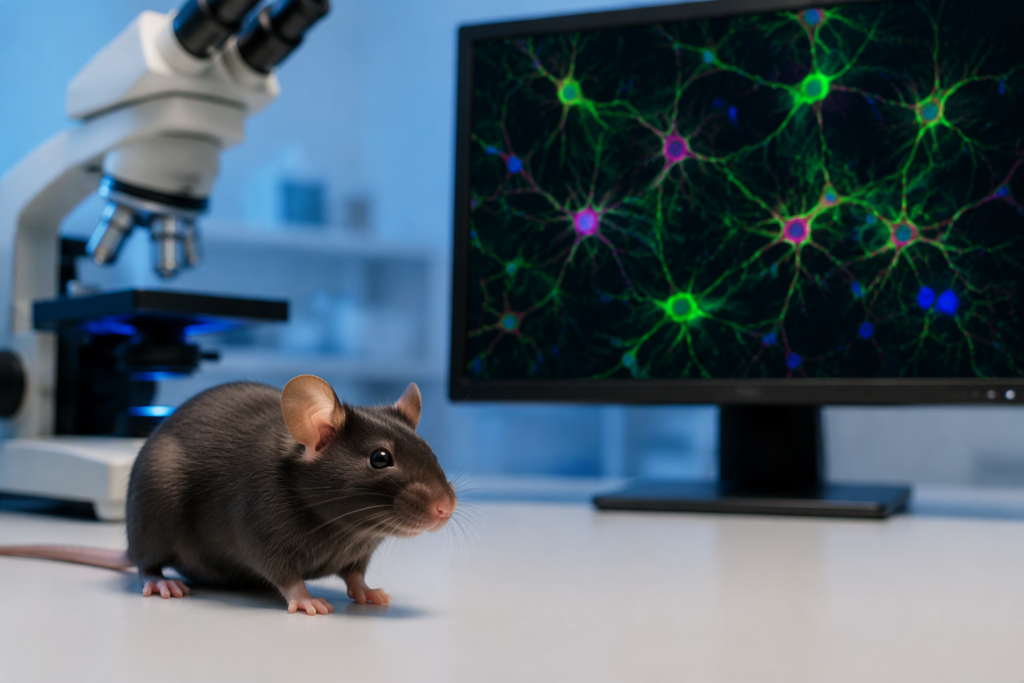
Researchers investigating brain development and neurological disorders have increasingly turned to chimeric models. By introducing human neural cells or organoids into rodent hosts, scientists aim to observe how these tissues mature within a living biological system.
Also read: Elon Musk’s Starlink Cellphone Carrier Push: How Direct-to-Cell Tech Works
These animal models, colloquially described in cutting-edge contexts as alien-cortical mice, provide a vascularized environment that laboratory culture dishes cannot replicate. The living host allows human cellular structures to access blood flow, nutrients, and natural biological signals essential for complex growth.
Can Human Brain Cells Grow Inside Animals?
Studies have demonstrated that transplanted human neural tissue can survive, differentiate, and form functional synaptic connections within host brains. When human stem cell-derived cortical cells are integrated into young rodents, they often extend axons and establish networks with surrounding animal neurons.
While human brain cells grow inside animals under these tightly controlled experimental conditions, researchers emphasize that the host remains fundamentally a rodent. The transplanted cells adopt supportive roles and adapt to the host circuitry rather than transforming the animal’s cognitive identity.
Medical Advancements and Disease Modeling
The primary motivation for developing these advanced models is understanding complex human neurological conditions. In vitro cultures, while useful, lack the physiological depth required to study intricate brain disorders comprehensively.
Investigating Complex Disorders
Scientists utilize humanized rodent brain models to examine several critical areas of health and disease:
Researchers can study developmental conditions such as autism spectrum disorders and schizophrenia by observing how patient-derived cells behave in vivo. In neurodegenerative diseases like Alzheimer’s and Parkinson’s, chimeric models offer an unprecedented platform to test targeted therapies and trace cellular decline in real time.
Ethical Considerations in Chimera Research
Despite the medical promise, the integration of human neural material into non-human species presents significant bioethical challenges. Ethicists, scientists, and regulatory bodies actively evaluate how far such experimentation should proceed.
Key ethical discussions center on animal welfare, the potential for altered cognitive capacities, and the necessity of strict oversight. Research institutions maintain rigorous monitoring protocols to ensure that host animals do not experience distress or acquire human-like cognitive states.
The Future of Cross-Species Neurological Studies
Research surrounding alien-cortical models continues to balance ambitious scientific discovery with cautious ethical guidelines. As methodologies refine, these chimeric studies may unlock vital answers to some of medicine’s most persistent neurological challenges.
Source: Al Jazeera