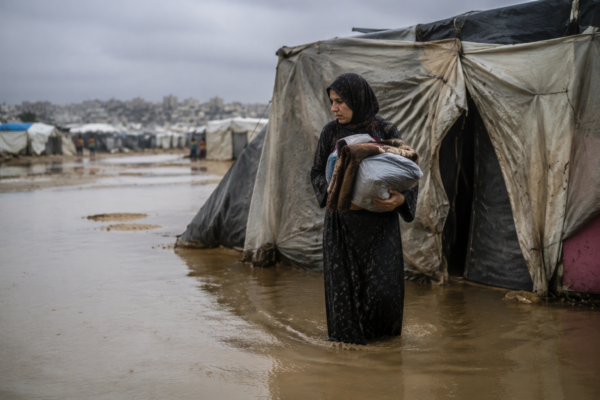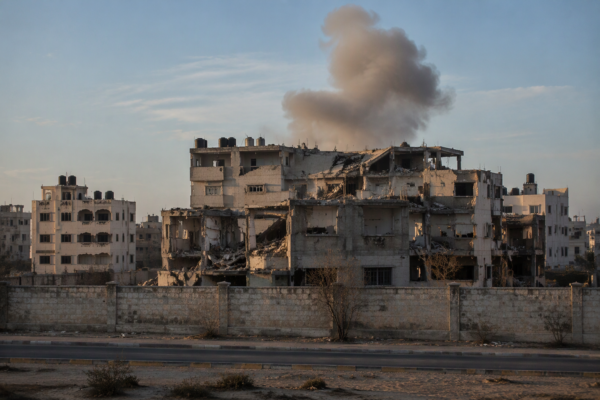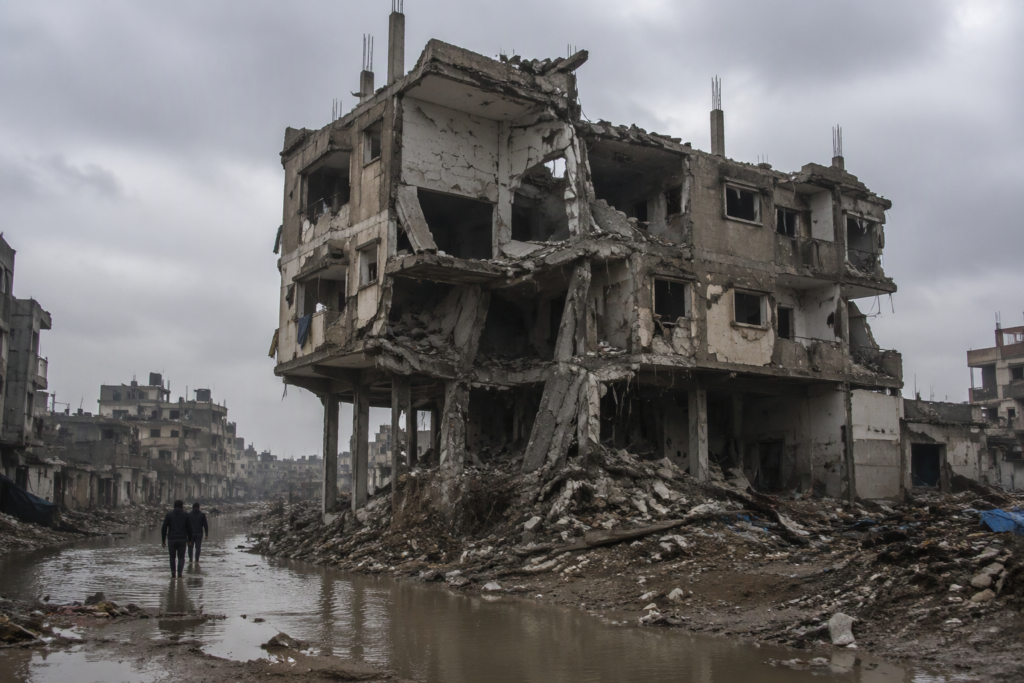

Heavy rainfall and severe flooding across the Gaza Strip have significantly increased the risk of sudden structural failure for thousands of damaged buildings in Gaza. The extreme weather has heightened fears among civilians sheltering in or near weakened concrete structures, compounding an already severe humanitarian crisis.
Rising Collapse Risks for Damaged Buildings in Gaza
Months of intense bombardment have destabilized residential towers, community infrastructure, and public facilities across the enclave. The arrival of seasonal rain now threatens what remains of these fragile structures. Water infiltration seeps into cracked foundations and fractured walls, eroding the soil beneath unstable concrete frames and drastically elevating the probability of catastrophic cave-ins.
Also read: Paraguay Banking Crisis: What the Ueno Collapse Means for Financial Stability
Civil engineering experts warn that moisture adds significant weight to weakened roofing slabs while washing away underlying support earth. Structures that may have appeared stable following direct or adjacent blasts can rapidly deteriorate under continuous downpours, putting surrounding areas in immediate danger.
Severe Weather Imperils Displaced Families
Due to severe shortages of adequate shelter and emergency accommodations, many displaced residents have sought refuge in cracked, partially ruined homes or alongside precariously standing walls. The heavy rains have inundated lower-level apartments and makeshift camps, leaving residents with few options but to remain close to hazardous sites.
The pooling water has also turned unpaved roadways and emergency pathways into dense mud, hindering emergency response units. Local civil defense crews face acute challenges as damaged machinery, fuel shortages, and obstructed routes prevent them from safely reinforcing compromised walls or assessing structural stability in flooded neighborhoods.
Humanitarian Concerns Grow as Storms Persist
The convergence of compromised municipal drainage systems and relentless rainfall has left extensive standing water throughout residential quarters. Without the heavy machinery required to demolish hazardously leaning edifices or safely clear rubble, civilians must navigate submerged streets lined with destabilized structures.
Aid organizations emphasize that the compounding impacts of unstable architecture, freezing temperatures, and standing floodwaters create urgent public safety hazards. As weather systems continue to bring rain across the coastal territory, the risk of sudden building collapses remains an ongoing threat to vulnerable communities across Gaza.
Source: Al Jazeera