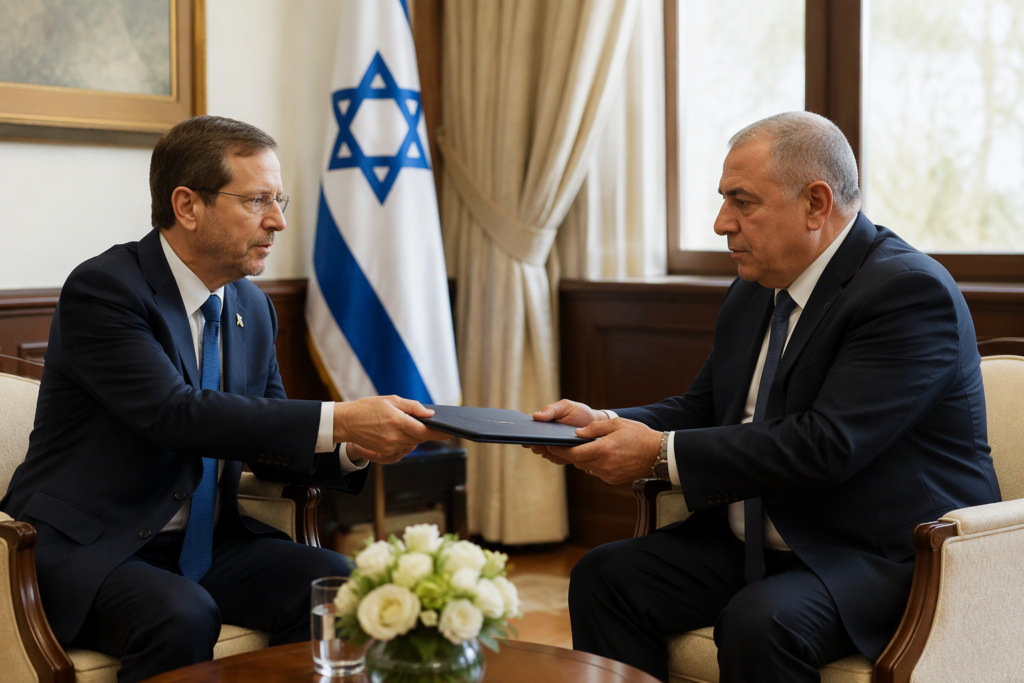

Israel’s president has officially tasked opposition leader Eisenkot with forming a government following an inconclusive national election held last week. The move comes as political parties face a familiar deadlock, with no single faction or alliance holding a clear path to power.
Mandate Given to Opposition Leader Eisenkot
The presidential decision to grant the mandate to opposition leader Eisenkot follows extensive consultations with party representatives after the recent vote. With the parliament split, the president stepped in to assign the task of coalition building to the opposition figure in an effort to break the political stalemate.
Also read: Israel’s President Taps Eisenkot to Form Next Government Over Netanyahu
Eisenkot now faces the challenge of negotiating with rival factions to assemble a functional governing majority. Under national law, the designated lawmaker will have a limited timeframe to conduct discussions, secure partner agreements, and present a viable administration for parliamentary approval.
Inconclusive Election Leaves Blocs Short of a Majority
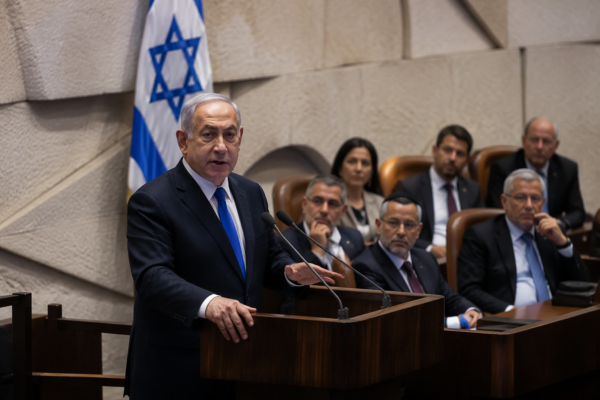
The latest election results revealed deep political divisions across the country. Neither the bloc led by Prime Minister Benjamin Netanyahu nor the opposing alliance managed to secure the required parliamentary majority to govern on its own.
Despite intensive campaigning, voter turnout produced another split parliament where both major camps fell short of the threshold needed to claim victory. The outcome has left Prime Minister Netanyahu and his allies without an immediate route to extend their tenure, while simultaneously complicating the opposition’s efforts to unite diverse political parties under one banner.
Path Forward in Coalition Talks
Coalition negotiations are expected to begin immediately as Eisenkot reaches out to various political leaders. To reach the necessary majority, any potential government will require compromises between parties with competing domestic and foreign policy agendas.
If negotiations succeed, Eisenkot will form a new administration and assume leadership of the government. However, failure to bridge divides among party leaders within the designated period could return the mandate to the president or push the country toward another round of elections.
Source: BBC