
Iran’s Hardliners Turn Against President Pezeshkian Over Western Diplomacy
TEHRAN — Political tensions in Iran have escalated sharply as ultraconservative factions and hardliners turn against President Pezeshkian, condemning his administration’s willingness to re-engage with Western powers over Tehran’s advancing nuclear program and international sanctions relief.
President Masoud Pezeshkian, who took office following a special election in mid-2024, campaigned on a pragmatic platform aimed at easing economic isolation and repairing strained ties with the international community. However, his calls for constructive dialogue have triggered a coordinated pushback from influential anti-negotiation figures in parliament, conservative state-aligned media, and security institutions.
Also read: Iran Ceasefire Talks With US: Tehran Proposes Accelerated Plan Amid Middle East Crisis
Deepening Rifts in Tehran
The rift between Pezeshkian’s government and parliamentary hardliners has intensified over recent diplomatic messaging. During international appearances and regional summits, Pezeshkian and his diplomatic team signaled openness to resuming negotiations regarding the 2015 Joint Comprehensive Plan of Action (JCPOA) and addressing concerns raised by the International Atomic Energy Agency (IAEA).
In response, hardline lawmakers and ultraconservative publications, such as the state-linked daily Kayhan, have accused the administration of naivety. Critics argue that offering concessions to Western capitals will only project vulnerability amid heightened regional tensions across the Middle East.
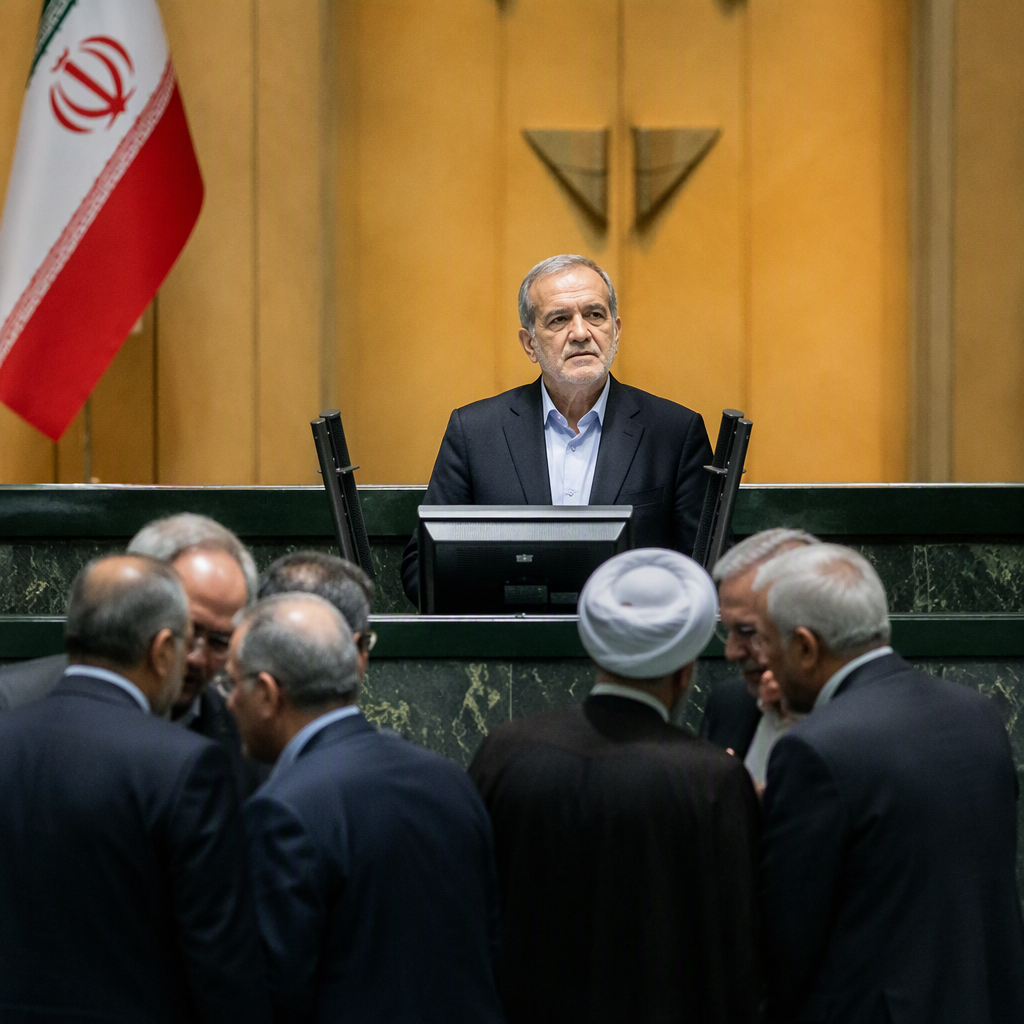
Hardline figures associated with the Paydari Front (Front of Islamic Revolution Stability) have used floor speeches in the Iranian parliament (Majles) to issue stern warnings to the executive branch. They contend that direct or indirect engagement with Washington offers no guarantees of sustainable sanctions relief and instead undermines the country’s strategic posture.
Nuclear Diplomacy at the Center of the Clash
The core dispute centers on the future of Iran’s nuclear development. Hardliners insist that Tehran should continue expanding its uranium enrichment capabilities to retain geopolitical leverage, citing the previous U.S. withdrawal from the nuclear accord in 2018 as proof that Western commitments cannot be trusted.
Pezeshkian, however, has repeatedly stressed that the country’s battered economy cannot achieve meaningful growth without lifting secondary banking and energy sanctions. His administration has defended diplomatic outreach as a necessary measure to alleviate inflation, stabilize the domestic currency, and address widespread public discontent over living standards.
Despite the administration’s pragmatic tone, foreign policy in the Islamic Republic remains strictly within the constitutional purview of Supreme Leader Ayatollah Ali Khamenei. While Khamenei previously signaled cautious tolerance for diplomacy—noting there was “no harm” in engaging with the adversary under specific conditions—he also emphasized the need to remain vigilant, a balance hardliners frequently cite to challenge executive initiatives.
Domestic Pressures and Economic Stagnation
The domestic political fight is further complicated by severe economic bottlenecks. High inflation, capital flight, and energy shortages have squeezed ordinary Iranian citizens, creating widespread domestic pressure.
Pezeshkian’s supporters argue that the president cannot resolve domestic economic crises without addressing foreign policy hurdles. Meanwhile, opponents claim that relying on external negotiations ignores the domestic economic resilience doctrine advocated by hardline factions.
Why Hardliners Turn Against President Pezeshkian Now
Analysts observe that the timing of this opposition is driven by shifting regional dynamics and broader geopolitical uncertainties, including evolving leadership and policy shifts in Washington. Hardliners fear that any early concessions by Pezeshkian’s cabinet could weaken Tehran’s regional alliances and dilute the leverage built by its security apparatus.
By publicly challenging cabinet ministers and scrutinizing foreign ministry appointments, hardline lawmakers seek to box in the executive branch, ensuring that any future negotiations adhere to strictly defined, non-negotiable red lines.
What Happens Next
The coming months will test Pezeshkian’s political maneuvering and resilience against conservative resistance. Key events to watch include:
- Parliamentary oversight: Hardliners are expected to increase pressure on foreign policy officials through formal summons and policy debates in parliament.
- IAEA interactions: Upcoming technical reports and diplomatic meetings with the UN nuclear watchdog will indicate whether diplomatic channels remain viable.
- Directives from the Supreme Leader: Ayatollah Khamenei’s forthcoming public statements will ultimately set the boundaries of permissible engagement for both the government and its critics.
As hardliners turn against President Pezeshkian with growing assertiveness, the reform-backed president faces the delicate challenge of maintaining consensus at home while attempting to revive vital diplomatic avenues abroad.