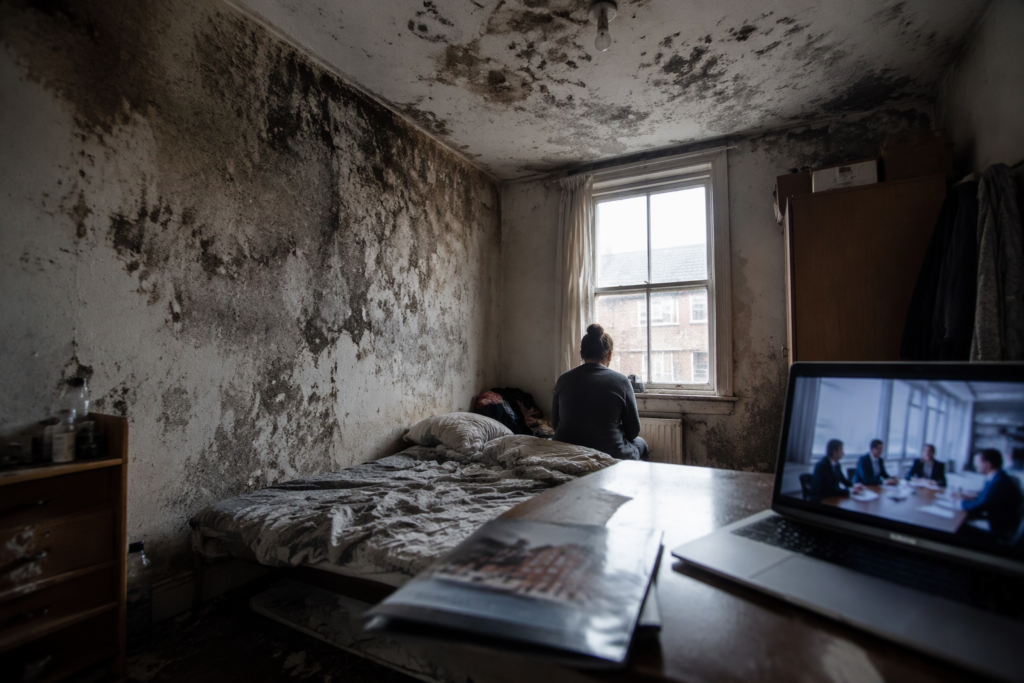
In a dilapidated flat crawling with rats and blackened by toxic mould in Cheshire, Phil had no idea his home had been pitched to a buyer in Prague as a pristine, high-yield asset. His apartment is part of a fast-growing trade in supported housing investments, where British properties meant for society’s most vulnerable people are quietly packaged and sold to overseas buyers at inflated sums.
A Czech investor bought Phil’s flat at Castleview House in Runcorn for £163,150 last year. That is more than double the £75,000 going rate for standard apartments in the converted office block. Sales pitches claimed the property was in top condition and housed tenants receiving specialized state-funded care, guaranteeing stable returns funded directly by British taxpayers.
Also read: Gaza Civil Defence Runs on Foot as Fleet Collapses
In reality, the building was deteriorating, and Phil received no care at all. The trade reveals how public welfare funding intended for therapeutic shelter is instead enriching developers, housing providers, and distant landlords who never see the damp walls inside.
How supported housing investments are sold across borders
More than 40 companies have been actively marketing these flats to buyers across the globe, including investors in the Netherlands, Turkey, Nigeria, Hong Kong, and Macau. Promoters pitch supported housing investments as government-backed opportunities with guaranteed long-term returns, using taxpayer-funded welfare streams to justify prices far above market value.
The system relies on a legal carve-out known as supported exempt accommodation. Because housing providers take on people with severe mental health struggles, addiction recovery needs, or trauma from domestic violence, they can bypass ordinary housing benefit caps. Councils pay them much higher rates to cover extra care and supervision. Yet the law leaves the actual amount of support undefined, creating a loophole that commercial operations can easily exploit.
Private firms cannot directly act as exempt social landlords. To circumvent this, developers strike long-term lease deals with registered non-profit associations, then sell the individual units to private buyers looking for steady passive income.
The network behind Castleview House and beyond
Developer Lee Jones converted Castleview House from commercial offices into more than 200 flats in 2019 through his firm, The Investment Room. Jones then partnered with Nurture Housing Association, leasing units on 25-year agreements to house benefit recipients. Jones also shared directorships in other housing companies with Nurture chief executive Chris Smith.
Estate agents then sold the properties abroad. Britské Reality, a firm operating in the Czech Republic, promoted Phil’s flat with claims that residents received psychiatric care plans under Section 117 of the Mental Health Act. Phil has severe depression and anxiety and cannot work, but he has never been sectioned under that act.
“Whoever marketed this property, the way they’ve worded it is total dishonesty. If they’re looking to make as much profit as they can, then they clearly have no plans to fix the issues in the building.”
Similar arrangements run by Jones and Nurture exist across northern England, including sites in Bradford, Doncaster, Rotherham, and Stockton-on-Tees. At City Exchange and Colonnade House in Bradford, residents live with cockroach infestations, non-working lifts, broken fire alarms, and persistent leaks.
Paper promises clash with squalid conditions
Marketing brochures told buyers that Nurture offered specialist supported housing. That designation requires intensive, round-the-clock supervision similar to an assisted care facility. The Regulator of Social Housing confirmed that Nurture holds no registration for specialized care, calling the firm’s marketing claims shocking.
Nurture stated that Castleview House operates under a general housing management framework rather than its supported portfolio. The provider attributed misleading promotions to third-party agents using outdated material, insisting it was reminding brokers to present accurate facts.
Lee Jones maintained that his businesses provide good quality homes and noted he has had no control over communal spaces at Castleview House since selling the freehold in 2021. The current freeholder has initiated legal action against Jones, alleging structural defects across the property.
Broken ceilings and shifting corporate blame
Vulnerable tenants elsewhere face identical struggles under fractured corporate ownership. In Cricklewood, north London, a formerly homeless tenant named Mo lived under a leaking roof until the plaster ceiling collapsed entirely. His flat was acquired for £1.83m by Gemelli London 2 Limited, an entity directed by French nationals based in the Czech Republic.
Mo’s provider, Windrush Alliance, collects nearly £2,000 every month in council benefits for his studio. Mo receives £340 in universal credit for basic needs and must pay Windrush £120 of that as a mandatory service fee. Windrush faced previous warnings from the Regulator of Social Housing for failing safety checks and had written off £1.8m routed to former directors before appointing fresh management.
Gemelli director Stephane Boussier said the firm receives roughly £1,365 per flat monthly from Windrush and gets no extra welfare subsidies. Boussier said complaints were raised with Windrush once discovered, leading to ceiling repairs after external enquiries. With layers of middlemen collecting rent, tenants find nobody accepts ultimate responsibility for basic maintenance.
Delayed reforms leave tenants waiting
While none of the property companies have broken existing laws, watchdogs argue the system invites severe neglect. Abena Oppong-Asare, chair of the parliamentary Housing Select Committee, described the setup as an unaccountable web where public money lines investor pockets while vulnerable tenants are left in danger.
Parliament approved the Supported Housing Act three years ago to establish local licensing rules and grant municipal councils legal teeth to shut down substandard operators. The government has still not brought the enforcement mechanisms into force, leaving local authorities without the statutory power to intervene.
Source: BBC


