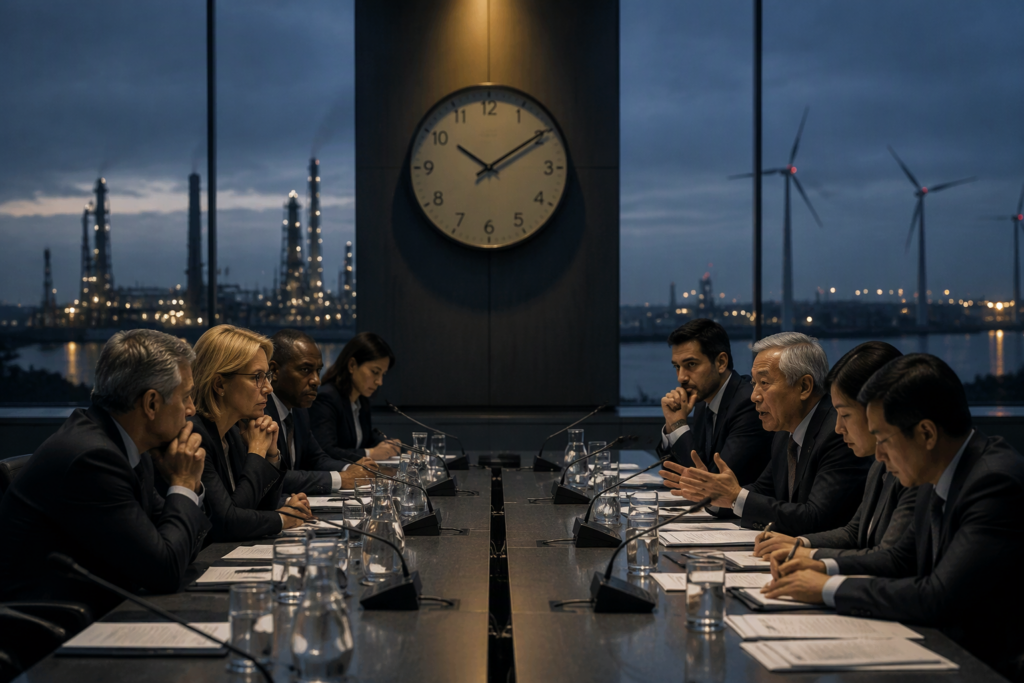
Diplomats from nearly 200 nations pushed past their Friday deadline in Antalya, Turkiye, after an updated text wiped out every direct reference to oil, gas and coal. The standoff dragged the COP31 climate summit into overtime, with exhausted delegations clashing over whether a global climate pact can function without mentioning the fuels driving global warming.
The scheduled two-week gathering in the Turkish resort city ended its Friday session by settling basic technical issues, leaving the primary political declaration unresolved. Delegates now face an uphill battle to save the agreement from collapse.
Also read: EU UK Reset Deal Sealed: Burnham Agrees Brussels Pact
“We are close to the finish line, but we are not there yet,” said COP31 President and Turkiye’s Environment Minister Murat Kurum late Friday.
How oil producers stripped the text
Negotiations took a sharp turn when host partners revised the conference document. Co-host Australia had opened the week with draft text pushing for an accelerated fossil fuel phase out. By Thursday, negotiators circulated a stripped-down version that eliminated all mentions of fossil fuels following stiff resistance led by Saudi Arabia and other major petroleum exporters.
Oil-producing nations mounted similar objections during previous UN climate talks, including COP28 three years earlier. The revised proposal also discarded an explicit $120 billion annual target intended to help developing countries adapt to worsening climate impacts.
The changes sparked furious pushback from European and Latin American delegations. European Union representatives warned the text risked transforming the gathering into an event that shields polluters rather than protecting the planet.
Panama joined a coalition of a dozen nations demanding binding language on an energy transition, with its leadership threatening a full walkout.
“It is not acceptable to have a COP or a cover document that does not even mention fossil fuels, and we simply will not put up with it,” said Panama’s Environment Minister Juan Carlos Navarro.
Battles over power grids and carbon capture
The disputed draft suggests lifting the share of global final energy consumption supplied by electricity to 35 percent by 2035. Yet it omits any requirement that this electricity come from renewable power, prompting several governments to insist that the draft specify clean energy.
Delegates are also fighting over carbon capture technology, which traps carbon dioxide emissions directly from industrial smokestacks and power stations. Proponents argue the technology lets essential heavy industries operate while cutting pollution.
Critics describe carbon capture as expensive, unproven at global scale, and an excuse for fossil fuel producers to prolong oil and gas extraction. Pacific island nations took aim at the provisions.
“We want to see the references to false solutions removed,” said Vanuatu’s Climate Minister Ralph Regenvanu during the Antalya climate talks.
Finance anger and geopolitical fallout at COP31 climate summit
Money remains an equally volatile flashpoint. Developing states accused wealthy countries of failing to deliver practical climate finance to protect vulnerable populations facing rising seas and extreme weather.
“We didn’t come here to beg,” said Ghana’s Environment Minister Zanetor Agyeman-Rawlings.
These disputes come right after a United Nations report confirmed global temperatures are tracking past the 1.5-degree-Celsius limit agreed in the 2015 Paris treaty. The current round of talks has unfolded under intense political strain.
The United States skipped the gathering for a second straight year following Donald Trump’s decision to halt American participation in international climate pacts. Escalating conflict between the US, Israel and Iran, alongside widespread cost-of-living pressures worldwide, has pushed environmental policy down the priority list for several world leaders.
Advocacy groups tracking the negotiations argue the proceedings have hit a historic low. Mohamed Adow, director of the think tank Power Shift Africa, called it the worst COP meeting on record.
What happens next in Antalya
Delegates at the COP31 climate summit are waiting for conference leaders to release a third draft agreement on Saturday, which will test whether negotiators can find common ground on fossil fuels before talks break down completely.
Source: Al Jazeera


