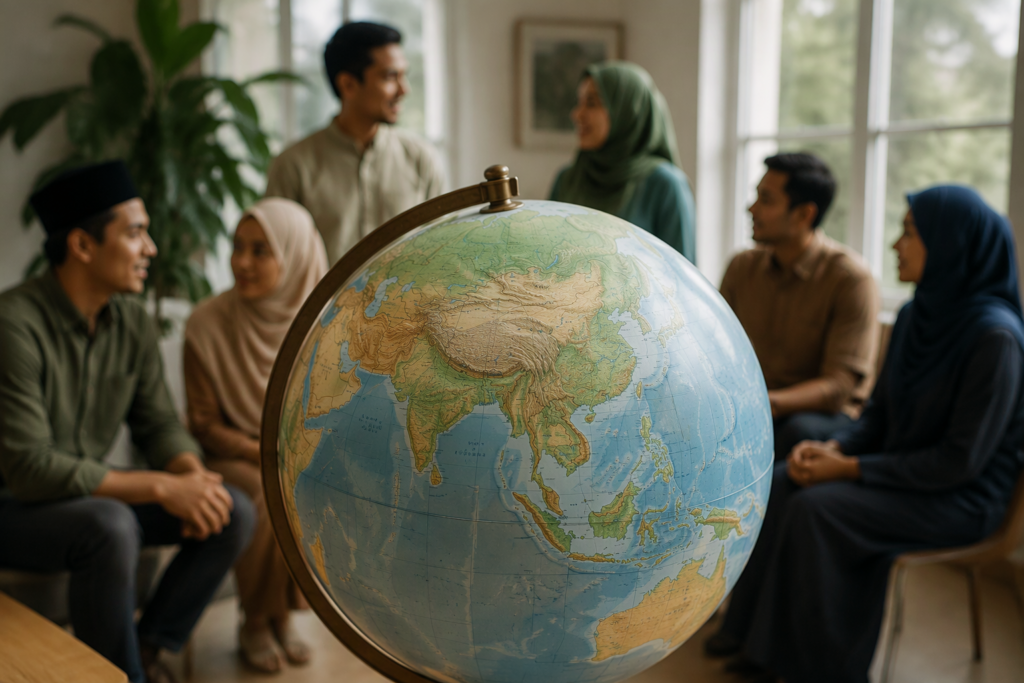
Within just over a decade, Christians will no longer make up the world’s biggest faith community, putting Islam on track to become the largest religion by 2035. Demographic projections from the Pew Research Center show that a sustained gap in birth rates is accelerating this global balance shift much faster than previously observed.
By 2070, the global Muslim population will expand by 80 percent, climbing from 2.02 billion in 2020 to 3.64 billion. Over that same half-century, the Christian population will grow by 30 percent to reach 2.96 billion, a pace that roughly tracks overall world population growth.
Also read: Pakistan Minister Visits India for First Time Since 2025 War
This massive expansion will reshape national populations and economic centers across Asia and Africa. While other major faiths stall or contract, the geographic center of the Islamic world is moving rapidly toward South Asia and sub-Saharan Africa.
How Islam becomes the largest religion by 2035
The primary engine behind this demographic change comes down to basic family size. Between 2020 and 2025, Muslim women had an average of 3.1 children worldwide, well above the 2.1 children needed for a population simply to replace itself.
Christian women averaged 2.5 children during the same period, while women of all other backgrounds averaged 1.6 children. That persistent gap explains why births minus deaths will add 1.6 billion Muslims by 2070, compared with an increase of 792 million Christians.
These numbers drive the timeline that establishes Islam as the largest religion by 2035. While Muslims and Christians both gain followers, Hindus and Jews will grow more slowly than global population rates, and the totals for Buddhists and religiously unaffiliated people will shrink.
Why Pakistan will take the top spot from Indonesia
Nearly three-quarters of this worldwide growth will take place inside the 53 nations where Muslims already form a majority. Pew projects those countries will absorb 1.2 billion new Muslim residents by 2070.
Indonesia held the title of the world’s most populous Muslim nation in 2020 with 239 million believers. Pakistan trailed close behind at roughly 227 million, but that hierarchy will soon flip.
Pakistan’s Muslim population is projected to double to 461 million by 2070, while Indonesia will see a modest 15 percent increase. Because of that sharp difference in growth, Pakistan will claim the number-one spot well before 2070.
India’s Muslim community will also climb, moving from third to second place globally as it expands from 213 million to 334 million. Even as a minority within India, that population will outnumber the Muslim count of almost every Islamic-majority state.
Africa claims four of the top ten spots
Sub-Saharan Africa will experience some of the fastest demographic surges over the next five decades. Nigeria will vault from fifth place to third, more than doubling its Muslim population to 282 million and pushing Indonesia down to fourth.
Four of the ten largest Muslim populations in 2070 will be in Africa:
- Nigeria: 282 million
- Egypt: among the top ten global populations
- Ethiopia: joining the top ten list
- Sudan: 116 million, more than doubling and surpassing Turkiye
These African shifts will push established nations off the leaderboard. Ethiopia and Afghanistan will enter the global top ten by 2070, replacing Iran and Algeria.
What could alter the demographic path
Can these long-range population models miss their mark? Pew built these calculations across 201 countries and territories, capturing 99.98 percent of humanity.
The findings assume that current patterns in fertility, mortality and religious switching will hold steady over decades. Major disruptions like wars, economic collapses, or natural disasters could alter birth rates and migration patterns in ways that delay or speed up these milestones.
Demographers will track the next round of national census counts and fertility updates through the late 2020s to see whether regional economic shifts begin slowing birth rates faster than expected.
Source: Al Jazeera


