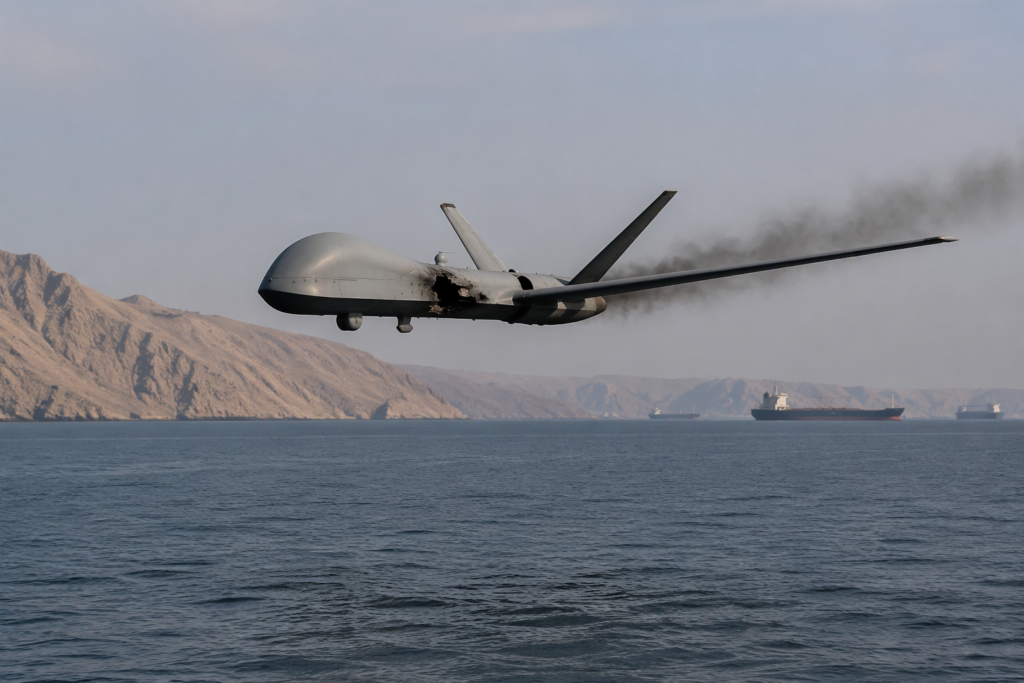
Iranian forces brought down an American MQ-9 Reaper using a newly deployed air defence system on Saturday. The downing marks the 58th Strait of Hormuz drone loss claimed by Tehran since fighting erupted earlier this year.
The incident over the narrow chokepoint follows days of direct, tit-for-tat strikes between the two militaries. With one-fifth of the world’s petroleum shipped through the waterway in peacetime, the persistent skirmishes have rattled energy markets and expanded across the Middle East.
Also read: Trafalgar Square Christmas Tree Cut Down in Norway for London
For everyday consumers and maritime shippers, the ongoing air clash means fuel prices will likely stay volatile. Neither Washington nor Tehran appears ready to back down, leaving commercial vessels caught in the crossfire.
How the Strait of Hormuz drone was downed
Iranian state broadcaster IRIB reported that Islamic Revolutionary Guard Corps units intercepted the unmanned aircraft on Saturday morning. Military officials stated that a newly integrated surface-to-air missile battery locked onto and destroyed the aircraft over regional waters.
The downing deepens an already punishing tally of American equipment losses. The Washington Post reported in August that combat operations had claimed 45 MQ-9 reapers, representing 25 percent of the US fleet at a replacement cost topping $1.3 billion.
Attacks on commercial traffic and reconnaissance aircraft have surged since July. Washington and Israel launched the offensive on February 28, triggering a regional conflict that has killed thousands of people.
Both sides inked a memorandum of understanding in June to de-escalate maritime skirmishes. That pact fell apart within weeks because neither side could agree on terms governing maritime navigation rights.
Iran sets seven demands to open shipping lanes
Iranian Foreign Minister Abbas Araghchi laid out Tehran’s negotiation terms on Friday, reiterating a seven-point proposal first delivered in September. He insisted those terms must be met before commercial tankers can move safely through the corridor again.
“The conditions include ending the war and lifting sanctions and the naval blockade on Iran’s southern ports.”
Araghchi stated that Iran offers flexibility on the implementation schedule if Washington provides genuine confidence-building gestures. He rejected any demand to send Tehran’s stockpile of 60 percent enriched uranium out of the country.
Even so, the foreign minister noted that mediators have offered several proposals that deserve review. He warned that the current friction hurts both sides but insisted Iran will not accept terms that amount to surrender.
Trump rejects proposal as Vance faces political fallout
Speaking to reporters at a White House press briefing, President Donald Trump dismissed Tehran’s diplomatic overtures as insincere. He claimed Iranian officials want an exit from the fighting but have refused to meet his core terms.
“We want to make a real deal, not a fake deal that they’ve been doing for 51 years,” Trump said. Just days earlier, the president had told reporters that a formal negotiated treaty was not necessary.
Vice President JD Vance stood beside the president during the briefing. Vance previously blamed the conflict for Republican defeats in midterm congressional elections earlier this month, where the party lost control of both chambers.
When questioned by reporters, Vance declined to say whether he would have ordered preventative strikes against Iranian nuclear sites. He stressed that initiating the February military campaign was Trump’s decision and affirmed his duty to back executive policy.
Treasury targets illicit oil trustees
While combat raged in the air, the US Treasury Department rolled out fresh economic penalties against individuals accused of bankrolling Tehran’s military apparatus. Officials sanctioned four Iranian nationals who allegedly operated as financial conduits for illicit petroleum exports.
Investigators said the network skirted the American naval cordon around southern ports, delivering crude to independent refineries in China. The Treasury placed all four men on the Specially Designated Nationals list:
- Mohammad Javad Bavand, an ex-intelligence officer inside the Revolutionary Guard
- Majid Taj, brother of Iran Football Federation head Mehdi Taj
- Mohammad Hossein Servati, son of an IRGC general, who brokered overseas crude deliveries
- Mojtaba Arabnejad, son of Mahan Air’s chief executive, who procured imported aircraft components
The designation freezes all domestic property linked to the four men and bars them from dollar transactions. Treasury officials claimed the individuals diverted portions of the unrecorded oil profits for personal financial enrichment.
Congress battles over December budget deadline
Back in Washington, the loss of another Strait of Hormuz drone added fuel to a fierce legislative fight over military spending. Lawmakers face a tight deadline to avert a government shutdown before current appropriations lapse.
Democratic Representatives Yassamin Ansari and Ro Khanna called on colleagues to strip offensive combat funding from the upcoming budget bill. They argued in a joint video message that taxpayers should not continue bankrolling an undeclared Middle Eastern war.
The standoff creates significant friction for congressional leadership. Top Democratic appropriators Rosa DeLauro and Patty Murray indicated they prefer halting offensive military operations without triggering a shutdown.
Lawmakers have until December 11 to pass a spending package or face a federal funding lapse.
Source: Al Jazeera


