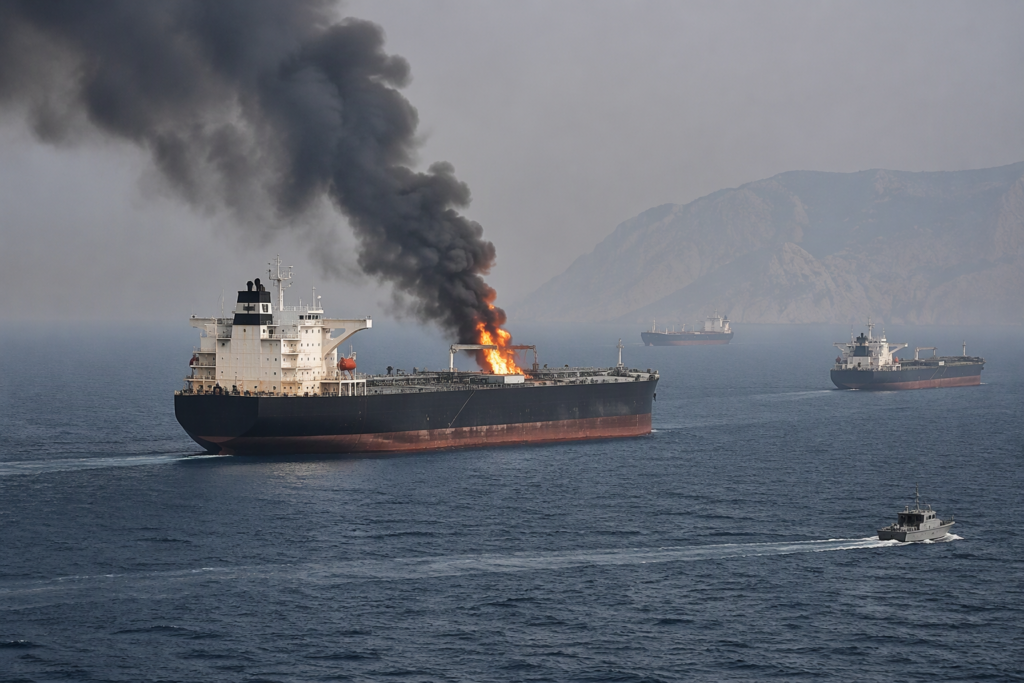
Commercial vessels are burning in one of the world’s most vulnerable maritime corridors, with tankers ablaze in Hormuz as regional conflict flares into open disruption. The blazes follow a severe public warning from Iran’s Islamic Revolutionary Guard Corps regarding the threat of coordinated domestic unrest, linking external combat operations to internal stability.
The stakes for international consumers are immediate and direct. If you buy gasoline or rely on goods shipped across oceans, disruptions in this channel quickly reach your wallet through sudden price spikes and transport delays. The corridor carries roughly twenty percent of globally traded petroleum, leaving little buffer when active transit routes catch fire.
Also read: Strait of Hormuz Tankers Hit as Iran Restricts Shipping
How tankers ablaze in Hormuz shake global shipping
Maritime security specialists have repeatedly warned that commercial freighters and crude carriers represent the easiest targets during Persian Gulf standoffs. With tankers ablaze in Hormuz, commercial shipping operators face surging war-risk insurance rates and may halt or redirect crude oil shipments until safe passage is reestablished.
Because the Strait of Hormuz is barely 21 miles wide at its narrowest passage, ships have zero room to evade hostile fire or floating hazards once caught in transit. Any sustained pause in traffic traps dozens of supertankers on either side of the Gulf, stranding export volumes destined for Asian and European refineries.
What the IRGC warning means on the ground
The simultaneous alert from the Islamic Revolutionary Guard Corps signals Tehran’s anxiety that external military shocks could trigger fresh waves of anti-government street demonstrations. Iranian military leadership often treats naval confrontation and domestic dissent as dual fronts, suggesting internal crackdowns will intensify as security services tighten their grip across major cities.
Given the current state of regional tensions and the aggressive military posture of Tehran, commercial maritime operators and coalition monitors will be under strict time constraints to verify the identities of vessels involved and the extent of their damage in the next 24 hours.
Source: Al Jazeera


