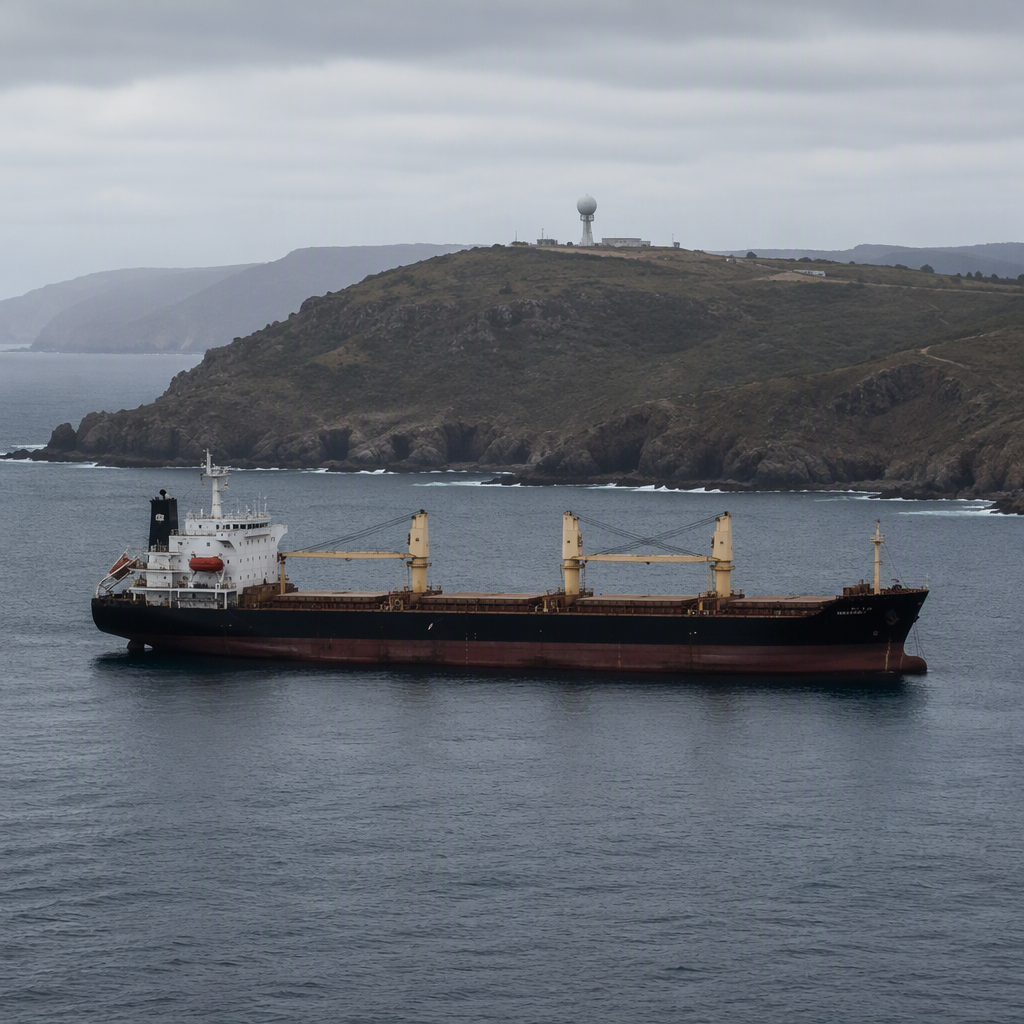

China Encroaches Close to US Land as Coast Guard Ship Breakdown Exposes Arctic Defense Gaps
Recent military maneuvers have raised serious alarms in Washington after China encroaches close to US land off the coast of Alaska, highlighting a stark readiness gap following the mechanical breakdown of an essential American polar vessel. The convergence of Beijing’s growing naval assertiveness and the fragile state of the United States’ polar fleet has brought long-simmering national security concerns to the forefront.
During recent patrols, Chinese naval and research vessels operated within the U.S. Exclusive Economic Zone (EEZ) near the Aleutian Islands. While the ships remained in international waters according to the Law of the Sea, their proximity to Alaskan shores underscored Beijing’s expanding maritime reach. Compounding the situation, an electrical fire and propulsion failure aboard the medium icebreaker USCGC Healy forced the vessel to abort its mission and return to port, leaving the U.S. temporarily without a single active surface presence capable of operating deep in Arctic ice.
Also read: What Lies Ahead for China After Xi Jinping: Succession, Economy, and Global Power
Why China Encroaches Close to US Land in the High North
China’s maritime strategy in the Arctic has gained significant momentum over the past decade. Beijing declared itself a “near-Arctic state” in 2018, unveiling a “Polar Silk Road” initiative aimed at securing emerging shipping corridors and accessing untapped seabed minerals, oil, and gas reserves.
In recent years, the People’s Liberation Army Navy (PLAN) has moved beyond civilian scientific surveys to combined military operations. Working closely with the Russian Federation, Chinese warships have conducted joint exercises across the Bering Strait and the North Pacific. These maneuvers are widely viewed by defense analysts as a demonstration of power projection, testing American surveillance networks and deterrence capabilities right at the nation’s northern doorstep.
“Beijing is showing that it can challenge American naval supremacy not just in the South China Sea, but also in the Arctic and sub-Arctic regions,” said defense analysts monitoring Pacific maritime movements. “Every transit through the U.S. EEZ serves both as an intelligence-gathering exercise and a political statement.”
Ship Breakdown Exposes Fragile U.S. Fleet Readiness
The timing of these foreign patrols coincided with an acute operational setback for the United States Coast Guard. The 420-foot USCGC Healy, one of only two operational polar icebreakers in the entire U.S. arsenal, suffered an electrical transformer fire while underway in the Arctic Ocean.
The damage disabled a propulsion motor, compelling commanders to cancel the ship’s scientific and defense patrols and transit back to Seattle for emergency dry-dock repairs. With the nation’s sole heavy icebreaker, the 48-year-old USCGC Polar Star, routinely committed to Antarctic supply missions or long refit cycles, the Healy’s mechanical failure left the U.S. without an active icebreaking presence along its Arctic frontier.
The Widening Polar Gap
- Russia: Operates more than 40 civilian and military icebreakers, including advanced nuclear-powered vessels armed with cruise missiles.
- China: Maintains a growing fleet of polar research icebreakers, including the Xue Long and Xue Long 2, with heavier dual-fuel and nuclear-assisted designs in development.
- United States: Currently relies on two aging polar-capable cutters, with the next-generation Polar Security Cutter (PSC) program delayed by multiple years and facing cost overruns.
Strategic Implications for Homeland Security
The incident has drawn scrutiny from lawmakers in Congress, particularly members of the Alaska delegation who have warned for years that northern defenses are dangerously neglected. The Bering Strait, separating Alaska from Russia by just 55 miles at its narrowest point, represents a vital international choke point connecting the Pacific Ocean to Arctic shipping lanes.
Unlike conventional warships, standard naval vessels cannot safely navigate Arctic waters clogged with sea ice without icebreaker escort. When foreign adversaries operate modern, ice-reinforced hulls along American maritime boundaries while U.S. assets remain sidelined by mechanical failures, deterrence is compromised.
The Coast Guard has attempted to offset the disparity by stationing National Security Cutters in the region and increasing air patrols out of Kodiak, Alaska. However, maritime experts note that cutter patrols are largely restricted to ice-free open water during summer months, unable to provide year-round presence.
What Happens Next
In response to recurring breakdowns and heightened Russian-Chinese activity, the Pentagon and Coast Guard are attempting to accelerate modernization efforts. The Department of Defense included dedicated Arctic defense funding in recent budget requests, and the U.S. signed the ICE Pact agreement alongside Canada and Finland to co-develop icebreaking vessels and streamline industrial production.
Additionally, the Coast Guard is finalizing the purchase and refit of a commercially built icebreaker to serve as an interim asset until the first Polar Security Cutter is delivered, which is not anticipated until 2028 or later.
Conclusion
The geopolitical balance in polar waters is shifting rapidly. As China encroaches close to US land in coordinated Pacific patrols, the mechanical vulnerability of America’s aging fleet serves as an unmistakable warning. Ensuring uninterrupted presence, expanding Arctic-ready infrastructure, and modernizing polar vessels will be essential to protecting national sovereignty in an increasingly contested northern frontier.