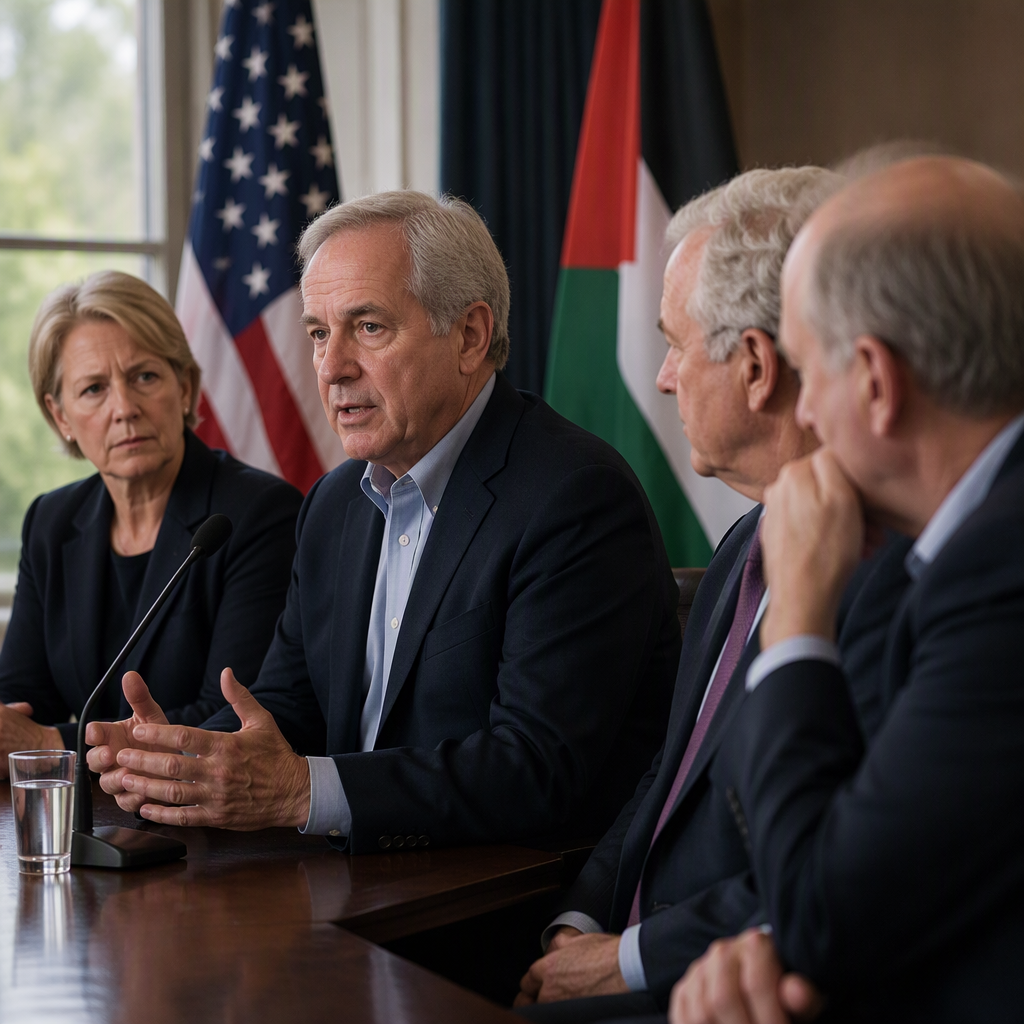

A coalition of former U.S. government officials who resigned over Washington’s handling of the war in the Middle East is urging prospective 2028 presidential contenders to publicly break with and denounce Biden’s Gaza policy. The group argues that continuing the current administration’s foreign policy doctrine risks alienating key voting blocs and permanently damaging American moral authority abroad.
The call to action comes as the Democratic Party begins assessing its future leadership following a turbulent election cycle. The former officials, representing agencies including the State Department, the Department of Defense, and the U.S. Agency for International Development (USAID), published a joint appeal demanding that any candidate seeking national office commit to conditioning military aid to Israel and adhering strictly to domestic and international humanitarian laws.
Also read: Former GOP Governor Running for Congress Vows Fight Against Far-Left Socialists
Why Critics Want Candidates to Reject Biden’s Gaza Policy
Throughout the conflict, the Biden administration maintained steady shipments of precision munitions, air defense systems, and heavy weaponry to Israel while shielding the country from binding resolutions at the United Nations Security Council. Critics, including those who left their posts in protest, argue that this posture failed to prevent widespread civilian casualties and humanitarian catastrophe in Gaza.
In their statement, the former officials highlighted that unconditional support for Israel’s military campaign in Gaza not only violated core statutory safeguards—such as the Leahy Laws and the Foreign Assistance Act—but also created deep rifts within the Democratic coalition. Key constituencies, including young voters, Arab Americans, Muslim communities, and progressive activists, expressed sustained frustration with the White House’s resistance to leveraging U.S. arms transfers to secure a permanent ceasefire.
According to the signatories, 2028 hopefuls must clearly demonstrate that they have learned from these missteps rather than carrying forward policies that many voters view as complicity in severe human rights violations.
Pressure Mounts on Potential 2028 Democratic Contenders
While the next presidential election is four years away, early positioning for the 2028 Democratic nomination is already underway. High-profile figures such as California Governor Gavin Newsom, Pennsylvania Governor Josh Shapiro, Michigan Governor Gretchen Whitmer, Transportation Secretary Pete Buttigieg, and several prominent senators are widely seen as prospective candidates.
The coalition of former officials insists that foreign policy cannot remain an afterthought in the upcoming primary debates. They are asking candidates to adopt clear commitments, including:
- Conditioning offensive military assistance on compliance with international humanitarian standards.
- Enforcing existing U.S. laws that prohibit weapons transfers to nations restricting American humanitarian aid.
- Ending diplomatic obstructionism at international tribunals such as the International Court of Justice (ICJ).
- Re-engaging multilateral diplomacy aimed at establishing a sovereign Palestinian state alongside Israel.
Foreign policy analysts note that future primary debates will likely feature unprecedented scrutiny over Middle East policy, which previously enjoyed broad bipartisan consensus among mainstream party leaders.
Electoral Fallout and Party Identity
The debate surrounding U.S. strategy in the Middle East has moved from think tanks into electoral battlegrounds. In key swing states like Michigan, dissatisfaction with the administration’s Middle East posture contributed to diminished turnout and protest votes in both primary and general election contests.
Signatories of the letter emphasized that political resilience in 2028 requires rebuilding trust with voters who felt dismissed by the party leadership. By establishing a clear separation from past decisions, candidates could signal an authentic commitment to human rights and a re-energized vision of American diplomacy.
However, taking a critical stance against Washington’s traditional alliance with Israel presents political risks. Candidates will face pressure from established donors, centrist lawmakers, and pro-Israel advocacy organizations that continue to advocate for strong, uninterrupted security partnerships.
What Happens Next
In the coming months, grassroots coalitions and progressive policy organizations plan to track the public statements and legislative votes of prospective 2028 leaders. Candidates will face targeted questioning during town halls, state party conventions, and committee hearings on Capitol Hill.
As the party works to define its post-Biden trajectory, the question of whether to defend or openly reject Biden’s Gaza policy will serve as an early litmus test for any contender aiming to lead the country forward.