
No Clear Winner in Israel Election Results With Nearly 90 Percent of Votes Counted
JERUSALEM — The latest Israel election results show no decisive winner with nearly 90 percent of ballots counted, plunging the country into renewed political uncertainty as neither Prime Minister Benjamin Netanyahu’s bloc nor his rivals appear to command an outright parliamentary majority.
According to data released by the Central Elections Committee, the vote tallies point to an exceptionally narrow contest. Both major political camps remain short of the 61-seat threshold required to form a majority government in the 120-seat Knesset, raising the prospect of protracted coalition negotiations or prolonged political stalemate.
Also read: Israel Election Turnout Hits 77.7%, Highest Level Since 1999
Deadlock Deepens in Latest Israel Election Results
With roughly 90 percent of regular ballots tallied, Netanyahu’s Likud party leads as the single largest party in the legislature. However, when combined with its traditional religious and nationalist partners, the right-wing bloc remains hovering just shy of a workable majority.
The centrist and diverse opposition parties have similarly failed to lock down a unified path to power. The deeply fragmented landscape reflects the sharp divisions among Israeli voters, who have endured multiple national elections in recent years without producing enduring stability.
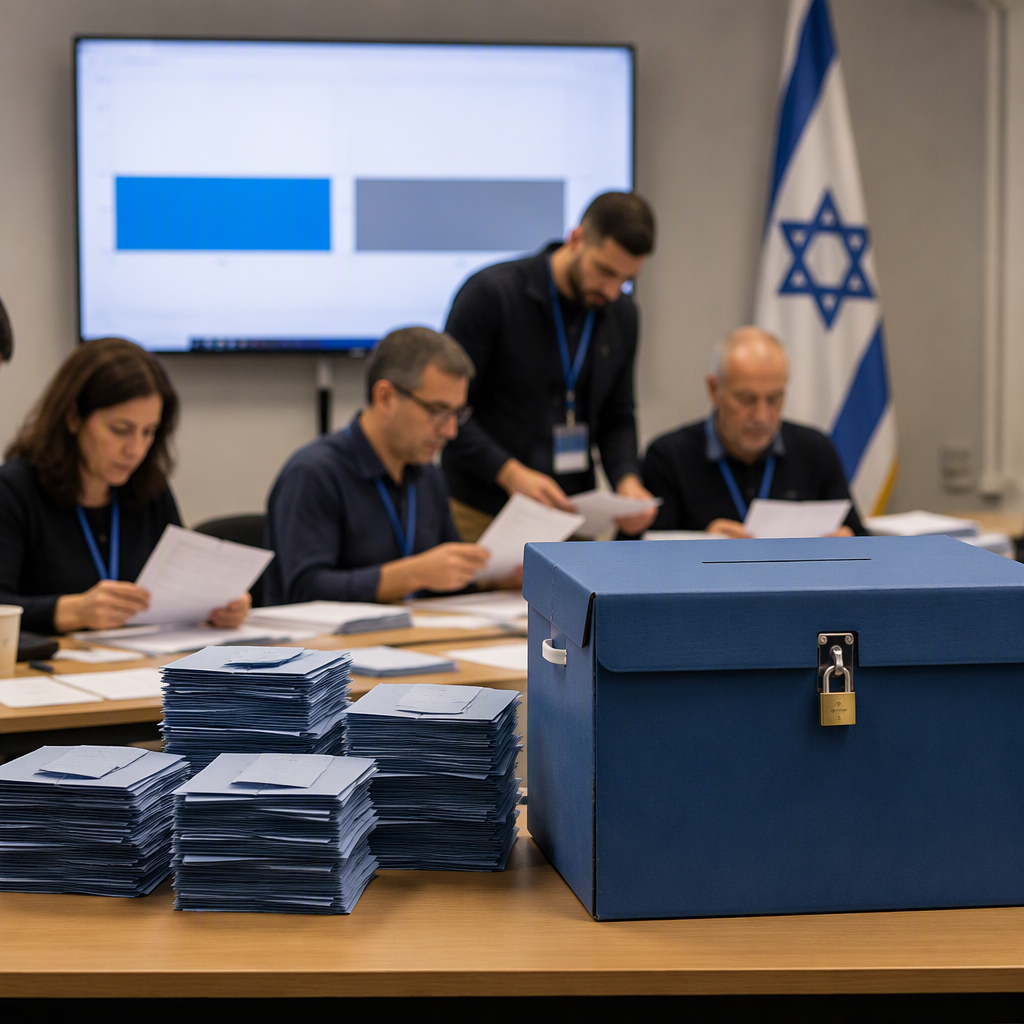
Election officials emphasized that tens of thousands of “double envelopes” — which include votes cast by soldiers, diplomats, hospital patients, and prison inmates — are still being verified. These late ballots historically cause seat allocations to shift by one or two seats, which could prove decisive in such a tightly contested vote.
Potential Kingmakers Hold the Balance of Power
As the final tally nears completion, smaller faction leaders are positioning themselves as critical kingmakers. Neither major faction can form a ruling coalition without crossing historical political divides or convincing unaligned parties to join their ranks.
Leaders across the political spectrum spent Wednesday assessing internal numbers and consulting party strategists. Informal backchannel discussions have already begun, with faction heads weighing potential ministerial appointments, policy concessions, and coalition agreements.
Political analysts note that the arithmetic leaves little room for maneuver. Even minor parties that barely crossed the 3.25 percent electoral threshold now wield significant bargaining leverage over both the incumbent and opposition leadership.
What Happens Next in the Coalition Process
Once the Central Elections Committee certifies the final ballot tallies, the focus will formally shift to President Isaac Herzog. Under Israeli law, the president oversees the initial stages of government formation through the following steps:
- Consultations: The president meets with representatives of all elected Knesset factions to hear their recommendations for prime minister.
- Mandate Assignment: The president assigns the mandate to the lawmaker deemed to have the best chance of building a 61-seat coalition.
- Negotiation Window: The designated candidate receives 28 days to negotiate a coalition, with the possibility of a 14-day extension.
- Alternative Mandate: If the chosen candidate fails, the president may grant another party leader the opportunity to assemble a government.
Conclusion: An Uncertain Horizon for Israel Election Results
The emerging Israel election results underline the persistent polarization of the Israeli electorate. While final overseas and military votes could still adjust the margin slightly, the overarching outcome remains a familiar impasse. Lawmakers now face weeks of high-stakes negotiations, with the threat of political paralysis looming if party leaders cannot bridge their ideological divides.