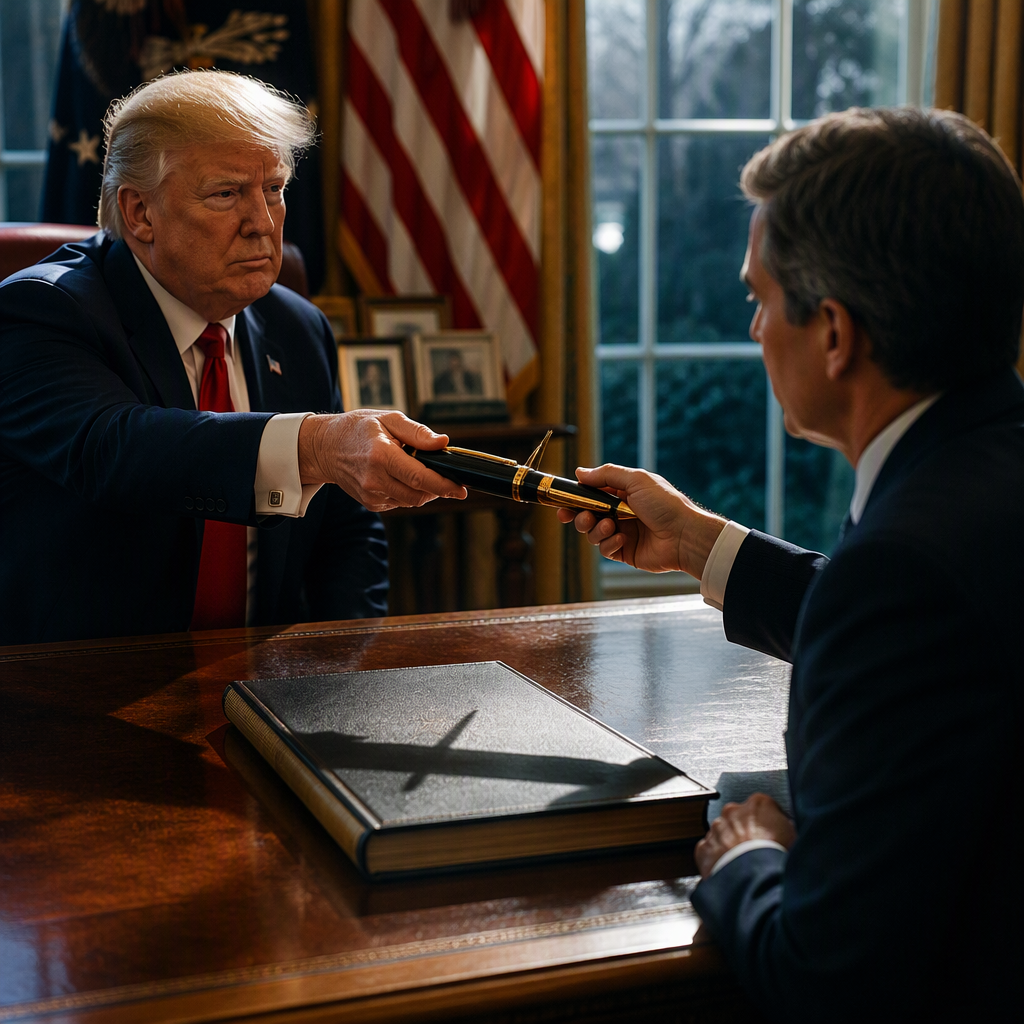

How Trump’s Expansion of Executive Power Hands Democrats a Potent Political Weapon
Donald Trump’s aggressive campaign to consolidate presidential authority is reshaping American governance, but legal scholars and political strategists warn that his push for expanded executive power could ultimately backfire on the Republican Party. By eroding long-standing institutional norms, testing statutory limits, and establishing precedents for sweeping unilateral rule, the conservative movement may be constructing the very machinery that a future Democratic president will use against conservative policies.
Throughout American history, institutional tools forged by one administration rarely disappear when the White House changes hands. As Trump tests the boundaries of presidential discretion over the civil service, federal spending, regulatory agencies, and emergency declarations, constitutional experts caution that Republicans are establishing a framework for expansive executive governance that progressives can readily exploit.
Also read: Obama Attacks Trump While Campaigning for Democrats Ahead of Midterm Elections
The Precedent of Expanding Executive Power
The modern presidency has steadily accrued power over decades, but recent efforts represent a qualitative shift. Grounded in the “unitary executive theory,” conservative legal architectures argue that Article II of the U.S. Constitution grants the president direct, plenary control over every facet of the executive branch. This doctrine envisions a chief executive capable of overriding independent regulatory commissions, directing Department of Justice prosecutions, and freezing congressional appropriations at will.
While conservative allies view these measures as necessary to rein in what they characterize as the “deep state,” the legal precedents established in court do not expire at the end of a single presidency. Once the judiciary affirms or normalizes an expanded interpretation of Article II, that authority transfers directly to whoever occupies the Oval Office next.
Transforming the Federal Civil Service
One of the central pillars of the push to concentrate executive authority is the restructuring of the federal bureaucracy. Through mechanisms such as Schedule F—a proposed reclassification of tens of thousands of career civil servants into at-will political appointees—the executive branch gains the power to dismiss career officials who fail to align with presidential directives.
For Republicans, the initial objective is removing perceived administrative obstructionism. However, the secondary consequences are profound:
- Ideological Purges in Reverse: A future progressive president could immediately dismiss thousands of conservative-leaning federal employees, regulators, and policy analysts without the traditional protections of the civil service system.
- Rapid Agency Realignment: Democratic administrations could install climate activists, labor organizers, and progressive regulators at every operational level of federal agencies on day one.
- Weakened Bureaucratic Resistance: Without civil service guardrails, career staff at the Environmental Protection Agency, the Food and Drug Administration, and the Department of the Interior would have little legal recourse to challenge radical policy reversals.
Emergency Declarations and Bypassing Congress
Another critical area where executive reach is expanding involves the use of statutory emergency authorities. Presidents have long relied on the National Emergencies Act to impose sanctions or manage international crises. However, using national emergencies to bypass congressional appropriations or enact major domestic policy initiatives sets a far-reaching precedent.
If a conservative administration successfully normalizes using executive declarations to repurpose military funds, construct border infrastructure, or impose unilateral tariffs without legislative approval, the pathway opens for liberal counterparts. Progressive lawmakers have already called for future Democratic presidents to declare national emergencies on:
- Climate Change: Halting fossil fuel leasing, redirecting defense funds to renewable energy grids, and restricting industrial emissions via executive fiat.
- Gun Violence: Utilizing emergency regulatory powers to restrict firearms commerce or bypass standard administrative procedure for gun control mandates.
- Public Health and Reproductive Rights: Mobilizing federal resources and public lands to protect access to reproductive healthcare despite state-level bans.
When the threshold for declaring a national crisis is lowered, the executive branch effectively neutralizes the legislative branch, rendering congressional resistance largely ineffective.
Politicizing the Department of Justice
Post-Watergate norms established a clear, unwritten firewall between White House political operations and Department of Justice prosecutorial decisions. Recent rhetoric and policy proposals seeking direct presidential oversight of criminal investigations threaten to dismantle that separation.
If the standard is established that the president can openly direct investigations against political rivals, business adversaries, or dissenting officials, that leverage will inevitably be inherited by political opponents. Future progressive administrations could direct federal prosecutors to pursue corporate executives for environmental violations, target conservative political donors, or aggressively prosecute state officials who resist federal directives.
What Happens Next
The ultimate scope of these authorities will largely be determined by two factors: federal court rulings and congressional action.
First, the Supreme Court’s conservative supermajority faces a historic institutional paradox. The justices must decide whether to embrace the robust unitary executive theories advocated by conservative litigators or reassert judicial oversight to preserve the constitutional balance of powers. If the court upholds expansive executive maneuvers, it permanently validates those powers for both parties.
Second, Congress faces mounting pressure to reassert its constitutional role under Article I. Reforming the National Emergencies Act, strengthening the Impoundment Control Act, and codifying civil service protections remain theoretical bipartisan options. Yet in an era of intense polarization, passing structural safeguards that constrain a party’s own standard-bearer remains politically fraught.
The Unintended Legacy of Maximum Authority
In politics, tactical victories often produce strategic vulnerabilities. By stretching statutory ambiguities and breaking institutional norms to achieve immediate policy goals, conservative strategists risk handing their political opponents an unprecedented arsenal. Once an expanded vision of executive power becomes the baseline for American governance, Republicans will have little constitutional ground left to prevent a future Democratic administration from using those exact mechanisms to reshape the nation.