
The Return of New Orleans’ ‘Deadly’ Cocktail: Inside the Absinthe Revival
For nearly a century, American authorities considered it toxic, hallucinogenic, and dangerously volatile. Now, the infamous New Orleans deadly cocktail—the storied absinthe frappé and traditional absinthe service—has completed a remarkable comeback in the historic bars of the French Quarter.
Cocktail historians and local bartenders are reintroducing patrons to the anise-flavored spirit that once defined the city’s golden age of drinking. Long demonized by moral reformers and outlawed by federal decree, the drink has shed its dark mythology to reclaim its role as an essential pillar of Louisiana cocktail culture.
Also read: ‘Afraid of Heights’: Inside the Peruvian Cliff Hotel With a Terrifying Check-In
The Myth Behind the New Orleans Deadly Cocktail
The beverage’s lethal reputation traces back to the late 19th century, when French-style absinthe flowed freely across New Orleans saloons. In 1874, Catalan bartender Cayetano Ferrer concocted the Absinthe Frappé at Aleix’s Coffee House on Bourbon Street, which later became the world-renowned Old Absinthe House.
Ferrer’s recipe—combining absinthe, anisette or simple syrup, crushed ice, and a splash of seltzer—became an instant sensation among writers, artists, and politicians. Patrons ranging from Mark Twain to Oscar Wilde visited the corner tavern to sample the frosty green elixir.
However, anti-alcohol crusaders and European wine lobbies soon launched an aggressive campaign against the spirit. Opponents alleged that wormwood, the herb containing the chemical compound thujone, caused violent madness, hallucinations, and physical ruin. Sensationalist headlines quickly branded absinthe as a poison, cementing the legend of the New Orleans deadly cocktail in the public imagination.
In 1912, the United States federal government officially banned the importation and manufacture of absinthe. For 95 years, legitimate bars across the nation could not pour authentic wormwood-based spirits.
The Science That Debunked the Danger
New Orleans drinkers never fully abandoned their taste for anise, turning during Prohibition and the post-repeal era to local substitutes such as Herbsaint. Created in 1934 by New Orleans native J. Marion Legendre, the substitute kept classic recipes like the Sazerac and frappé alive, but the original spirit remained prohibited.
By the early 2000s, modern chemical analysis finally dismantled the century-old hysteria. Peer-reviewed research proved that vintage and traditionally distilled absinthes contained only trace amounts of thujone—far below levels capable of causing neurotoxic or hallucinogenic harm. The intoxicating effects that 19th-century doctors observed were simply the result of high alcohol proof combined with heavy overconsumption.
In 2007, the Alcohol and Tobacco Tax and Trade Bureau (TTB) updated its regulations, permitting the sale of authentic absinthe containing less than 10 parts per million of thujone. The regulatory shift opened the door for authentic historic recipes to return legally to American glassware.
How Historic Venues Are Serving the Classic Drink Today
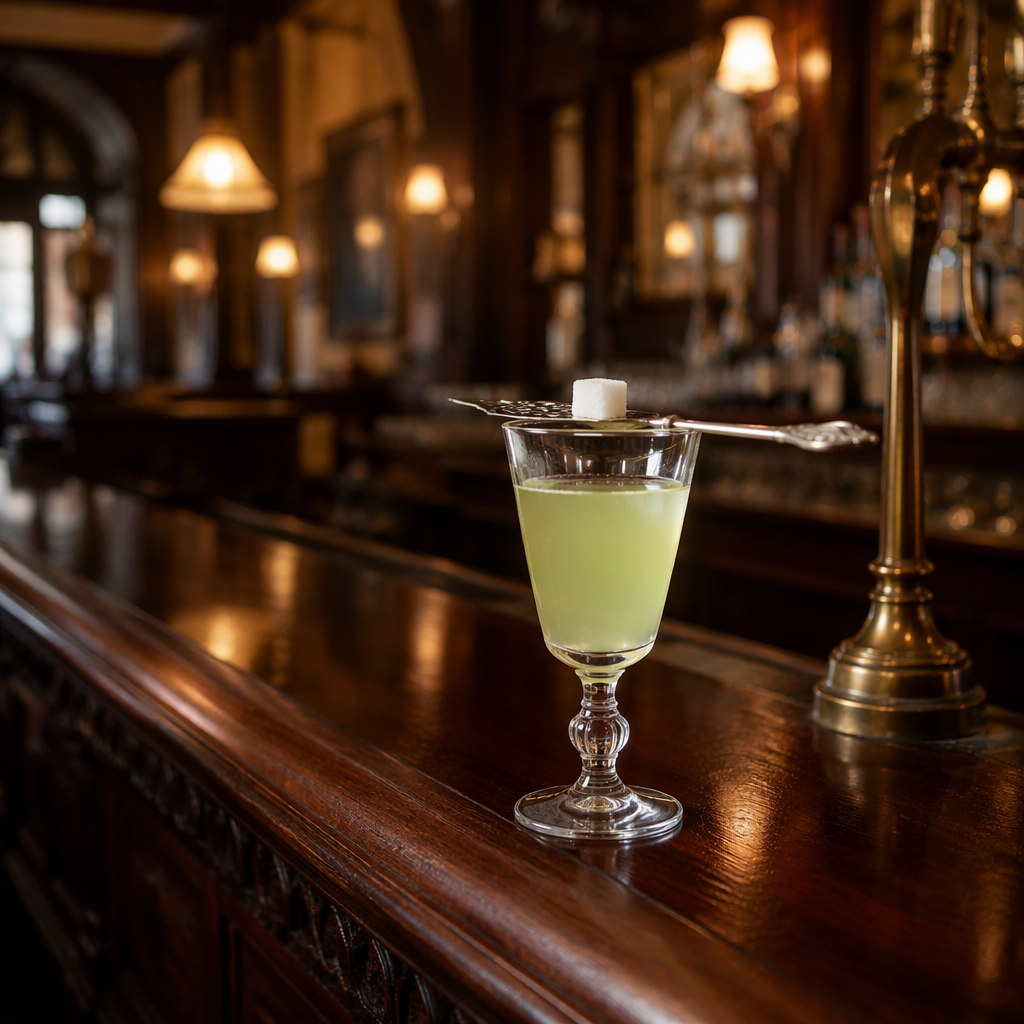
Today, visitors to New Orleans encounter absinthe treated with culinary reverence rather than illicit fear. Bars throughout the city utilize traditional 19th-century water fountains with ornate spigots, slowly dripping ice-cold water over sugar cubes perched atop slotted silver spoons to create the drink’s signature cloudy transformation, known as the louche.
At the Old Absinthe House, barkeeps continue to churn out hundreds of frappés daily beneath brass chandeliers and century-old marble fountains. Modern craft cocktail outposts, including French 75 and specialized absinthe lounges, showcase international distillates alongside regional American varieties.
The annual Tales of the Cocktail festival, hosted in New Orleans, routinely features seminars and tastings focused on absinthe preservation, reinforcing the spirit’s legitimacy on the international bar stage.
What Happens Next for New Orleans Spirits
The resurgence of absinthe reflects a broader push among craft distillers and mixologists to resurrect lost American drinking traditions. Regional craft distilleries across Louisiana are now producing their own small-batch absinthes, sourcing local botanicals to put a distinct Gulf Coast stamp on the classic European profile.
Far from being a lethal relic of the past, the New Orleans deadly cocktail has emerged as a symbol of historical resilience, offering modern travelers a direct, authentic taste of the Crescent City’s untamed liquid heritage.