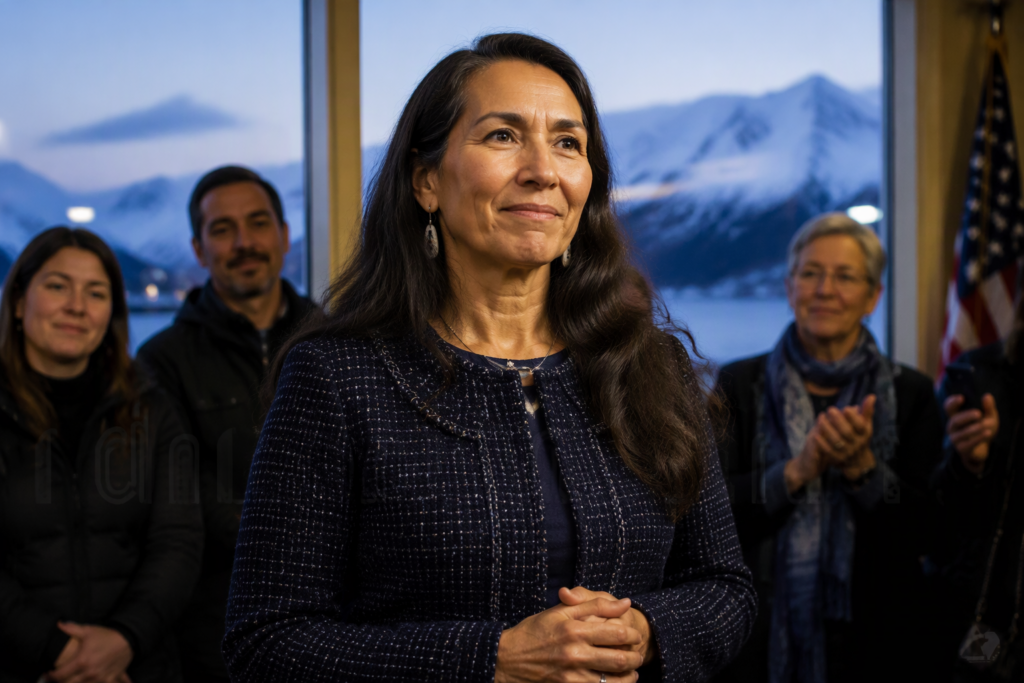
Two full weeks after polls closed, Democrat Mary Peltola won the Alaska Senate race, unseating her Republican opponent and sealing an expanded majority in Washington.
The victory ends an extraordinary campaign defined by alleged spoiler schemes, ballot name confusion, and aggressive courtroom fights. For voters across the country, it solidifies Democratic control over both chambers of the US Congress for the final two years of Donald Trump’s presidency.
Also read: Democrats Push Minimum Wage Hikes After Midterm Wins
With this win, Democrats secured their ninth flipped seat from Republican hands in this year’s midterm elections.
Why the Alaska Senate race took two weeks to call
Alaska was the last state in the nation to finalize its vote count from the November 3 election. Election officials faced severe logistical hurdles while gathering and tabulating ballots across the state’s vast, isolated regions.
Paper ballots had to travel from dozens of remote settlements scattered across hundreds of miles of wilderness. State officials needed fourteen straight days to tally every return before certifying that Peltola had unseated the Republican incumbent.
Nine flips give Democrats full control of Congress
Peltola’s victory represents a major shift on Capitol Hill. By flipping a ninth Republican seat, Democrats expanded their margin in the US Senate to prevent split-chamber stalemates.
The outcome hands the party unchecked legislative control over the federal budget, oversight committees, and judicial confirmations. President Donald Trump will face unified Democratic resistance during his final two years in office.
The bitter fight over Daniel J Sullivan
The campaign grew contentious well before voting began on November 3. Peltola’s campaign came under intense fire after a report revealed efforts by Democrats to recruit a candidate named Daniel J Sullivan.
That recruit shared a near-identical name with Alaska’s sitting Republican US Senator, Dan S Sullivan. Opponents argued the recruited candidate was an intentional spoiler meant to confuse voters when they marked their ballots.
The controversy triggered unprecedented legal battles in state courts. Rival campaigns fought over candidate qualifications and ballot placements before election workers could send voting materials to remote towns.
What to watch next in Washington
All eyes now turn to January, when the new US Congress convenes and Mary Peltola takes the oath of office in the Senate.
Source: BBC