Fresh off midterm victories that handed them legislative control in key states, Democrats are moving quickly to push aggressive minimum wage hikes across the country. In Pennsylvania, Gov. Josh Shapiro announced plans to more than double the state’s baseline pay from $7.25 to $15 an hour as his very first legislative act this January.
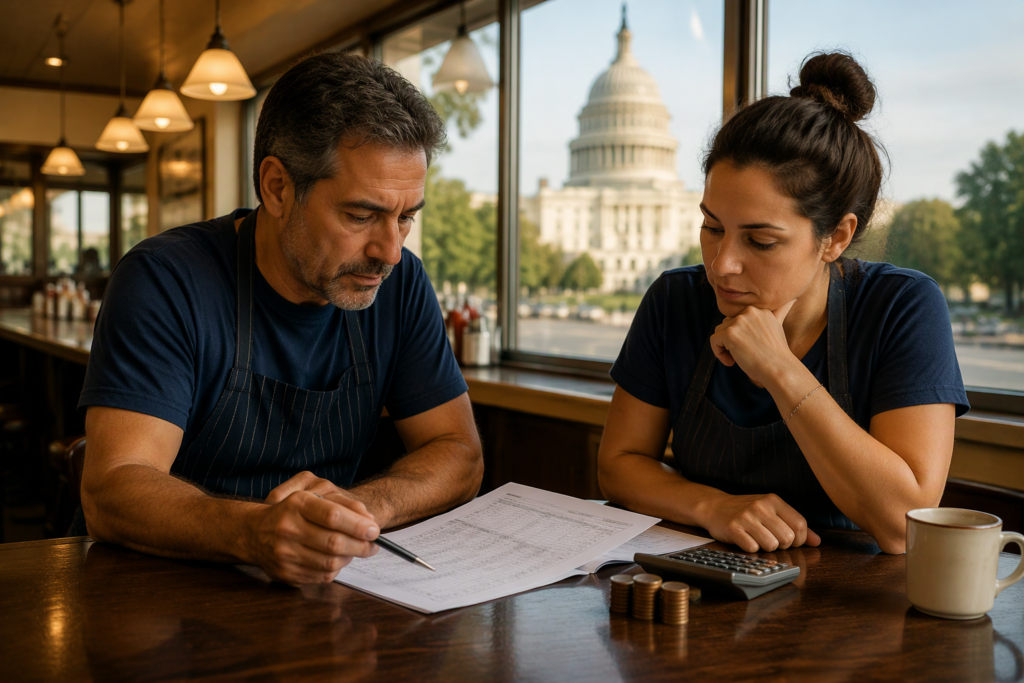
For millions of workers struggling with grocery bills and rent, the promise of bigger paychecks sounds like long-delayed relief. But the push sets up an immediate clash between progressive lawmakers eager to deliver on campaign promises and economists who warn that sudden payroll spikes could backfire on the very people they are meant to help.
Also read: Democrats Launch Immigration Reform Push After Midterm Wins
The debate reaches far beyond state capitols. Democratic governors like Shapiro and Illinois Gov. JB Pritzker, along with congressional leaders in Washington, are attempting to turn their electoral wins into a broader mandate for federal action on wages, even as small business owners in high-wage cities report mounting distress.
Shapiro targets Pennsylvania’s $7.25 floor
Pennsylvania has kept its minimum wage locked at the federal floor of $7.25 an hour for decades, surrounded by neighboring states that raised theirs years ago. After Democrats flipped the state Senate to secure a full governing trifecta in Harrisburg, Shapiro made clear that the wage floor is his top priority.
“Half a million workers in Pennsylvania still make less than $15 an hour. You can’t live off of that in 2026,” Shapiro said. He promised that raising the rate will be the first bill he signs with the new majority.
Shapiro’s plan represents a 107% jump in base pay. During an interview with Don Lemon, Shapiro acknowledged that some listeners outside Pennsylvania might find it hard to believe the state is still stuck at $7.25, placing the blame squarely on previous Republican legislative majorities that blocked reform bills.
The warning from economists on minimum wage hikes
While labor advocates celebrate the move, free-market economists argue that doubling wages overnight creates serious hazards for employers operating on razor-thin profit margins.
Tom Savidge, an economist with the American Institute for Economic Research, pointed out that state mandates do nothing to guarantee that local shops can actually afford the new payroll costs. He warned that small businesses could be pushed to raise retail prices, trim operating hours, or freeze hiring altogether.
“A federal minimum wage hike will worsen the affordability crisis. A one-size-fits-all mandate ignores regional differences in wages and business costs. It risks higher prices, fewer hours and fewer jobs, especially for inexperienced workers.”
Savidge also stressed that such mandates tilt the playing field toward national corporate chains. Big retailers can absorb higher labor costs by deploying automated checkout systems or shifting work across regions, while independent Main Street operators have far fewer options.
Seattle offers a cautionary tale
Cities that already enforce high wage floors provide a real-world look at the trade-offs. In Seattle, the minimum wage sits at $21.30 an hour and is scheduled to reach $22.14 in January.
While proponents argue these pay floors lift families out of poverty, local shopkeepers tell a different story. In a January survey by The Intentionalist, 67% of 136 independent small businesses in Seattle and surrounding Washington communities reported facing heavier financial strain than they did during the pandemic. Owners pointed to rising payroll expenses, higher rent, and climbing insurance rates combined with weaker customer foot traffic.
Academic research on Seattle’s wage mandates shows mixed outcomes:
- A 2022 study in the American Economic Journal found earlier wage jumps lifted pay for experienced staff but cut total hours worked, especially for entry-level applicants trying to break into the job market.
- A 2017 study from the University of California, Berkeley, reported that food service pay climbed without causing a statistically noticeable drop in overall restaurant employment.
For independent restaurants already dealing with expensive wholesale food and declining customer spending, higher wage requirements have been cited by several Seattle operators as a factor in closing locations.
Pressure builds for federal minimum wage hikes
Despite those warning signs, Democratic leaders are eager to take the wage battle to Capitol Hill. Pritzker, who signed a gradual increase in Illinois that brought baseline pay to $15 an hour by 2025, is urging Congress to pass a nationwide increase.
House Minority Leader Hakeem Jeffries backed the effort on Monday, calling it a disgrace that the federal floor has remained unchanged at $7.25 for two decades. Jeffries said he plans to consult with colleagues in both the House and Senate to see what legislation can be assembled.
Yet critics in Illinois question whether Pritzker’s model delivered the promised prosperity. Adam Gorcyca, a policy researcher at the Illinois Policy Institute, cautioned that wage mandates often reduce overall earnings by prompting bosses to slash shift lengths or hold back on entry-level hiring. Gorcyca noted that Illinois experienced one of the slowest pandemic economic recoveries in the nation, casting doubt on claims that mandated wage increases strengthen broader labor conditions.
Whether congressional Democrats can build enough bipartisan support to pass a federal rate hike will become clear when lawmakers return to Washington to set their legislative calendar.
Source: Fox News